A Noob’s Review – 1000xRESIST

There is a nearness and its gravity is echoing.

I already wrote at length about my first impressions of 1000xRESIST. Instead of rehashing that, I am going to talk about what I consider to be the games strengths. I would also talk about the weaknesses but I honestly have difficulty finding any beyond the slow start that I mentioned in those impressions.

The more you try to recommend this game to folk, the more you realise how difficult it is to define the genre. There is a surprising variety of touchpoints for comparison, but every similarity I point out is usually a specific tone or mechanic, rather that the game itself being similar to any other. Here, I want to talk about what this game does, and why it works for me.

+ Scope

I often wonder how people come up with stories like this. But then I read something from an AMA with the developers. This game is a fantastic example of using what you have to inform what you do.

A question was asked about what birthed the idea using clones. There were two answers, one we will get into later, but the second one stood out to me.

“The other thing was SCOPE. Yes, it meant we could focus on making the character model that we had, better!”

It’s fascinating how a creative decision so important can stem from such a technical, meta reason. I personally find that given all of the freedom in the world, my work will often be weaker than the work I had to do under restrictions, which could be why this resonates so much. Scope takes discipline, and while they could have decided to spend more time creating more characters, they made it a core part of the story, giving them more time to focus on the intricacies of the world they were building.
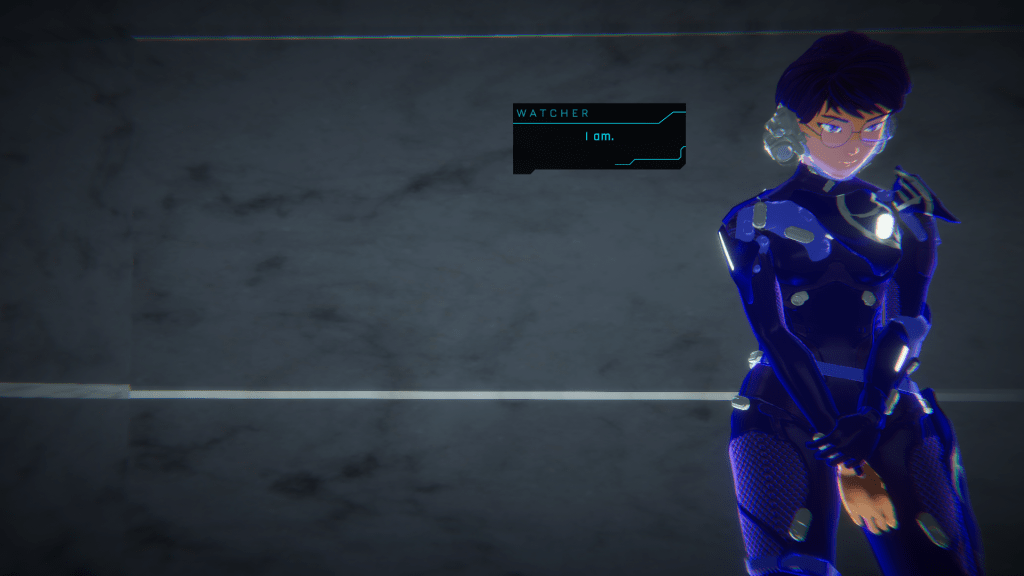
Thinking of it this way, it begins to dawn on me that there are a lot of reused environments too. Many of the places that you go, you will see again for one reason or another. However, there wasn’t a single visit to any of these locations that made me feel sick of them. It never got tiresome. Every revisit was repurposed so carefully that suddenly, fewer environments become a blessing, allowing me that familiarity that makes me feel more involved in the story.

+ Nature vs nurture / themes

Nature vs nurture is something that has always intrigued me. It’s not something that can ever be researched ethically, but the questions remain ever fascinating. How much of a person is in their genetics, and how much is their circumstance? What would the best of us be driven to under difficult circumstances? Could an evil person have been good? Is everyone capable of anything? Is anyone capable of everything? We will never know and it makes for an extremely rich setting for a narrative to explore. One thing that no one can deny is that we are influenced by the people around us, no matter how much we want to be, for better or worse, and that is explored well here.

There are two reasons why we wanted to look at clones! One, was getting to explore the classic thematic of nature vs. nurture. How much of how we turn out as human beings is because of things we don’t understand?

The game also took on many tricky themes that could very easily have been too much. Generational trauma, oppressive regimes, faith, sacrifice, ends justifying means, intent, justice. It was a lot, but never too much. Everything was handled with care and in a world where everyone is waiting for the next thing to be outraged about, I found the game handled everything with class, giving no ammunition to the folk who try to drag things down. Equally, it felt like a safe space to consider these delicate topics without judgement.

+ The Writing

As I mentioned in my first impressions, I didn’t like the writing at first. However, once I got used to the rhythm of the speech of these characters, I was finishing their sentences. I when I finished the game, I couldn’t remember the specific lines in some important moments, but I could hear their rhythm like a melody stuck in my head. And it’s believable. No one talks like this, but they do. It is another one of those bold choices that went well because they rightfully have confidence in the excellent quality of their storytelling.

+ Everything Audio

The music goes a long way to setting the atmosphere of this game. Every time I sat down for a session, hearing the melancholic tones had me immersed immediately, whether it was light, sombre melodies or a little heavier.

The voice acting is another auditory factor that solidifies this games identity. There are so many characters, all so similar and yet so different. The hushed tones, words spoken so softly yet carrying so much weight. It is all so intentional and commendable. The voice acting also contributes to the rhythm of the speech as mentioned above. Without it, I am not sure the game would have bled into my thoughts the same way that it did.

+ Visuals

The game does not have ‘impressive’ graphics. As in, don’t come here for photorealism or next gen aesthetics ala Hellblade. It is stylized. Sometimes, particularly walking around the hub area, the textures felt a little PS3 to me. However, I think any reasonable gamer, and particularly indie enjoyers, can accept that photorealism is only one choice in a medium that can achieve anything, and beauty can be created in other ways.

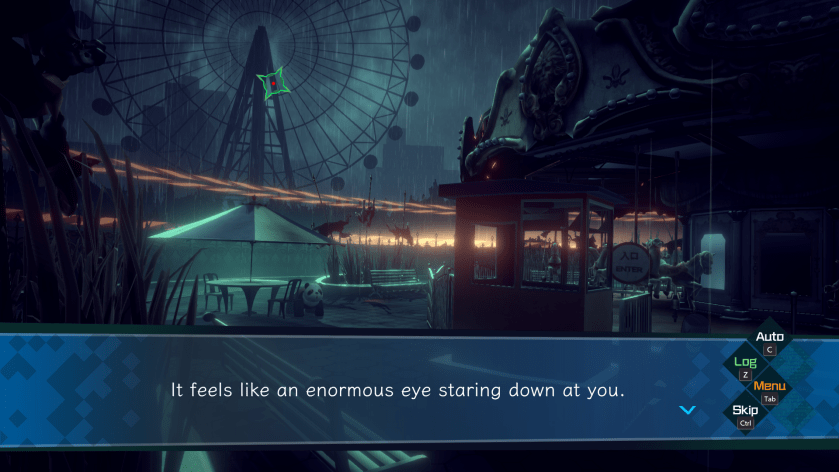
What this game does have is very impressive art direction and cinematography. It is ambitious in its style in every way except perfection. Colour is already an in game concern, but the use in a creative sense, alongside lighting, can be striking. Whether you are walking around a corner into a set piece, or being guided by a cutscene to see something new, the developers clearly had a vision and they did everything they could to put that on screen, succeeding with flying… colours.

+ Balance

1000xRESIST contains a huge, winding story, the likes of which is very rare to be told so comprehensively within a 14 hour experience. The reason that it is done so well is the balance achieved in the conceptual phases as well as the execution. This story is about disaster. It is about eras. Civilisations. But it is also about people. Individuals. It is about things much bigger than we can possibly comprehend, and it is about the nuance of being human within that. It never loses sight of either of these things.

+ Attention to Detail

Just because the scope was kept in check, that doesn’t mean there is a lack of anything. In fact, that is most likely the very reason that the game contains the density of detail that it does. Again, I am not talking about the textures or foliage. I am talking about continuity, and the stories that are being told indirectly throughout the entire game. It is worth looking around and talking to everyone that you find. You never know who or what will make a huge difference down the line. While it isn’t the focus of the story, I find there to be a bit of butterfly effect between the lines and it is really neat to identify the triggers that may change the course of history, no matter how small they seem at the time.

+ Respecting the Player

Possibly the thing that I found the most impressive above all else is the way that I felt respected as a player. In my initial impressions I complained that I felt I was supposed to care about something I had no understanding of or context for. I understand that decision a lot more as I have made my way through the game. The developers trust that you will come to understand, without any clumsy exposition dumps or codexes. We learn through experience, exploring the environments we are in, and observation. It is no coincidence that our main character is called ‘Watcher’.

Of course, there is exposition, there has to be, but it is weaved into the game so well that I never begrudged it. In fact I welcomed it as the more that I found out, the more that I realised I still wanted to know. There is even an exposition device written into the story in the form of communions, allowing us to learn about the history of the game world alongside our main character.

I felt respected in another way too. Throughout this whirlwind of heavy hitting themes, I never once as the player felt that I HAD to feel a certain way. These characters are flawed. They make mistakes, mistakes that we are making with them, whether we believe it is a good idea or not. Never once did the game then shame you for what you have done. It provides opportunities to think, but it never does the ‘What have you done?! You, the player, you did something despicable’ thing that some other games do. It could easily have gone down that route but I am very grateful that it did not and as a result it is a richer experience.
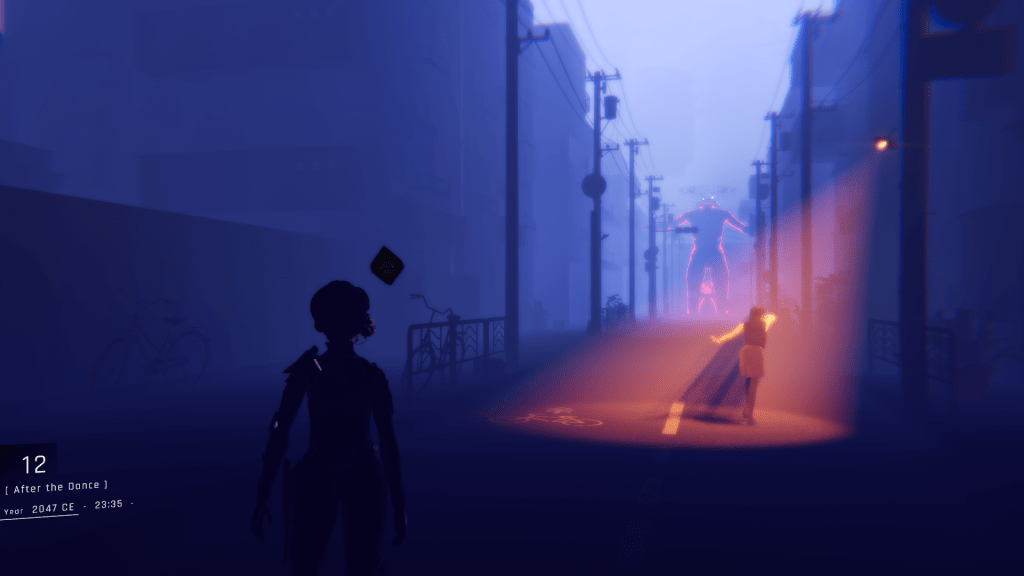
1000xRESIST appeals to the part of me that loves YA dystopian fiction. There is nothing wrong with that, but it also somehow feels very reductive. I think what I ultimately mean is that this is not going to be for everyone. For me, it came out of the blue, infecting my thoughts both in and out of the game for a while, but not everyone will have that experience. I think it is important to temper expectations, especially if you aren’t going in as blind as I did.

If anything that I have wrote sounds interesting to you then there is a good chance you will enjoy the game, but be aware that this is an immersive, experimental, narrative based experience. If that isn’t your jam then I don’t necesserily think this is the game that could convert you. My recommendation to everyone is that if you aren’t feeling the beginning, just like I wasn’t, try finishing the first two chapters and see if it grabs you. If it hasn’t by then it probably wont but that is a good amount of time to see some of the variety of storytelling on display.

One thing I do know is that I am not finished with this game.

This is a game about breaking barriers. Some characters giving their all to destroy them and some giving their all to stop them. But also the developers, creating a game that I can’t ever imagine a large studio having the courage to try. It is unconventional, it nails what it is going for, it is a breath of fresh (and emotional) air, and as I said in my impressions post, this is what indie gaming is all about.

Hekki Grace.


More on 1000xresist

More Noob Reviews

Sign up now to stay up to date with the latest posts!

A Noob’s Review – Pupperazzi

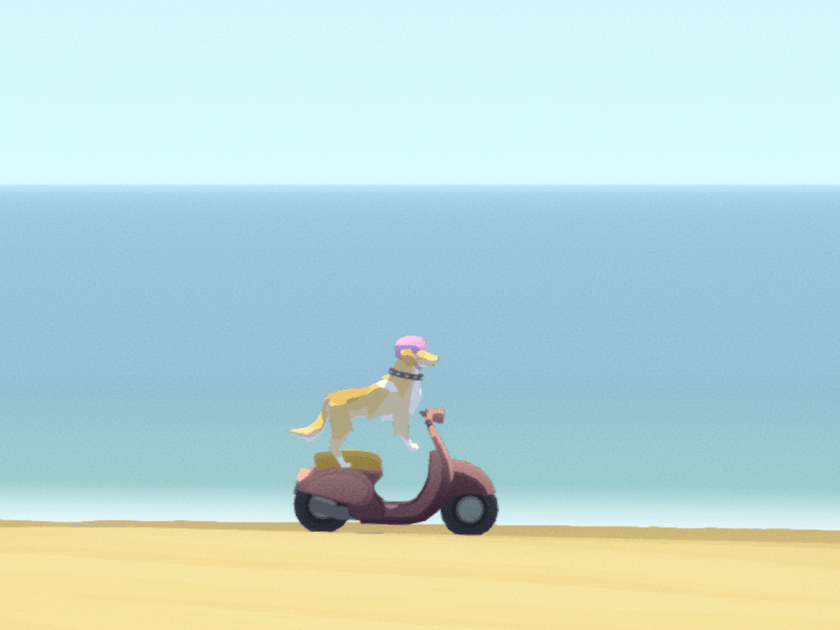
Based on what I had seen of Pupperazzi, this game wasn’t high up on my ‘to play’ priority list. I thought it was going to be a ‘meme’ game and not much more. I am very happy to report how wrong I was about that. This game is an absolute delight through and through. I expected a rough experience that would be fun for an hour, but instead it provided multiple sandboxes of endearing, silly (in a great way), exciting, shenanigans and says ‘go wild’. And wild I went.

+ Atmosphere

The atmosphere in this game is unironically electrifying. The summer vibes instantly swept over me and there was no where else I would rather be. In every direction something weird or wonderful was happening and the energy of everything going on around me was in turn feeding me and my shutter finger.

– Bugs

I was so charmed by the rest of the game that I almost forget that I got some serious bugs. I almost quit in the second area because I thought my game was completely broken. It crashed and when I came back, it had kept my ‘follower’ and ‘item’ progress, but it set me back to the beginning with requests, right back to the tutorial. Thankfully I could speed through them, but then the third time I loaded in the game all of my items were gone. Once again, thankfully I could recollect them, but it was touch and go for being game breaking for me, which would have been a travesty. I am not sure how common these issues are, but being scared to quit the game for fear your progress will be lost is always a bummer, providing a background, gnawing anxiety that I must finish the game in this session.

+/- Jank

Sometimes the photos don’t register the ‘things’ that is in the picture you took, be it a particular breed, a number of dogs, a background element etc. I have read some frustrations from others online that couldn’t complete requests because of this finickiness. Thankfully that was not my experience. Instead, it created some fantastic comedy moments, which is why I give it a ‘+/-‘ rather than a negative. If you are going completionist then it could also be problematic because it is all about taking photos of all of the different breeds and behaviours. By the time I had finished all of the story requests my Puppypedia was pretty much full so it didn’t get in the way for me fortunately.

+ Stylistic Choices

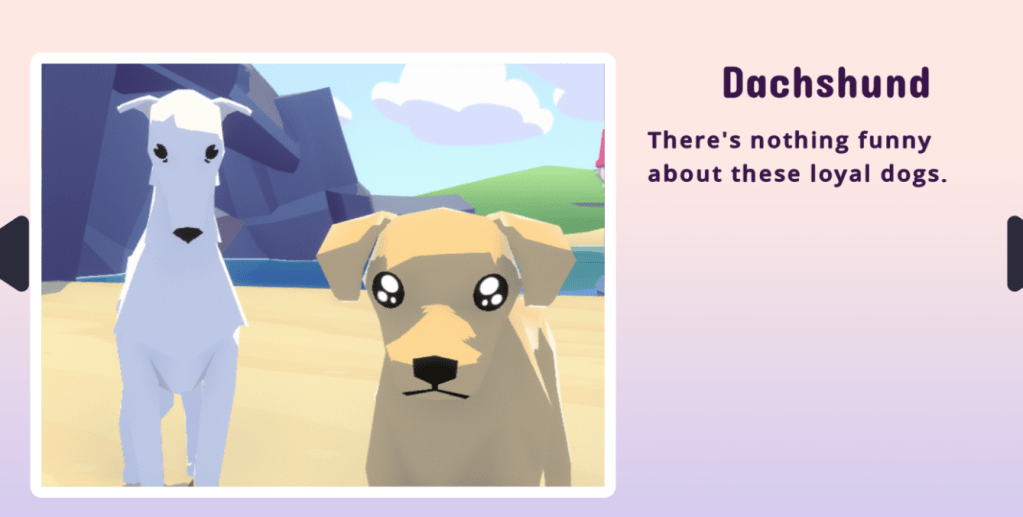
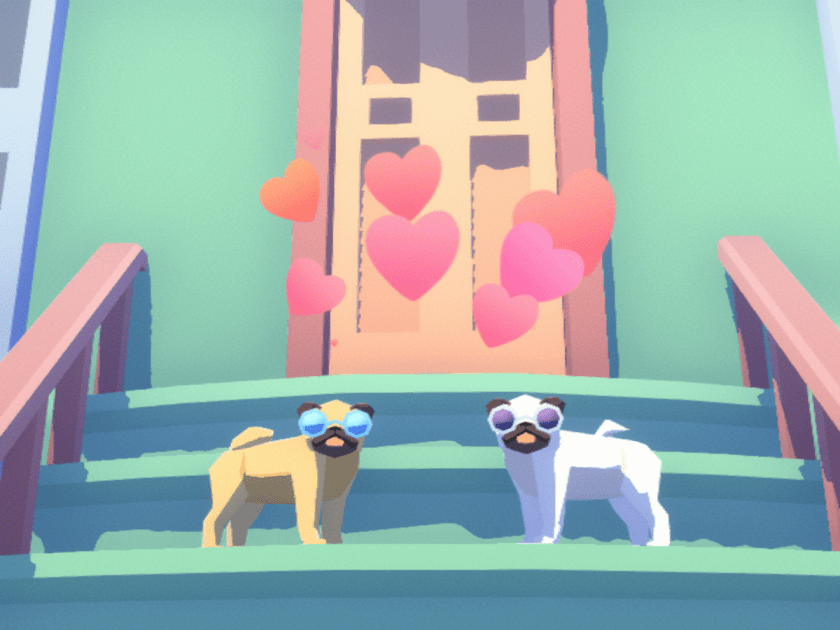
The way the dogs move is hilarious. The lack of animation in their body is perfect. It isn’t something that I thought I would like, but when you enter an environment full of these goofy dogs, you can’t help but smile. Considering they are stiff as literal boards, they still have so much personality. Their faces and responses are animated giving them a lot of character, and each breed is instantly recognisable.

When you get photo requests from clients, each dog and/or thing that you talk to have their own little Disco Elysium style character portraits. This is another touch that didn’t have to be there but gave me a chuckle when I saw them. As much as I laugh at how silly the game is, it can also be beautiful. The art style provides for some beautiful backdrops, particularly the sunsets. It would be easy to see 5 seconds of footage and think that the lack of animation is ‘lazy’, but I disagree. It only takes playing the game for 10 minutes to feel the joy that the creators have distributed throughout so many different areas. Even the player character is an unexpected but light hearted surprise.

+ The Randomisation

The levels feature a specific kind of randomness. There are dogs in different scenareos and doing different things, but the breed that you get in each of those slots is random everytime you load up the level. The fact that the dog breeds are randomised means for more unique photo opportunities between players. Sometimes it can feel like you have hit a jackpot, having specific breeds for specific moments. Other times, loading back into the level can inspire a shot that you didn’t even consider before. This was a great decision to bring even more joy to a game already filled with it. It allows for a kind of spontaneity that you couldn’t manufacture any other way.

+ The Gameplay

This is a photography game that is actually about the photography. You arent going to be learning to use a DSLR or taking photo of the year, but everything in the gameplay loops back to it. The game is structured around taking photography requests in different areas. Doing so earns you money that you can spend on lenses, filters and other items to increase the tools available to you, allowing you to take more of a variety of photos. Exploring the environment will net you new toys, which you can then use to provide new interactions and yet more photo opportunities. A few other games feature a camera as a way of gathering collectibles, but it is often a means to an end. A way of cataloguing things as opposed to getting creative with the photos. This was the first of it’s type that really made me excited about taking good pictures, by giving me everything I needed to play.  The only thing I wish was that film wasn’t also tied to that progression. On one hand, only having limited photo slots forced me to not go overboard and keep them organised. On the other, I would have enjoyed the freedom of snapping away as much as I desired.

+ Using the Camera

I really like how easy it is to jump into the camera. Right click to open camera, left click for photo, mouse wheel for zoom, wasd to move and tab for menu. Nice and simple. If you need to open the menu right as you have got a shot lined up (for example to change your filter or lens) you can do it easily and the action freezes perfectly. You can view the scene while altering your settings and it is exactly how you left it, ready and waiting for you to close the menu to get your shot. I was very grateful for the pause as I would have missed many opportunities and it would have put me off using the filters if it wasn’t so easy.

+ The Extra Things

There are some fun surprises in the game. I am not going to spoil what they are but I appreciated the additions. The final level that I unlocked was the first level at a different time of day, and despite spending a lot of time there, when I went back there was something new that made me smile. They can be small details but they make the game feel complete.

One of my goals this year is to properly learn to use my camera. This game has genuinely made me more excited for this. I have tried having photoshoots like this with dogs in real life in the past, and I am so ready to try it again.

I want to express how sorry I am for judging a book by it’s cover, but I already feel forgiven by the warm love that I felt from all of the wonderful doggos on my screen. If you enjoy dogs, taking pictures, summer vibes, silliness and/or charm, then I recommend giving this one a go. A bite-size delight.

+ Atmosphere

– Bugs

+/- Jank

+ Stylistic Choices

+ The Randomisation

+ The Gameplay

+ Using the Camera

+ The Extra Things

If you would like to see more images check out posts Hot Diggity Dog and Gone to the Dogs in my Game Photography section!

Sign up now to stay up to date with the latest posts!
A Noob’s Review – SUPERHOT

SUPERHOT broke me. It tried to break its way into my mind, but instead, it just broke it. Let me explain.

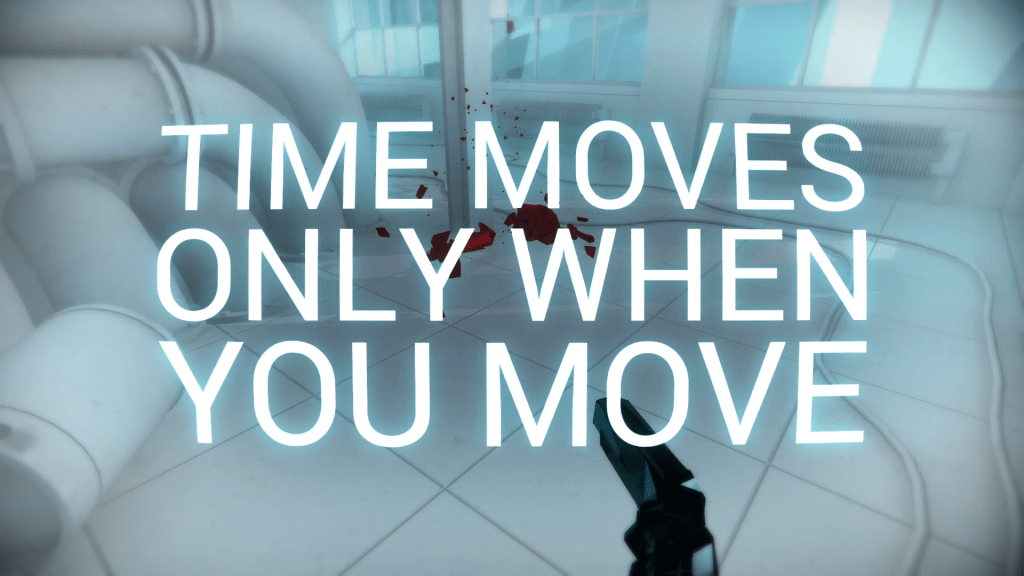
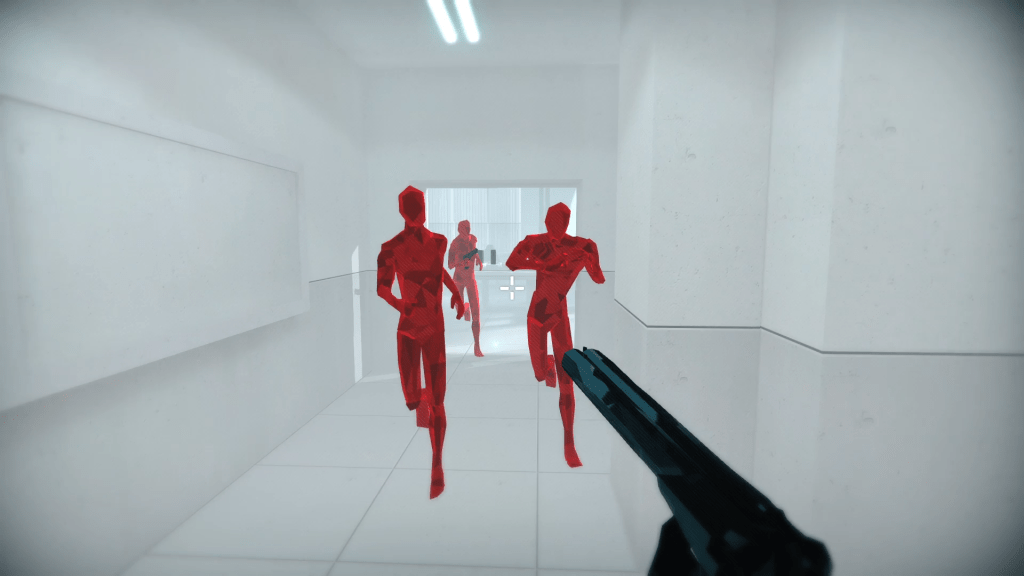
In case you don’t know, Superhot is a first person shooter. Anyone that knows me will be thinking ‘Noob? Playing a first person shooter? Wut?’. As it turns out, there is a little more to it than that. In this game, time only moves as you move. As a consequence, every move you make has to be deliberate and precise. Stay still and watch bullets moving towards you at a snails pace. Panic though and it’s game over as they speed up and hit you before you can blink. This unique mechanic allows the game to present as a corporeal puzzle game as much as it is as a shooter, which is ironic considering the incorporeal theming involved.

+ Innovation

This is a game concept that makes so much sense. Even if you have never thought about it in your life, you hear the explanation of what this game is and think “wow, of course, how come I didn’t think of that?”. And it works! There isn’t another game like it, at least gameplay wise. It is one of those titles that creates something completely new and showcases it to its full potential.

+ Aesthetic

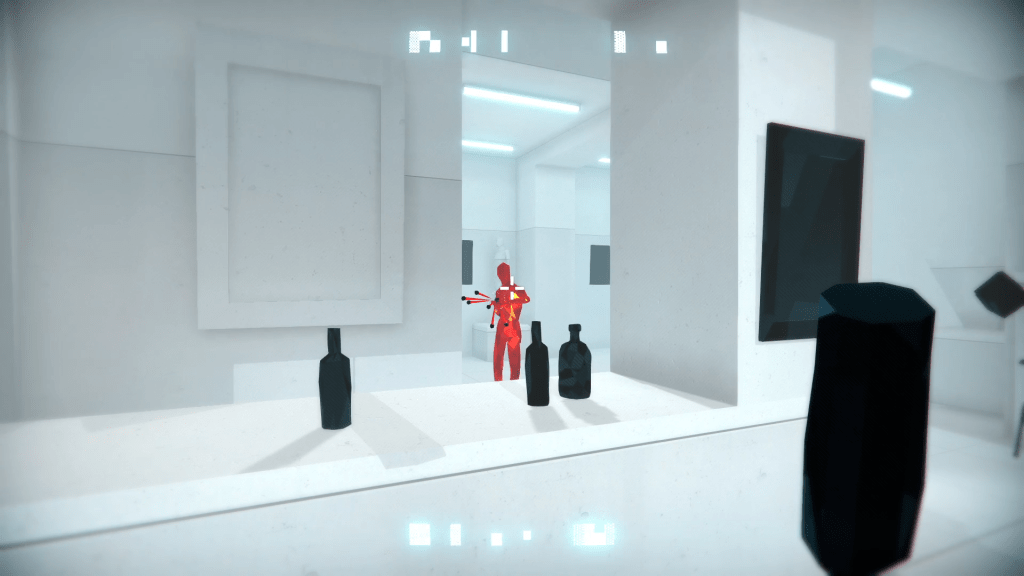
What can be seen as a simple aesthetic actually serves to be a great asset in the gameplay itself. There are three colours. White, red and black. Red = enemies. Black = objects. White = anything else. This completely eliminates any visual clutter aiding even further in the idea that the gameplay IS the game. It is distinctive, it is thematically appropriate and it is everything that it needs to be.

– Hitboxes

The hitboxes weren’t quite as precise as I would have liked considering this can be a game about millimetres. It could be technical limitations, it could be a choice to be discourage using cover, but bullets being stopped in the air by an invisible corner is frustrating when you feel you have otherwise made a good play.

+ Fast Pace

Levels vary in length but they rarely outstay their welcome. The short bursts that the game gives you allows for going ‘all in’ – getting creative without fear as dying will only set you back a couple of minutes. This can go two ways. On one hand, you can bash your head against the level until you nail it. It isn’t a problem because once you have died you are already back in the game trying again before you even have time to finish any outbursts it may have brought on. As soon as you complete it you forget the struggle, feeling like the baddest ass in all the land. Or alternatively, you nail it first time and truly are the baddest ass in all the land.

– Difficulty Curve

This is where my troubles began. I would say the difficulty throughout the game is sprinkled. Naturally, it starts off simple, but there were some early levels that tripped me up in the same way as some later levels, while there were some later levels I did easily in one try. For some, this will provide an interesting pace. For others, it may be a little more frustrating as it can be difficult to tell if you are improving at the game.

The final level, however, is something else. It is long. Mercifully, it is checkpointed, but that didn’t save me. The previous levels contained more strategically placed enemies, highlighting the puzzle element that I mentioned earlier. This level though is – for lack of a better phrase – on another level. Personally for me, it felt different from all the rest of the game. Yes, it felt climactic, but also it lost a lot of what I enjoyed about the previous sections. I don’t want to say specifically why as that is spoiler territory, but my strategies weren’t working and I couldn’t find a set answer to get through it. This, sadly, marked the end of my Superhot experience. The frustration outweighed the potential pleasure of succeeding and I had my first ever on stream rage quit. As it turns out, I had been probably around 15 seconds from completing the game, but unfortunately I have no desire to return.

+ Story

I like the story this game is telling and more so the way it tells it. It is brief, it is memorable and it uses the medium well. As you progress an unsettled feeling creeps in and the further you go, the more it grows. It plays with ideas of control and reality, and it was always welcome to check back in at the pc every few levels.

Upon putting it down, I vowed never to go back to this game. As much of a shame that it is that it ended this way, I still had fun in the lead up. The short snappy levels were great fun and when something works out well, it truly feels superhuman. Punching an enemy in the face and catching their gun to then shoot them in the face isn’t something that you get to do very often and while it may be a novelty, it doesn’t lose its appeal for the duration of the game.

SUPERHOT wanted me to complete the game, so in a way, technically, the fact that I quit actually means that means I won. So with that in mind, to conclude.. SUCK IT SUPERHOT. I BEAT YOU.

+ Innovation

+ Aesthetic

– Hitboxes

– Difficulty Curve

+ Story

If you would like to see ALMOST the full game then you can here!

Sign up now to stay up to date with the latest posts!

A Noob’s Review – Moonlighter

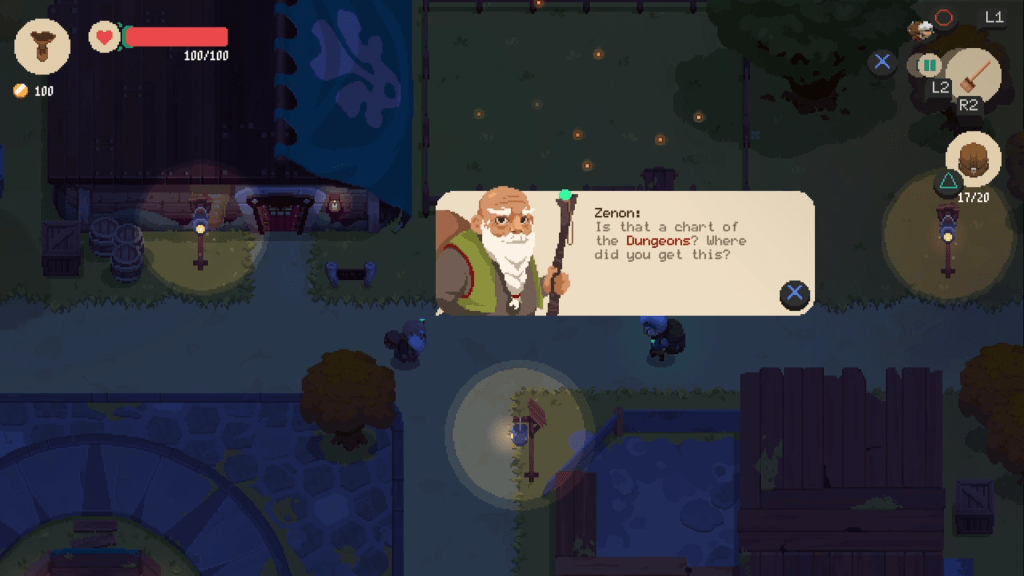
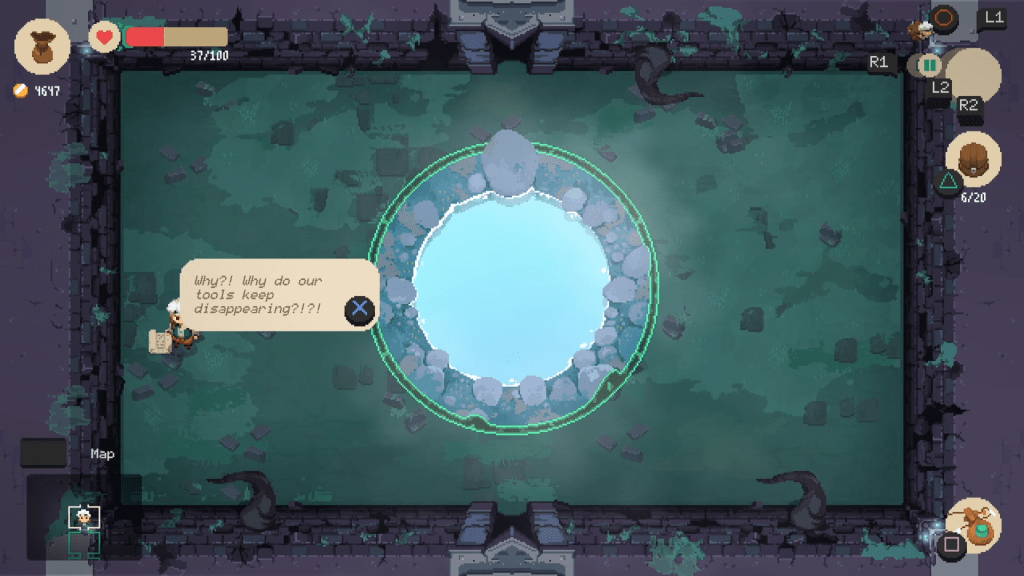
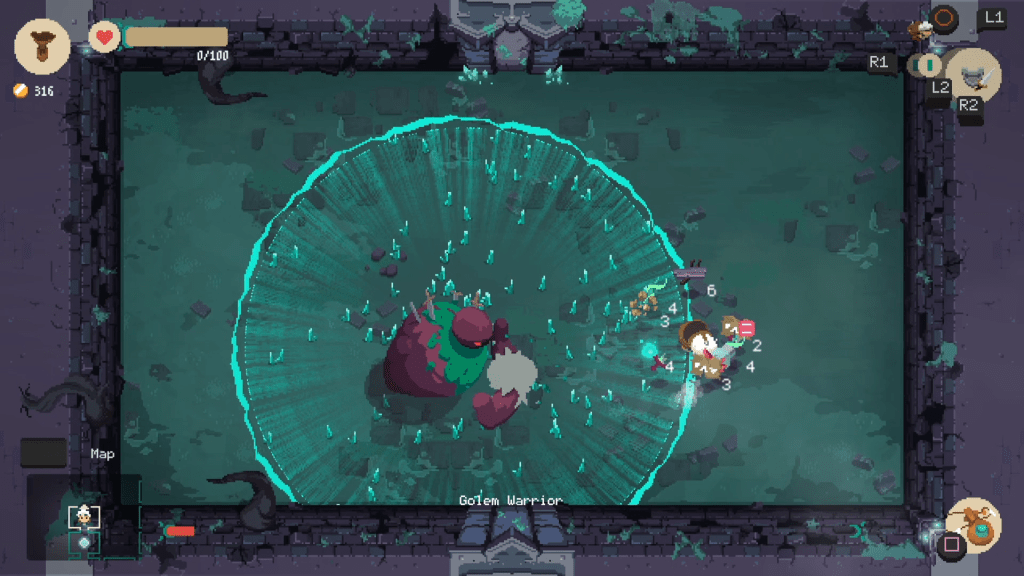
Moonlighter is a game in which you hunt for treasures by night, and sell them by day. Both of these jobs create two different modes which construct the daily flow of the game. The dungeons you pillage are randomized in a rogue-like fashion. The further you get into a dungeon, the more valuable loot you will find. Kill the main boss to complete the dungeon and unlock the next one, with a new biome and new loot. Throughout the journey you will be fighting creatures, finding notes and organizing your bag in order to maximize your haul. What is the catch here you may be wondering? Well.. If you die you lose the majority of the loot that you have collected that night. It becomes a game of deciding whether you dare go into the next room. There may be enemies that could kill you, but there also may be a healing pool or something worth everything you have already collected combined. Do you want to risk it all? Or are you satisfied to come back another day.

The second half of this game is managing your shop. Almost everything that you find is sellable. Your job is to figure out the optimal price to sell these items. Price them too low and you are missing out on valuable cash, but price them too high and they will not sell or customer demand for said item will plummet. The game kindly provides you with a book that updates automatically to allow you to focus on pricing up the new goods while quickly selling old ones. Another catch? A lot of what you find are also materials that you will need to upgrade your equipment, so you have to make some decisions – managing money vs benefit when it comes to what you sell. My advice? Prioritize upgrading every time. It makes a huge difference as you can spend longer in the dungeons, allowing you to bring even more valuable loot home. And thus, the loop continues.

+ A Good Podcast Game

My favourite thing about this game is that it is a great podcast game. By which I mean, once you are used to the mechanics and know what you are doing, you can easily put on your favourite podcast and listen away.

– The Combat

I am so hit and miss with combat that anyone would be forgiven for taking my opinion with a grain of salt. However, I found the combat to feel really clunky. Hitboxes were strange, it didn’t feel super responsive and I never really got the hang of it. The first thing that I did was rebound the controls (excellent feature I am always happy to see) to feel more familiar which helped some, but the further I got it never felt better. The only thing that helped me make progress was upgrading my equipment. Of course, that is to be expected, but I never felt like I was improving as a player. I was still feeling as frustrated by the end as I was at the beginning. By the fourth dungeon I ended up turning down the difficulty because I just wasn’t having fun with it. Granted, I am used to playing The Binding of Isaac where you can attack in a different direction than you are facing. You can’t do that here and I felt it a lot. It resulted in lots of running into enemies while trying to face them, taking damage in the process.

+/- The Progression

This being a pro or a con really depends on how much you enjoy the core loop. I did enjoy the loop, but I was excited to see how it was going to progress as I unlocked new areas and facilities in the town. Unfortunately for me, I didn’t enjoy the direction it took. The best way that I can describe it is – more of the same but with a few added annoyances. The dungeons and your gear upgrades all follow the same patterns with a couple of changes here and there. That was fine. It was the shop progression that I had a bit of an issue with. As an example, the larger your shop grows, new mechanics are introduced. One of them is a bird flying into your shop. You have to chase it around and catch it by pressing X. It startles the customers and everyone freezes until you catch it. The first time this happened was fine, but it happened around the same time every single day, with the bird flying in the same predictable pattern. It wasn’t a challenge or a delight. It was just a thing that happened to give you something to do and it didn’t add anything. In fact the opposite, it developed to be quite annoying. I do enjoy how the variety of customers grows as your shop does, but I hoped for more in the shop itself. 

+ The Ease of Use Features

Simple mechanics such as moving everything to and from chests, easily being able to pick up individual items or stacks, sorting via price, getting rid of items mid dungeon, automatically updating my price book, being able to see my price book easily mid looting, and having a wish list option that highlights crafting materials you need as you find them, were all very gratefully received by me. Often when I thought ‘I wish I could do this’ my thought was cut short because the game had already given me a way to do it.

– Valuing items becomes finicky

To create more challenge and variety, your book doesn’t store item price data if the item is in high demand when it is sold. That means that you can charge more than normal for profit, but the number doesn’t get saved. I wish there was a separate section for recording this data. In addition, it doesn’t save the price for certain customers. This can result in an attempt to figure out the best price of a particular item thwarted because some rich or interested dude bought it. This then gets frustrating becasue you not only have to remember the item and price range that you were working with, but find it again and try another day where it is just as likely to happen again. By the third dungeon I would say around 95% of my prices were not getting recorded and it was really frustrating because figuring out the price boundaries was my favourite part of the game. I loved testing the boundaries, slowly testing the maximum I could get without being too cheeky. This aspect was completely taken away due to the progression of the mechanics and instead turned into annoying robbers and just trying to sell everything as fast as I could. It improved slightly in the fourth dungeon but by then I felt defeated. It had me questioning whether my game was bugged, a question I still don’t know the answer to.

– Some Minor Technical Issues

Every time I pressed X – from entering a dungeon to reading a note – the game would switch my weapons. Which would mean I would run up to punch an enemy only to slowly shoot an arrow in their face because I didn’t realise it had switched. This isn’t game ruining at all, but it was an annoyance that added onto previous ones. I also had some chugging and framerate drops occasionally which felt a little strange in a 2D top down game like this.

+ The Familiars

You can happen upon eggs in the dungeons that after a few days hatch into little friends that aid you during your dungeoneering. I loved this addition. They were cute and had some legitimately interesting perks.

– The Notes

There are notes you can find throughout the dungeons and every time I found one I felt excited. They are there to give the player some hints and add some flavour. I just wish they were a bit more interesting. It didn’t take long at all for them to start repeating and I found them to be quite generic. Occasionally it would be a hint for something that I figured out 2 dungeons ago, and it just ended up feeling very disappointing.

Ultimately, the first couple of hours of was my favourite part of the time that I spent with this game. Where I thought it was going based on those first hours and where it actually went turned out to be a little different, which was unfortunate for me. My favourite part of the game was gradually made worse by strange mechanics rather than staying the same or improving, to the point that I pretty much gave up on it. I started my first few hours wanting to craft every weapon to the highest level, but by the end I was just trying to finish the game. It could be that it is just not for me, but what I really think happened is the niggles that I mentioned above wore me down. The later the game, the more niggly mechanics were added which added to the wear down. I think it is a fantastic, fun core concept for a game that was brought down by a few small things. That all being said, if you go in with the expectations set by everything written above then it is a nice game to keep your hands busy while you listen to podcasts.

+ A Good Podcast Game

– The Combat

+/- The Progression

+ The ease of use features

– Valuing items becomes finicky

– Some minor technical issues

+ The Familiars

– The Notes

If you would like to see my first few hours with the game then you can here!

Sign up now to stay up to date with the latest posts!
A Noob’s Review – AI: The Somnium Files

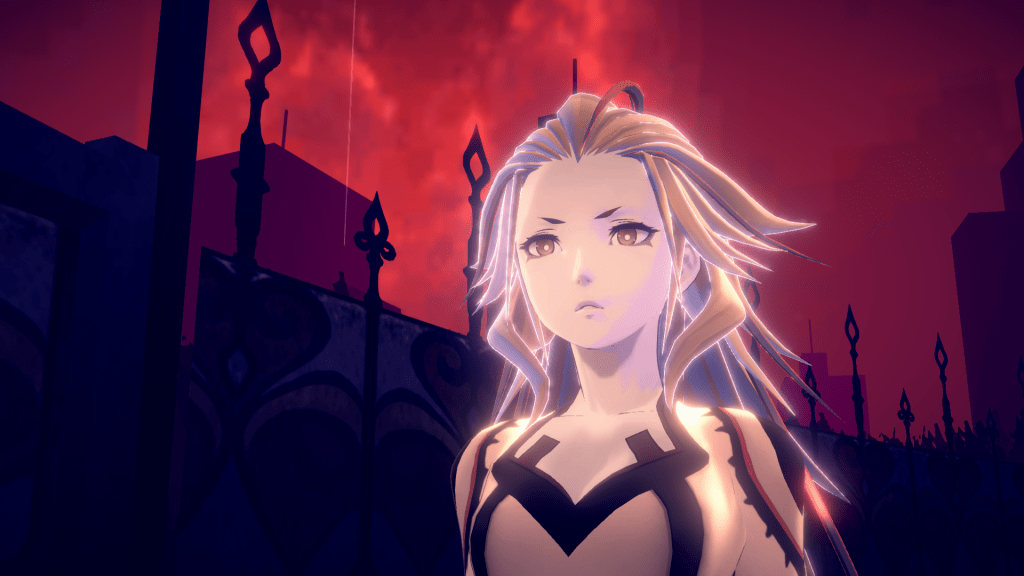
I went into this expecting a visual novel akin to the Zero Escape series, a series that I have covered to completion on my channel. What I found was that the similarities are few and far between, and I think that if this is a visual novel, then it is on the very border of the definition of the genre. That is by no means a complaint. While a lot of the mechanical differences didn’t hit for me, the story (which has to be core of any game that identifies as a visual novel) succeeds in telling a thrilling murder mystery, in a world where the gritty, shocking atmosphere doesn’t get bogged down by the sci fi elements, but is rather enhanced by them.

+ The Story

Something that I think is important to note is that everyone may get a very different experience of the story depending on the choices you make. The game has a flowchart structure where you follow a route to completion, then go back and change your choice to see what happens in different scenarios. By the end, you will have the same information as anyone else, but the journey in which you got there could be vastly different. I personally believe I got all of the endings in an order that was specifically curated for my tastes (anticlockwise around the flowchart for anyone that is curious) and feel very lucky for doing so. Following this route, the story ramped up very far very quickly and I was hooked. The mysteries had me desperate to see what was going to be around the next corner.

Looking back, it must be some good story telling that it had me guessing so many theories. Some were close, some were mildly correct, and some were way off. Allowing you to have this variety of thoughts, and yet the actual answers being satisfying too is a credit to the writers. I think my favourite thing about this developer is the ability to allow your imagination to go wild, misguide you and leave you asking questions right to the end. They did that well in the Zero Escape series and they were successful here too.

+/- The Writing

While I was praising the writing of the story above, the writing of dialogue can go from great, to so annoying that I don’t even know why I am playing. The player character is a man named Date. Don’t get me wrong, Date isn’t the only one guilty of this. But obviously that doesn’t make it any better. It makes it worse, because you don’t only have to endure it from him but others too. I do like his character sometimes but it gets overshadow by how perverted he is. The occasional lewd joke, sure, why not. But every scene has something. Some have multiple, and it is just not funny. It comes across as juvenile to me and makes me grateful that I didn’t stream or record this game. That way, I could just roll my eyes and move on instead of having to take in what was being said.

+/- The Characters

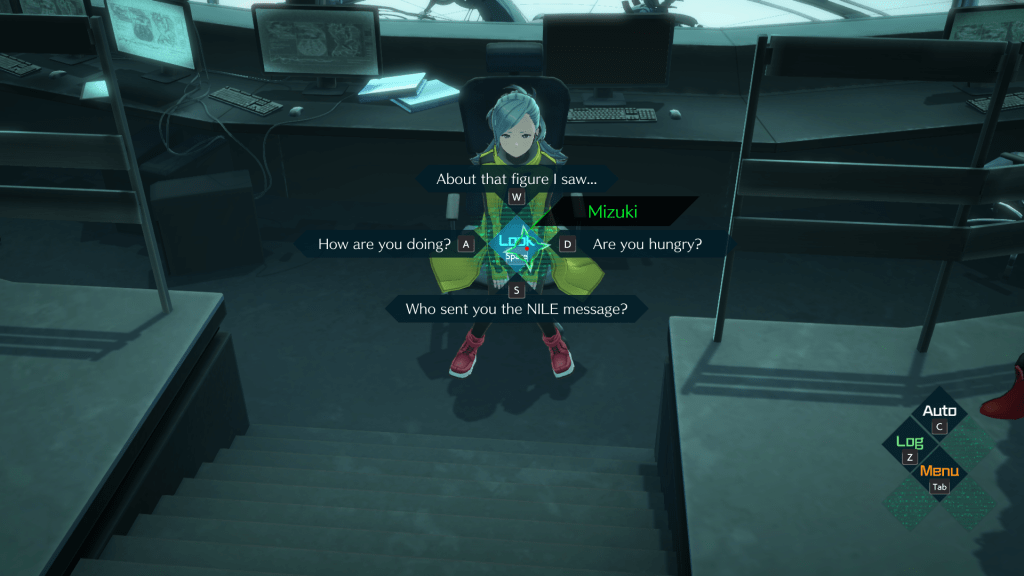
The Characters are such a mixed bag for me. Some of them feel very over the top to be almost caricature-ish. It is impossible to explain why without spoiling the game so I won’t go too deeply into it, but Mizuki and Mayumi were great to me. Iris and Ota not so much.

+ AI

AI, Eye, Aiba. I had no idea what this game was about when I started. All I knew is that it had a title that made no sense to me. The game very quickly explains the deal with AI and I was into it instantly. I am very attached to my eyes – something happening to them is probably one of my biggest bodily fears – but I do think I would give one up if it meant I could have an AI. Also, her physical form is frickin adorable.

– The Somnium Puzzle Sections

Where the Zero Escape series had novel sections and escape room sections, AI has a little more variety. The bulk of the puzzle sections though are the Somnium puzzles. In these sections you are exploring various dreamscapes, investigating for clues and progress by interacting with objects. So far this sounds like something I would love, but it is completely ruined by the time mechanics. Every Somnium has a 6 minute time limit. Every action you do costs a certain amount of time. Some interactions give you modifiers that you can choose when to use (for example one modifier might make an interaction take exactly 30 seconds, another might make it take an eighth as long as it was going to). If you happen to get a bad modifier then your next action will take double time or more. At first I thought this could be neat. It is something new that I hadn’t seen before. But actually playing it doesn’t work on so many levels. Firstly, if I am in a dreamscape, that is super interesting! I want to be able to explore without consequence. Secondly, it is not intuitive which actions are going to help you progress, sometimes its something completely unexpected. Thirdly, what if I want to try out all of the silly interactions? Well if that’s the case then be prepared have to go through the convoluted retry system or start again from the beginning. If you do need to restart you can fast forward text, but that is no fun to me. In the end I gave each Somnium one try, then as I was running out of time I would pull up a guide because I found replaying so tedius. Finally, these puzzle sections are where the story branches happen. The trouble is that there is no way of knowing what interaction you make is going to take you down what path. Like I stated before, I am very lucky that I got the story in the perfect order for me, but that was literally just luck becasue I had no idea what direction I was taking things. In the Zero Escape series you make blind choices that lead to different paths, but at least in that game you can base your decisions on who you would like to spend more time with. In this one, you don’t even necessarily know you are making a choice till you have commited by interacting with a random object.

+/- The Other Mechanics

As I mentioned before, this game is more interactive than many other visual novels. What would often be a novel section in other games can almost be a point and click section in this one. You can look around your environment, clicking on everything and hearing comments from your own character as well as others around you. I really enjoyed this to start with, but it gets repetitive. I bet by the end most people are no longer clicking on the background objects. The problem is, they do throw in some new lines every now and again, but you never know when. So you either go through the tedium of clicking on every object due to fear of missing out, or you miss out on some character quirks and jokes. This section is also used to ask characters questions which I enjoyed.

There are some other sections too. This game contains action. And with action comes quick time events. These were fine. If anything I think I would have preferred to just watch the action rather than doing the QTEs. I am not sure what happens if you miss them so I can’t comment on that, but if you have to start the section again that would suck, it would ruin the pacing just as much as replaying a somnium does.

Finally, since you are a detective, there are interrogation sections. Unfortunatly there arent much to them, but I did like them none the less. You will be presented with a question and a few clues and you have to pick out the relevant answers. It is simple but it is nice while you are in the process of putting things together. If you choose the wrong one then Aiba will tell you, so there is no failstate.

+/- The Audio

As mixed as I have been with everything else, I am also mixed on this too. I don’t find the soundtrack very memorable. They did reuse some sound effects from the Zero Escape series which took me out of the game a little bit. There are occasions where you have to sit through an extended section of pop music and I was sat there like ‘oh my god, is this still going’. The best part of the audio though is that it is fully voice acted, and I think the majority of the actors did a great job. I enjoy hearing what each character sounds like as it gives them their own personality, more so than if I was just reading all of their lines.  

I have tried to be as spoiler free as possible because the less you know the better, but also I believe knowing the caveats in advance can help set expectations and should hopefully improve the experience for anyone reading. Despite all of the problems I had, I still recommend this game if you have the patience, because the mystery was great and I really enjoyed the story. I am curious if any of my problems have been improved upon in the sequel! 

+ The Story

+/- The Writing

+/- The Characters

+ AI

The Somnium Puzzle Sections

+/- The Other Mechanics

+/- The Audio

Sign up now to stay up to date with the latest posts!

A Noob’s Review – PowerWash Simulator

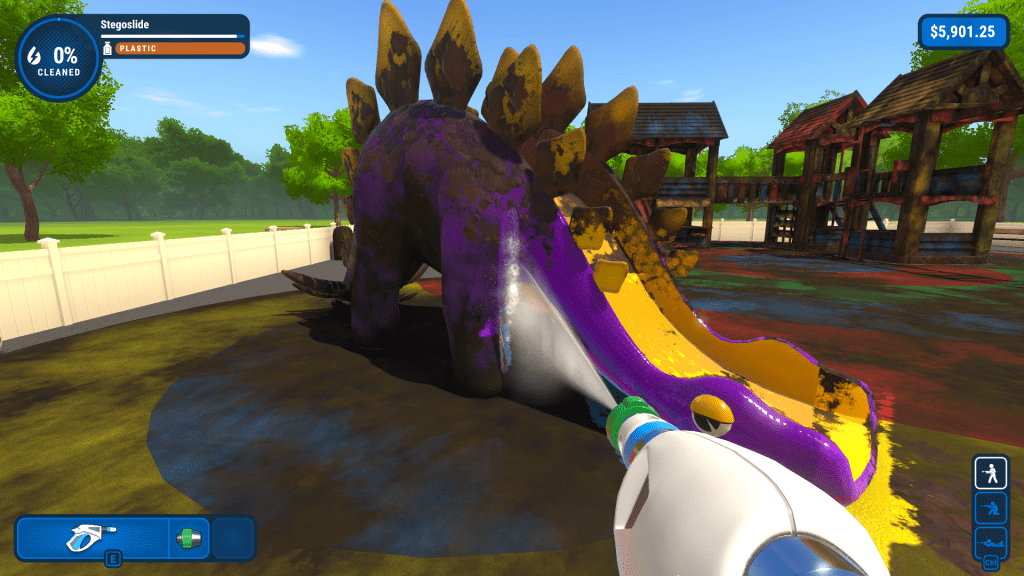
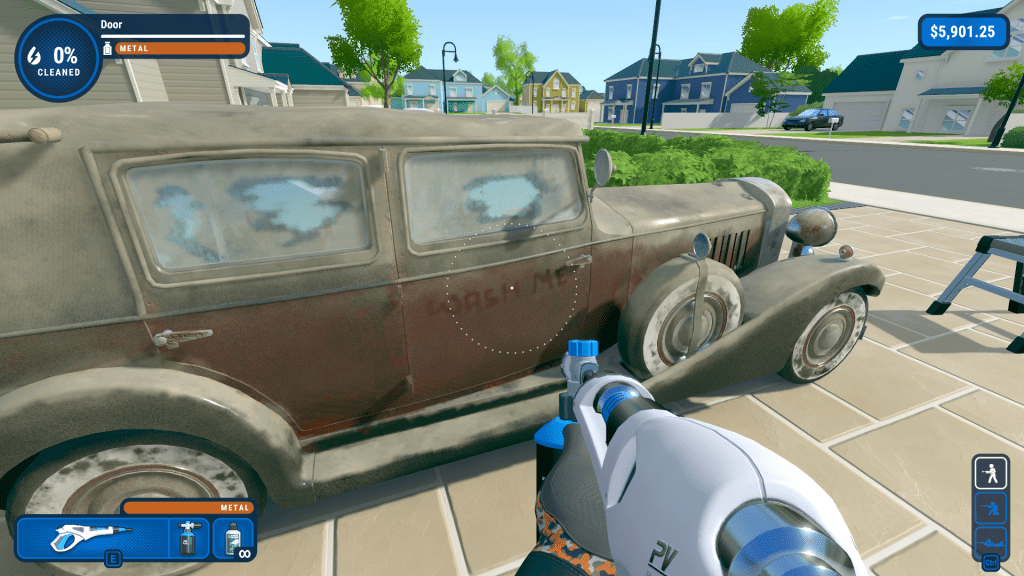
Playing PowerWash Simulator is like using a colouring book. It is something mindless to keep your hands and a specific part of your brain busy while you are doing something else such as watching a show or listening to a podcast. I never intended on finishing this game but I have had a challenging month, and this game turned out to be the perfect white noise that I needed to get by. It has a very similar feeling to the paint-by-numbers game I play on my phone when I want to pass time without engaging my brain.

+ (Non-)realism

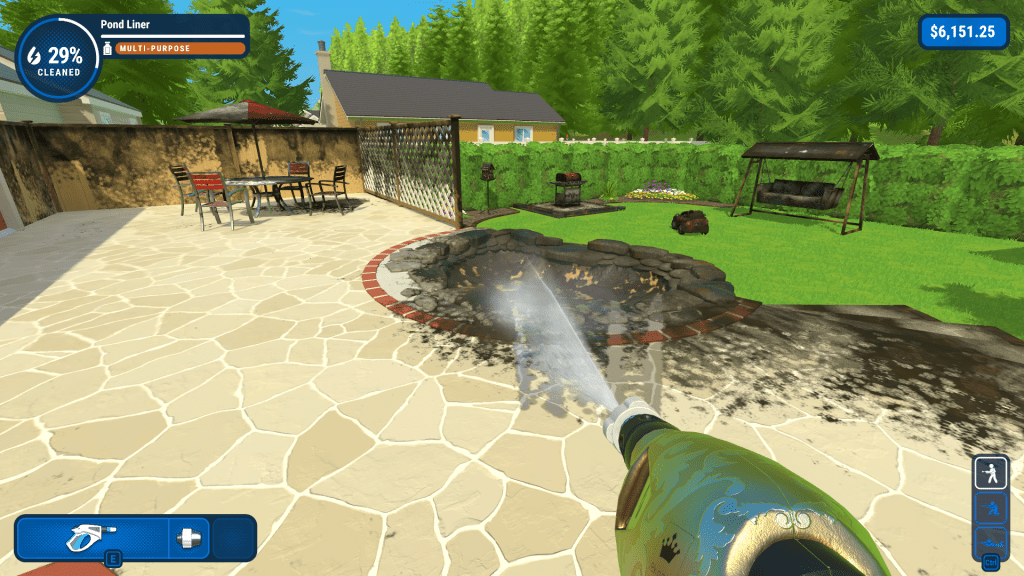
Upon cleaning my first van I felt slightly irritated. Bugged by the fact that this is not how cleaning works. I can be a very systematic person. I have a set way that I wash my dishes, and that is because cleaning is annoying and awkward and putting things in water doesn’t = clean. So imagine my confusion when this game allowed me to clean the windows of the vehicle before I did the roof. How could that be? Everyone knows the dirt would come off the roof and re-dirty the parts you have already cleaned. This was against the laws of cleaning nature and I had a hard time accepting it. I finished up my now squeaky clean van and got to work on a huge garden. Slightly overwhelmed, I started on the fences and worked my way around. But then while I was doing the fences, I may as well do the floor between them. But I hadn’t done that bench yet so I should probably do that too. Then it clicked. If this game had real life cleaning physics it would be unbearable. It would go from an alternative to colouring in, to absolute chore simulator. I thanked the game dev gods that it wasnt me making this game, petitioning to make it realistic. Instead, they took fun and convenience into consideration, which enabled my compulsion to do things in any order that made sense to me in that very moment without consequence.

+/- The Compulsionism

I found my rhythm by the end of the game. Go around the edges of things, then do the betweeny parts. The only problem with this – how do you ever stop. Everytime I splash a bit of water onto a new section, I feel like I have signed my soul to a soapy devil and I am now committed to finishing this piece. Do my edges, splash onto the next area, sign a new contract, rinse, repeat. It is very hard to stop. Some times it feels less out of enjoyment and more of a duty. Of course, this isn’t a problem with the game, this is entirely in my head and if anything, it shows good game design. Not being able to put a game down is often a goal in making a game and usually the sign of a successful one.

– Bugs

I had a couple of bugs while playing. One time I got stuck somewhere unable to move. Then there were multiple times where my ‘show me the dirt’ button wasn’t working. Thankfully all of these were solved by either leaving then re-entering the level, or restarting the game. Nothing too major, just little annoyances but I could never tell when they were going to happen.

+/- Navigation

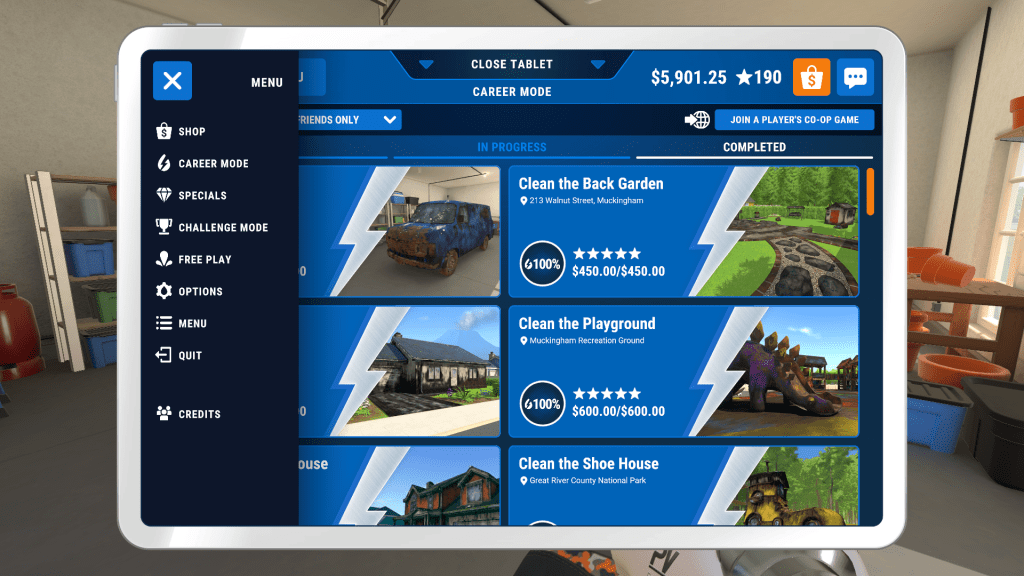
The menu is generally laid out well. It is really easy to jump between levels in seconds should you need to. It is designed as a tablet which works well with the theming of a mobile business. You can use the menu button to get a list of things like ‘Shop’ and ‘Settings’. That was all very clear. What wasn’t as clear to me was how to change your clothes. Throughout your cleaning career you are constantly opening your equiptment tab to change the length of your machine, so often that you cease to actually see the menu. What I didnt notice is that within that tab there is a clothing tab. I only realised after a google search because I was near the end of the game and desperate to try on my new gear. I never actually figured out how to change the skin of my Power Washer until I purposefully reloaded the game to figure it out specifically for this review. It is a triangle on top of a tab and it is so easy to miss. Again, only minor things but they felt worth mentioning.

+ Game Modes

Career mode is the bulk of the game. You will receive texts from clients offering you jobs. Near the beginning you can often choose between two or three, but by the end it becomes one at a time. As you complete jobs you will earn stars which will unlock upgrades in the shop, and money that will allow you to buy said upgrades. When you are done with career mode you can use free play mode to redo previous areas with all of the shiny equiptment and unlimited soap supplies. Also, there are special levels that contain 4 novelty scenarios to clean. I wonder if this is going to be added to over time. Co-op mode is an option if you want to clean with your friends, or just clean you friends. Finally, there are challenge modes, including time challenges and water usage. I tried and failed a time challenge three times before I gave up. I am no speed cleaner but they are there for others if you are up for perfecting your power washing technique.

+ Story

Wait.. This game has a story? Actually, kind of! As you play through career mode you will recieve funny texts that may or may not be related to the job you are doing. Admittedly, I was so absorbed in my podcasts (Bonfireside Chat in case anyone was wondering) that I didn’t read them for most of the game. As I got to the final third or quarter of the game, things begun happening and the messages were catching my eye more and more. At this point, I was ready to stop. When I started flagging I went to trusty google to see how many levels were left, and seeing some of the titles of said levels gave me a bit of a second wind. True enough, I was then committed and had to see it all the way through to the end. I had to know what would happen. The game has a fun tone and it really works in its favour.

+ The little things

There was something so joyful about seeing something you have previously cleaned show up on a level. One example is seeing vehicles you have previously cleaned in the background of your current job. It happens more as the game goes on and consistently gave me a little dopamine boost.

+/- It’s a time sink

If I can loop back round to the intro, you can spend a lot of hours in this game. On one hand, fantastic. My time is filled without allowing and creeping thoughts or problems. Just keep washing. On the other hand though, where the hell did my time go? So many hours… down the drain (hur hur).

I think that is all I have to say about PowerWash Simulator! Overall, I finished the game. Considering I cleaned every inch of this world, I still feel so dirty that I put so many hours into it. Truth is, it is so much easier than cleaning in real life but has a similar satisfying effect. Trouble is, you then stand up from your computer and realise that there will always still be cleaning to do in real life. It served me well, but I am pretty happy to be hanging up my Prime Vista PRO for good.

+ (Non-)realism

+/- The Compulsionism

Bugs

+/- Navigation

+ Game Modes

+ Story

+ The little things

+/- It’s a time sink

Sign up now to stay up to date with the latest posts!
A Noob’s Review – Hades

I feel I need to start this one with a disclaimer. Reviews are subjective. I am going to talk about my experience with the game as a person who doesn’t play games for their combat. People who like the challenge may disagree with what I say, as I have seen many people online say this game is too easy. I, personally, am not a god at video games. I can only talk from my own point of view, that this game can also be great for people like me, even if it does have its drawbacks.

+ The Premise

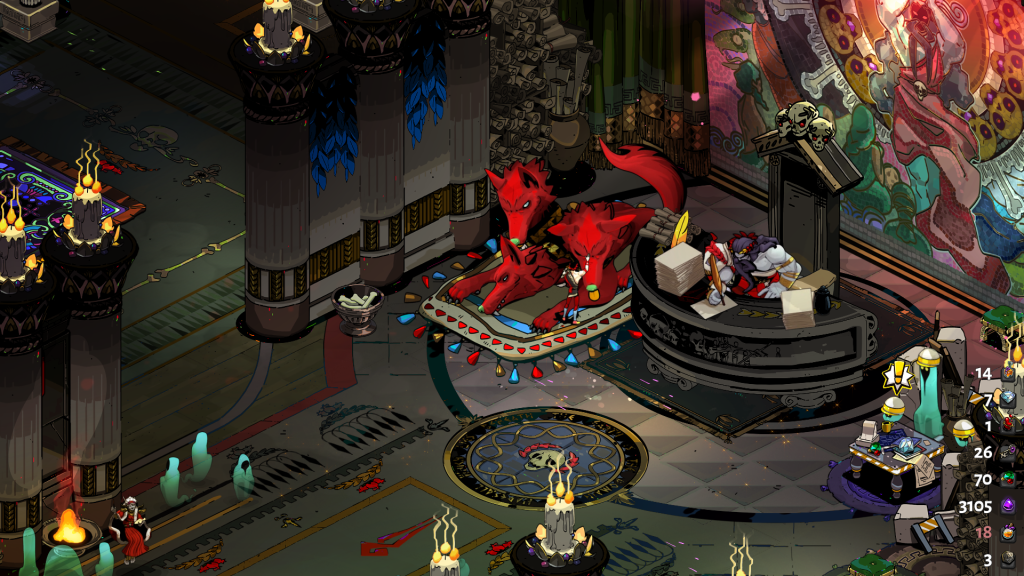
Alright, so Hades is an artistic, stylish rogue-lite based in Greek Mythology. We play as Zagreus – the Son of Hades – and we have one goal. Escaping the underworld. Everytime you die you are transported back home, which makes sense as that is where the majority of the dead end up sooner or later. This alone is such a fantastic concept. I love when game mechanics are tied to the story and I can think of no better set up for a rouge-lite. Throughout our escape attempts, our family on Olympus will offer us aid in the form of boons and this is where the classic roguelike gameplay factors in. Different perks combine in different ways to allow a variety of playstyles. Throughout our escape attempts – and eventually escapes – we get more and more story, be it characterisation of the gods, or directly talking to everyone back home. We also get more and more mechanics, including weapons to shake up your playstyle and difficulty modifiers, for better or worse. The best part of this set up is that death doesn’t always feel bad. In fact, sometimes I wanted a death just so that I could go back to the house and see what everyone was up to.

+ Aesthetics

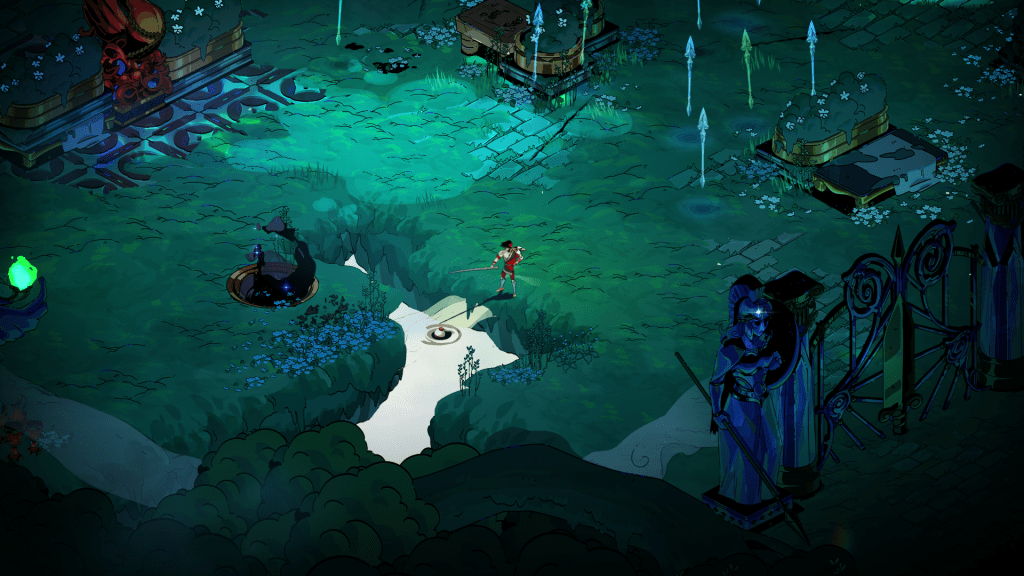
At first, when I had only seen others play and not played myself, I didn’t love the aesthetics. Everyone was raving about them but I didn’t really get it until I tried it myself. You would think that the staple colours of red and green would shout Christmas. But they dont. Instead they evoke this regal hell. Rather than a festive cheer, it feels expensive and strict, yet also has a sense of home. The music is so good, everytime I start a run my head has to bob, it is perfect to hype you up for the challenge ahead. There is also diegetic music that is appropriately beautiful and evolves in fun ways as you go. The art in both the portraits of the characters and the movement itself is quite busy, but so unique. When things are busy sometimes my senses freeze up, but once I got used to it I really enjoyed looking at the details put into the characters. Then somehow everything also looks great when it moves. Overall, they took a premise that is already fantastic on its own, but then executed it so stylishly that it oozes personality.

+ The Voices/Dialogue

Before I was familiar with the game I heard a lot of praise for the voice acting. This was another thing that I didn’t really ‘get’ when I started playing myself. I don’t find them traditionally ‘good’. I do find them very stylised in a way that once I got used to it, I loved. As an example, lots of lines are read very quickly and don’t seem to pause in places that you would usually pause. Or there would be no gap between sentences. It felt very unnatural to me for a while, but in the end I feel like it becomes a defining factor in the style of the game. What I do love about the voices are the effects that are used on them. Some of the characters in the game are even beyond gods, and the audio designers did a fantastic job of creating ethereal effects that really characterise the way they speak. This, on top of the fun dialogue and the beautiful art, creates these very evocative and memorable characters, even if we do only meet them one line at a time. There is also so much dialogue. It will be a long time before you hear anything repeated. It is very impressive and a great hook to keep you coming back for more.

+ The Family Dynamics

Family drama is something that can be hit or miss. In real life, it SUCKS. But when that family are Greek Gods? There is something very enticing to be involved in the dynamics of these extremely powerful, extremely temperamental folk. I don’t know much about mythology in general, but I do know a lot of these characters are known for being petty, dishing out punishments, holding grudges etc. I do also believe they know how to have a good time. So having these colourful characters as our uncles and cousins and such was a rush. I didn’t trust them at all, but they so were fun to interact with. The family dynamics in the house are great too and you get to know more as you progress through the game. I really started to care and as dysfunctional as it is, some qualities shine through that you root for.

– The Difficulty Curve

Moving onto the gameplay itself, it is a very mixed bag for me. I am not that experienced with roguelikes but I do know that the more you play, the better you get. You learn the game and you improve. I did enjoy the process in the beginning, however there are certain blocks that felt like a huge wall to me. I managed to overcome some of them, but that doesnt stop them from becoming tedious. Without spoiling too much, the third area enemies often have a lot of armour and can respawn. It would sometimes take me minutes to complete a room. It was frustrating and boring. That might not sound like much but when you have been flying through the first area it feels like molasses. The same thing goes for bosses beyond the second area, I just don’t enjoy them. Thankfully, with every run you are collecting darkness and other items which you can use to upgrade your character. For me though, the satisfaction of coming back upgraded and getting further does not overcome the frustration of the halt of progress in the first place. (This may sound like I just don’t like rogue-lites. The only real point of reference I have is The Binding of Isaac, and I feel like that game moves a lot faster while also having more to think about, so there is less time to be bored). It is not a good feeling when over half of a run feels like a slog and I sometimes feel like throwing it because I can’t be bothered with the boss.

+ God Mode

God Mode is genius and I thank the Devs so much for including it. If you are playing for the story rather than the challenge, God Mode is an optional setting that can progressively make the game easier until it balances out at your level. Every time you die, you will gain a bonus to your damage reduction stat. Meaning enemies will hurt you less. You can turn this on or off at any time and it was a life saver for me. I played the game without it until I got my first clear. To get to credits you need 10 clears. I kept playing and playing but I wasn’t getting any more clears. Then the tedium mentioned above set in. I decided to turn on God Mode and it was the best decision I made. Two clears in a row and my enthusiasm for the game was back. After dying a few more times I reached the correct difficulty for me and got an 8 win streak. These weren’t easy wins either, it was just right that it was down to the wire most times. I urge you that if you are finding it tedious, getting bored, or doing a collect-a-thon, use God Mode. I certainly wouldn’t have got as far as I did without it.

+/- The Pacing

In a game with two distinct sections (gameplay during runs then story time and upgrading between) it was always going to be hard to pace it well. For a lot of people, the story sections ruin the pace of the gameplay. They are ready to jump straight back in but have to go around talking to everyone, breaking their momentum. For me, it was the other way around and play almost felt too long. I wanted to be back at the house for the next story beats and to upgrade my stuff. Based on those two types of players, I don’t really see how they could have a middle ground. It is not detrimental to the game, but it is a common complaint that I have heard and felt myself occasionally, even if it is opposite ends of a spectrum.

+ Other Objectives

There is a lot more to do than just clearing runs. These aren’t things that you have to do but are an option if you need something other than combat like I do. Some characters have side quests that you progress by gifting them items between runs. You can improve relationships, unlocking new dialogue and scenes. Then there are the Boons. If you are a compulsive list taker like me, collecting every Boon is so much fun. Some Boons require you to have other Boons first, and navigating that was a game that I enjoyed more than getting clears. I have officially collected them all and really enjoyed doing so. By the end, every fated choice (one you havent picked up yet) received a celebratory fist bump from me. There are also heat levels that you can unlock to make the game more difficult if you are so inclined. All of these things provide rewards that you can either put towards improving more runs, or buying house fashion.

I hope that if anything, this review shows that Hades can be enjoyed by many different types of people. It is very accessible as a first foray into the genre, while equally providing a new challenge for the genre savvy. While I don’t think it is a perfect game, I do believe it deserved all of the love, praise and awards it recieved. By the end, the game was leaving Game Pass so I was rushing to complete everything that I wanted to. I really don’t think this is the way to play. Chipping away with a few runs here and there after the initial addiction keeps the runs more palatable in my opinion. You can definitely have too much of a good thing! Having said that, it has provided me with many hours of entertainment and I will think back on it very fondly.

+ The Premise

+ The Aesthetics

+ The Voices/Dialogue

The Difficulty Curve

+ God Mode

+/- The Pacing

+ Other Objectives

I streamed my entire journey to my first clear!

Sign up now to stay up to date with the latest posts!

A Noob’s Review – Stray

This year I have been blessed with the amount of ‘me’ games that I have been able to play. Stray, I am pleased to admit, is one of them. Without playing it, it is easy to think of it as nothing more than ‘that cat game’. That is how I thought of it before. I had hope that it would be great but expected charm and not a lot more. However – for me at least – it was so much more than that.

+ The Protagonist

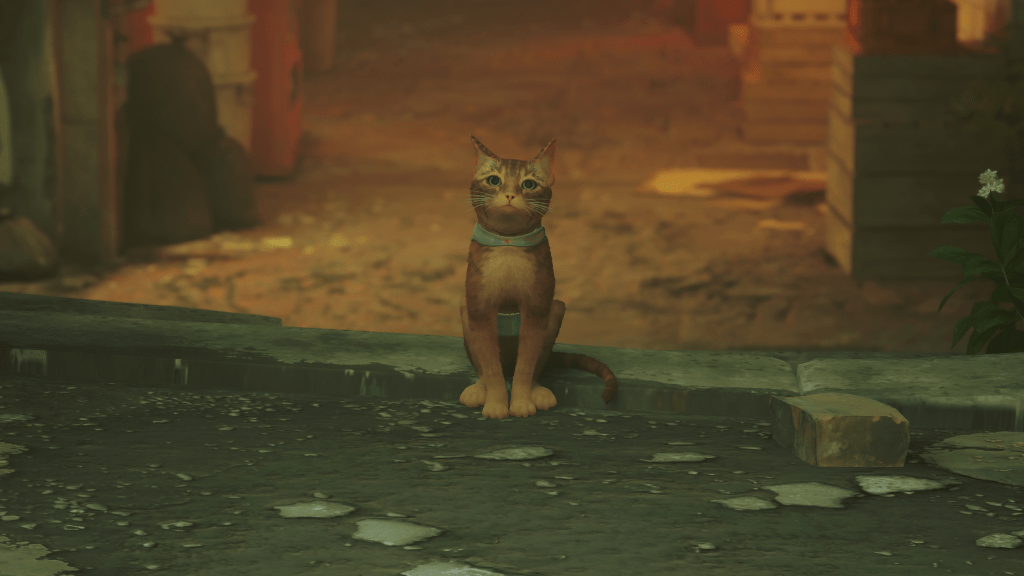
In Stray, we play as a ginger tabby cat. Not a talking cat. Not a person that has been transformed into a cat. Not a magical cat. Just your regular old, run-of-the-mill, carefree street cat. Other aspects of story and play get added as you go, but the cat is still a cat, if a very smart and loyal one.

Throughout this game we traverse through different environments of this fictional dystopia, exploring, learning and taking in the surroundings. We are a speechless outsider, observing and interacting as we go. We aren’t one of them, and my playable character also sharing these qualities with me (the player) created a uniquely immersive experience that hit me on a genius level. This would have been a different game if we were playing as one of the robots that inhabits the city. 

Then there is the cat itself. The animations are beautifully made and transition seamlessly. Everything, from the swagger and agility to the curiosity and behaviour scream ‘real cat’. The interactions with other cats, the scratching at objects and rubbing on peoples legs were things that didn’t need to be included, but do wonders for immersion. In some games, going off the beaten path feels strange because you are on a mission to save the world or on urgent business, and stopping to talk to someone or play a mini game breaks the narrative. You do it, because it’s a game, but it feel wrong. Here though, we are a cat. If we see a perfect nap spot, we are 100% going to take it. Because that’s what cats do. We are emotive and adorable without feeling like a caricature, and it is just a pleasure to control this excellent boi.

+ The World Building

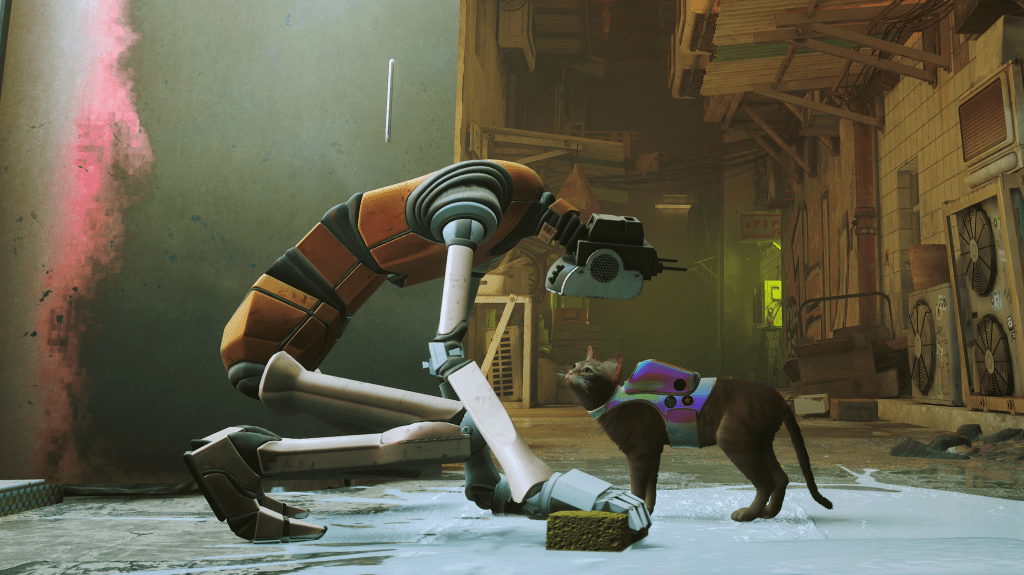
Urban and Cyberpunk settings don’t often appeal to me that much. For that reason I was here for the cat, nothing more. To my surprise, it didn’t take long for me to be completely invested in this world, desperate to explore to learn more of what life is like here and why. While ignorant past Noob felt like rolling her eyes at the idea of there being robots in this game, present Noob was delighted to meow at every single one I happened upon. You can learn a lot by interacting with everything you can, exploring the areas, taking notice of the details and putting the pieces together. Although it is a story of robots, it is more relatable than expected. Dealing with issues like pollution and poverty, two very real things, the game managed to keep me in a state of melancholy while also making me think.

+ The Aesthetic

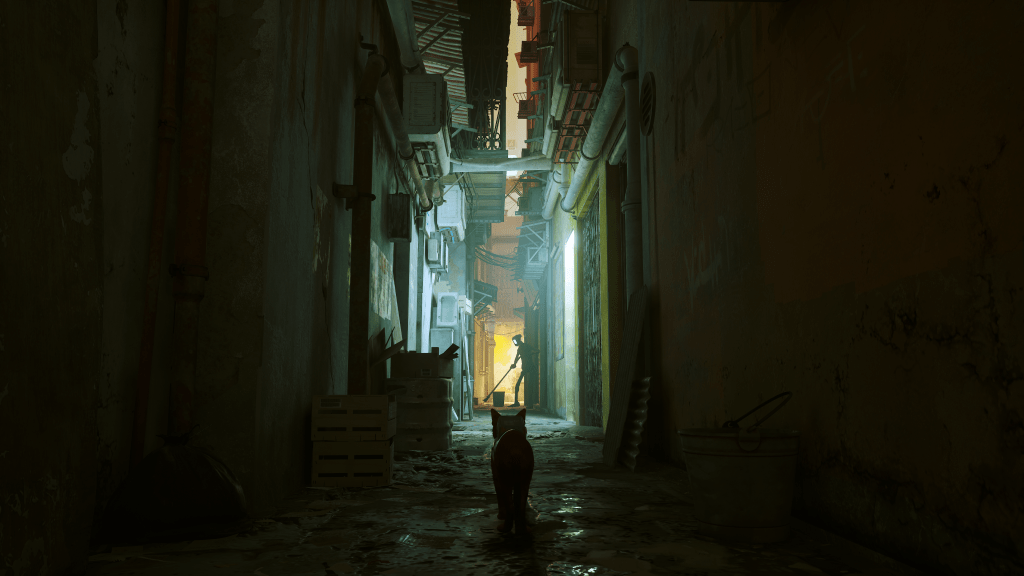
Like I mentioned above, I didn’t expect the setting to really jive with me. Although I haven’t experienced a lot of it, I felt like I was burning out of the dark, dreary cityscape with colorful neon lights. All I had to do was play to realize that I was wrong. This game is stunning and the use of colors kept my brain twinkling in awe. Moving onto a new area always brought something new and interesting, and the beauty within the damaged and broken parallels with the themes of hope that are scattered throughout. Robots are robots, and while they seem sentient, everything they learned is from the humans. The way this is creatively used brought me so much joy. Abandoned apartments layered in rugs, linens, books and plants, creating the most stylish shabby chic décor. It isn’t practical but it doesn’t need to be. Every robot adopting their own style based on what they can find. Lights, lights and more lights. From the intricate interiors, to the wide shots of places you are discovering and have been, there is a beauty to this game that is not only pleasing to the player but really adds to the world building. The biggest crime that there is no photo mode (although maybe that is for the best, I might still be playing to this day).

+ The Difficulty

This is a very easy game, and I think that decision suits it very well. It allows for the flow of exploration without the frustration that can come in other games. Having said that, if you aren’t into exploring as much as I am you don’t have to. It isn’t difficult to figure out what you have to do next so if you want to mainline the story that is also entirely fine. Any puzzling is very minor, which makes the game very accessible to experienced gamers and new players alike.

+/- The Controls

I am personally very happy with the controls but I know a lot of people were underwhelmed. This is no precision platformer and I am glad that it doesn’t try or pretend to be. You can’t jump freely, only where the game allows. One could see this as a lack of freedom, or you could see it as a time saving and quality preserving mechanic. I didn’t waste any time trying to make jumps that maybe, just maybe, I could make. And I wasn’t taken out of the experience by janky animations caused by jumping places that were never intended because I was never allowed to. The levels are hand crafted with verticality in mind and the simple but intuitive controls were additive for me. The fact that there is an on demand meow button is just icing on the cake. 

+ The Details

I talked about some of the details in the protagonist and aesthetic sections, but it deserves to be its own positive mark. My favorite detail is how every NPC has their own little personality. Most of them have their own hobbies and styles. When you meow at them, they all have their own reaction to you. It only flashes across their face for a second, but it is there and that was enough to ensure that I meowed at every single NPC that I met.

+ The Collectibles

There were no pointless collectibles. They took the form of memories, and every one that you found added some more context to the world. They weren’t too difficult to find (I think this is the first game ever that I found them all by myself) and they encouraged exploration which, to me, is the highlight of the game. Exploration, rewarded with story, which then encourages more exploration is a dream game loop for me and it was executed to perfection.

+ The Level Design

This game felt like a living and breathing city. I explained a lot of why it works in the Aesthetic and Controls sections above, but I want to give a shout out to the open world areas. I expected more of a linear game so arriving in the slums was a huge surprise. There is lots of exploring to be done and the entire level makes sense. It is unique, lived in, full of character, easy to maneuver and not too big to be overwhelming. And the same can be said for every other open world section in the game. There are nooks and crannies that you can only access due to being a cat. At first it can take a while to get used to the fact that bars aren’t a wall, you can walk through them or jump over them. It keeps things unusual and interesting. A different perspective.

+ The Pacing

I really enjoyed the pacing. Although I would have liked even more time in the open world sections, it would probably be to the detriment to the game. When you are ready to move on, the game is separated with chase/stealth/sort of combat sections that also do not feel like they last too long. The game in its entirety is relatively short, and throughout the entire game I was engaged enough to not put it down. 

+ The Surprises

There were things in this game that I did not expect to see at all, but it was all entertaining enough. Obviously this is very vague as to not ruin it, but I think you will know what I mean when you get there.

Overall, this is an awfully sad world with hidden havens dotted around that I couldn’t get enough of exploring. I loved my character and I loved my time with it. I don’t think there are any cheap emotional stabs which is something I always fear in games containing animals, and I couldn’t be happier with the time I spent with this game. In the end, everything in the game made sense and I was very satisfied with the conclusion. The game resonated with me, and not just because of the cat, which I would say is an achievement for ‘that cat game’. Pawsome all around (be grateful. I could have used so many more puns throughout this review).

+ The Protagonist

+ The World Building

+ The Aesthetic

+ The Difficulty

+/- The Controls

+ The Details

+ The Collectibles

+ The Level Design

+ The Pacing

+ The Surprises

Sign up now to stay up to date with the latest posts!

A Noob’s Review – My Time at Portia

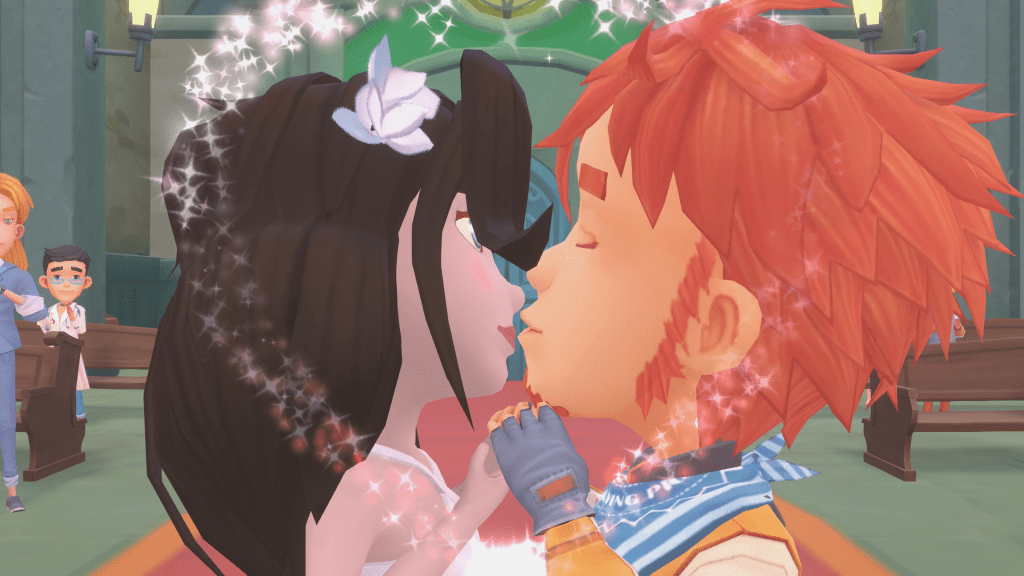
My Time at Portia is a game with many flaws, but if you can look past them then it can be an absolute delight. I feel like Portia is ideal for the people who love Stardew Valley/Harvest Moon type games but find the farming tedious after a while. These aren’t the only type of people who might enjoy this game, but if that resonates with you then it could be worth a shot! Not only through the first few hours but throughout my entire playthrough, I was constantly surprised, confused and amused by the stuff I would find and the things that would happen, leading to the affectionate nickname of ‘My Weird Time at Portia’.
– Doesn’t know what it wants to be

When I first started playing My Time at Portia, I got the sense that it didn’t know what it wanted to be. Games like Stardew Valley have a lot to do. You can farm, craft, cook, mine, forage, fish, create relationships. I feel that all of these things are key to the slice-of-life farm sim genre that these games are part of, which is already quite a lot of things to do. Portia is similar in that sense, except, add a main story, side quests left right and centre, dungeon crawling, named boss fights, a full on skill tree with three entirely seperate sections to go down, a photo menu, a workshop manual, a research system, a fluctuating economy, social mini games, regular mini games, festival mini games. It is a lot, and for a while the main thought going through my head was ‘What on earth is this game’.

+ Something for everyone

Though the absolute muddle of things to do and potentially overwhelming vibes this game gives out, the bright side is there is probably something for everyone. If you are like me and enjoy the systematic collection of things and ticking things off lists, you can do that. If you like making friends with everyone in town, you can do that. If you like spending your time decorating your home rather than completing commissions, you can do that. If you like dungeon crawling and fighting for loot.. I can’t say that I recommend it but it is there. More on that later!

– The jank

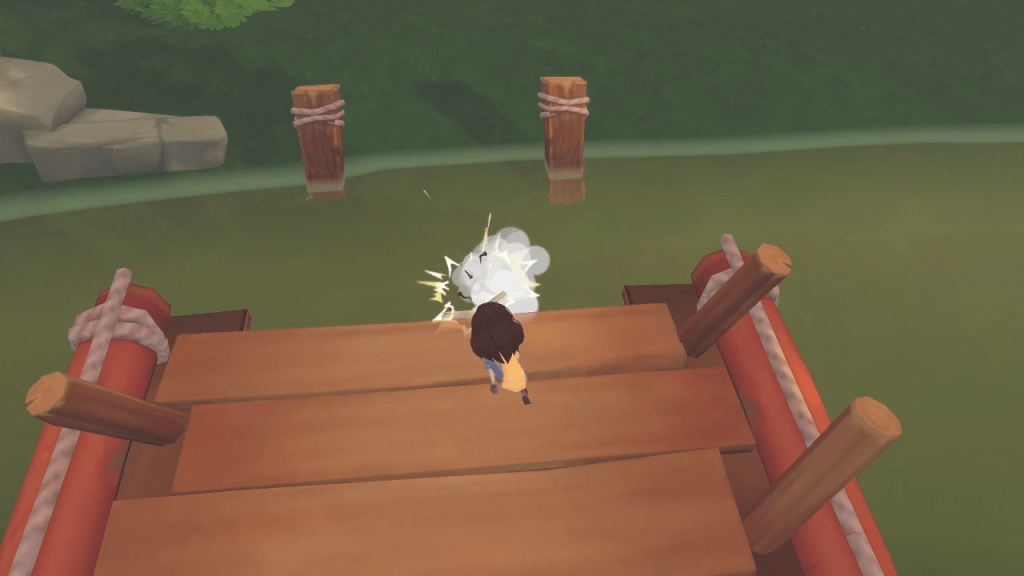
Before you even think about playing this game there is something that you have to accept. This game is Janky. And I mean Janky. Sometimes characters speak out loud, sometimes they dont, when they do it is generally awful. Sometimes they will say the right words, sometimes they will say something entirely different, sometimes they won’t actually be there while they are talking. Sometimes the camera will focus on weird things. NPCs are constantly stuck on the environment and will occasionally teleport. Photo quests break often. Mounts become unmountable. The game does a lot and generally it works, but with love, I do have to say that it can be quite a mess.

+ The jank

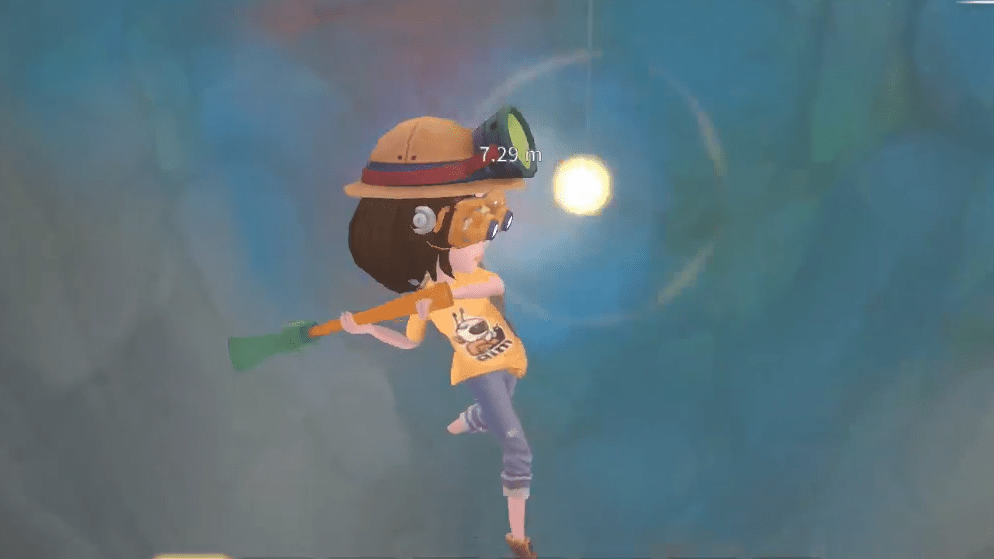
On the other hand, if this game didn’t have its Jank then I don’t think it would be half as memorable than if it were perfect and smooth. If you have a mount they are going to be running around in the background of every cutscene. When you get past how awful some of the cutscenes are they become hilarious and you look forward to the next one. When creating my character I couldn’t figure out how to change her name on console so she ended up being Linda. I gave her some pink cheeks that looked nice in the character creation menu. As soon as we got into the game though, it turns out those pink cheeks basically glow. Every day in game, something in the world is going wrong and it was a constant source of glee for me. A lot of the Jank is graphical or in the animations, and they can be the best.

– The combat

Okay… if there is something that I have to give my biggest criticism in this game, it is the combat. I don’t enjoy combat at the best of times but I can usually appreciate it if done well. It isn’t the end of the world since this game isn’t about combat, but you have to do it often enough that it can become frustrating and tedious. There is no feedback, or at least it tries to give you feedback through visual effects, which in the end just feel like a mess on the screen. I genuinely cannot tell when I am getting hit. There are numbers popping up but there is no feeling to it at all. Sometimes you can hit through or be hit through walls. Sometimes the enemy ends up in the air and doesn’t come back to the ground. Timing doesn’t feel like it matters much and when it does it can be frustrating. Hit boxes are hit and miss. AI companions will run at enemies and agro them when you are trying to draw them out one at a time. Thankfully, if you die during a boss fight you will respawn without their health being replenished. This is a mercy that I am grateful for, but it almost feels like confirmation of an awareness that the combat isn’t the best. Throughout the main story you will be put into multiple combat scenarios. As long as you keep plenty of health replenishing items in your inventory then you can tank your way through without too much pain. It can be a huge drag though.

+ Low stakes

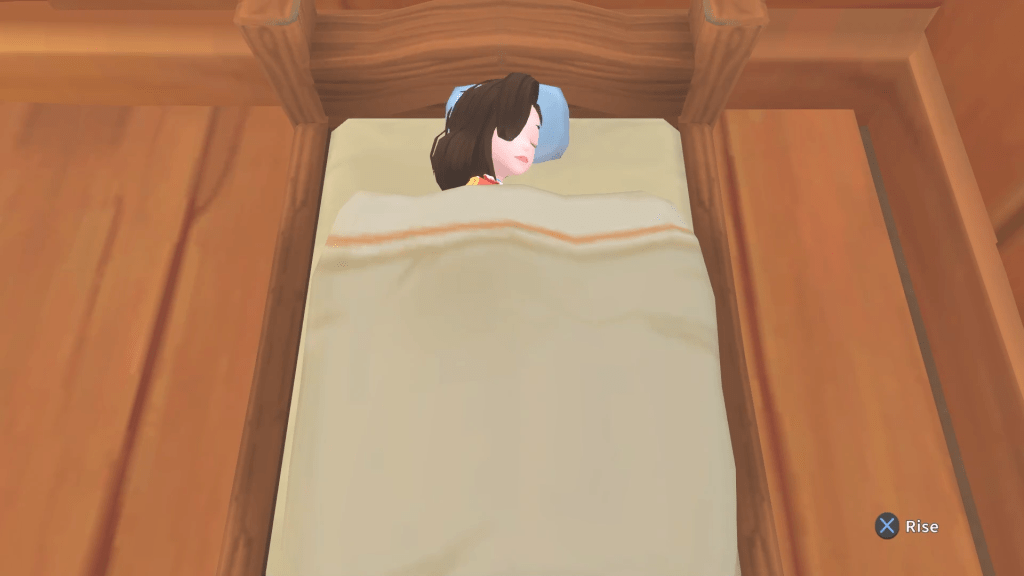
I think what I love the most about this game are the low stakes. Sure, there are optimal ways to play and you can min/max if that is how you like to do it. But if not, there aren’t really any punishments for going slow. The only things that are timed are daily commissions (which you can choose to do) and very few quests/side quests. Other than that.. go nuts. Fancy spending an entire week in the mines? Go for it. As long as you have set your machines away there is really no reason to come home at night, so you can pass out at 3am doing whatever you were doing and wake up with full stamina the next day without losing anything. This all makes it really easy to pick this game back up even if you haven’t played for a month. I really appreciate it when I compare it to say, Stardew Valley, where I don’t want to boot up my game without my notebook in hand because I need to stick to my plan.

+ Crafting

I believe Crafting is a really clever way to solve the problem that I mentioned in the intro. By the end, I usually find farming really tedious in these games. Having to water everything every day, plant them at the right time, harvest and replant, then if you miss the window you have to wait an entire year. I always pray for rainy days so that I can go and do other things. Instead, in this game you have to gather materials and process them, to then craft them into different items. Different materials can be processed in different ways, so it is up to you to manage what you have, what you need, and that is the loop rather than plant, water, harvest, repeat. It is much more flexible and, for me at least, enjoyable.

+ Progression

The fact that I already enjoy the crafting is doubled when paired with progression in this game. Throughout the main story you will get many different commissions to help make the city a better place. If there is something I love in a game, it is an environment that evolves over time. Not only does Portia do that, but it only does so thanks to your efforts. Building bridges will allow you to access new areas. Building busses will unlock fast travel. You will build buildings and areas that from that moment onwards will be a permanent part of the town. It never stops being satisfying. On top of this, the crafting progression itself also feels nicely done and natural to me. Once you are able to build everything available, you know that you will then need to upgrade your equiptment to unlock more options. If you have options available that you dont yet have the materials to build, you know that your next quests are going to unlock an area that allows you to access new resources. It is a cycle that repeats throughout the game and works very well.

+/- Relationships

I don’t really know where to place relationships here. There are things I really like and things that I really dislike about them. On the positive side, relationships bloom themselves as you progress through the story, which I think is very naturally done. As you help improve the town, the townsfolk will like you more. As you do commissions for individuals they will like you even more. Then as you grow relationships with them you will start to get cute little side quests which I found to be a nice touch. Becoming friends with certain vendors will get you discounts, and you will occasionally receive gifts from your buddies.

The relationship system is let down in two ways in my opinion. Firstly, I don’t think it’s very fun. There is the traditional system of giving the person daily gifts that they like which isn’t bad, but it isn’t great. Then there are some more unique systems, most of which didn’t land for me. Some characters have their own minigames you can play, some can spar (see combat above to explain why this doesn’t hit) and once you become their friend you can go on playdates (or proper dates if you are romancing). After I had done two dates I was already bored of the system and just wanted go back to old fashioned gift giving. Secondly, when it comes to romance, I don’t feel like there are many good options, specifically for husbands. I didn’t really want to marry anyone. Six of the options are identical. Having kids is as far as you can go down the family route and they don’t grow up from being a toddler. So relationships in general in this game are a really mixed bag for me.

+ Attention to detail

The attention to detail in this game is great. While some systems feel unnecessary, there are others that add to the overall charm of the game. My favorite thing is that anything you are holding, your character will be holding it in their hand. If it’s big they will carry it over their head. Most accessories that you can wear for stats you can also see on your character. They didn’t have to do these things but it really adds to the experience, and it will always be funny running along carrying a giant poop above your head.

– Navigating crafting

Navigating the crafting systems does not flow well, and while you do get used to it, it could be better (and I believe they may have solved this in the sequel). For example, if you are assembling a big product, having the ingredients in your inventory will not do. They have to be directly in your hand to place them. Eventually you get some automation options but it is so late in the game and unintuitive that I have to mark the game down for it. When I don’t play for a while, the hardest part is reacquainting myself with all my stuff since I need to know where to grab things from.

+/- Festivals

Something else to watch out for in this game are the festivals. Many slice-of-life games have them.. But none of them have them quite like this.

++++ Pinky

And the final positive point of this game, saving the best till last. Pinky. 

There are a lot of reasons to like this game and many surprises along the way. As long as you know that you are going into a very imperfect experience and are open to some fun, there is such a good time to be had. If you like what you heard above then you should definitely jump in. If you claim the free games on the Epic store you may already own it, or it is currently on the PS Plus Extra Tier and Xbox Game Pass. The Sequel ‘My Time at Sandrock’ is in Early Access right now so it is the perfect time to jump into the series.

  • – Doesnt know what it wants to be
  • + Something for everyone
  • – Thejank
  • + The jank
  • – The combat
  • + Low stakes
  • + Crafting
  • + Progression
  • +/- Relationships
  • + Attention to detail
  • – Navigating crafting
  • +/- Festivals
  • + Pinky
I did stream my first few weeks in Portia, I’ll leave this here in case anyone is in need of misadventures.

Sign up now to stay up to date with the latest posts!