Run a cozy cat post office. Sort and deliver parcels from the daily boat, organizing everything your way. At night, the moon reveals hidden truths about packages. Clear a strange backlog, help locals, and unlock new abilities and destinations.
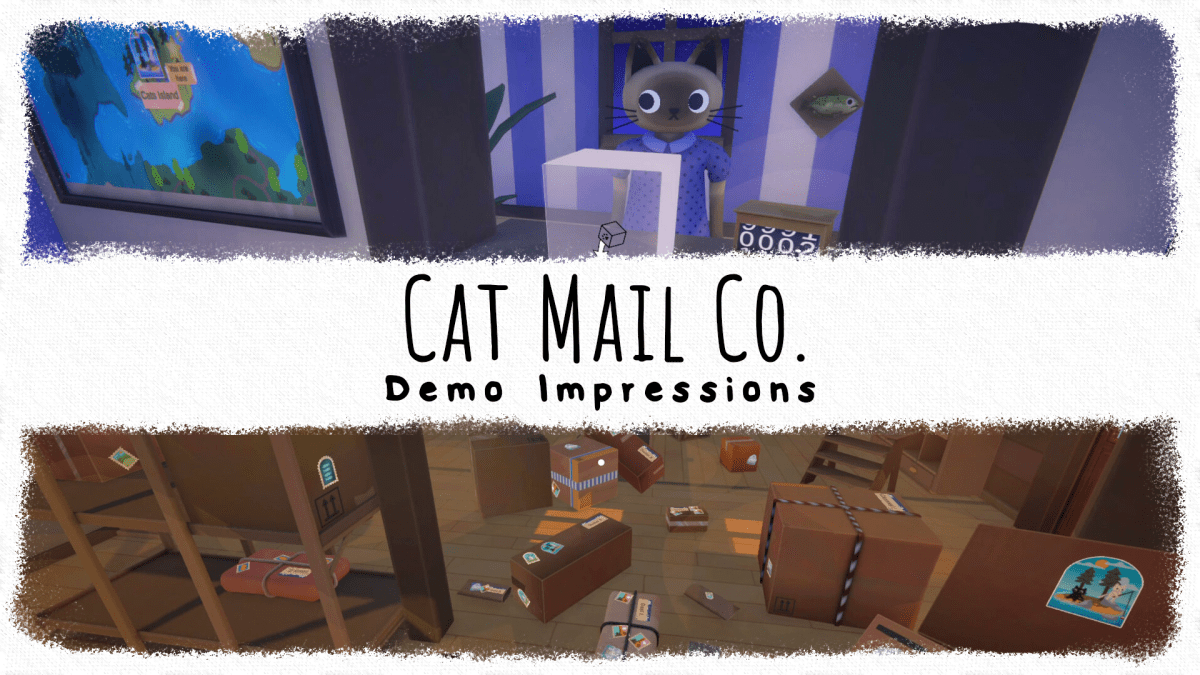
I had a weirdly specific revelation with the Cat Mail Co. demo. It turns out that this game is exactly what I wanted Wilmots Warehouse warehouse to be. Empty shelves with parcels of all shapes and sizes and unlimited time to sort them is the personal heaven that I stumbled across when I booted this one up, and spent way more time than necessary optimising, just because it felt nice.
In Cat Mail Co. you are running a post office desk, retrieving parcels from customers, processing them ready to arrive at their destination safely, sorting them exactly how you want to, and retrieving customers parcels from the shelves, which may be simple or trickier depending on how organised you are. Between desk shifts you load and unload the boat, sending the packages on their way and adding more post to your precious piles of cargo. It is a little bit like if laundry was a gameplay loop, and I mean that in the least damning, most soothing sense possible. It is a systematic task that is never really done.
So far, Cat Mail Co. is providing exactly the type of cozy logistics that I love to unwind. I was dissapointed when the demo ended simply because I would have enjoyed another shift, putting my freshly organised shelves to good use. I am curious how added complexity will affect the gameplay, like adding in more destinations and potential restrictions on the packages that are sure to present in the full game. My hope is that it will enhance the experience, ensuring you have to pay a little bit closer attention before things get too samey. Either way, the demo was a pleasure and I would certainly spend some more time manning (catting?) this postal office in the future.
Demo Length – 30 mins At a glance + Cozy as heck + Lo-fi logistics + Feels great in the hands + UI is seamless + The lack of a timer provides a lovely freedom to play how you want to play, whether you would rather be hyper organised or need longer to search through messy piles.
A peaceful cleaning and organizing game where you explore different locations, collect trash, clean stains, and arrange items to turn mess into perfection.
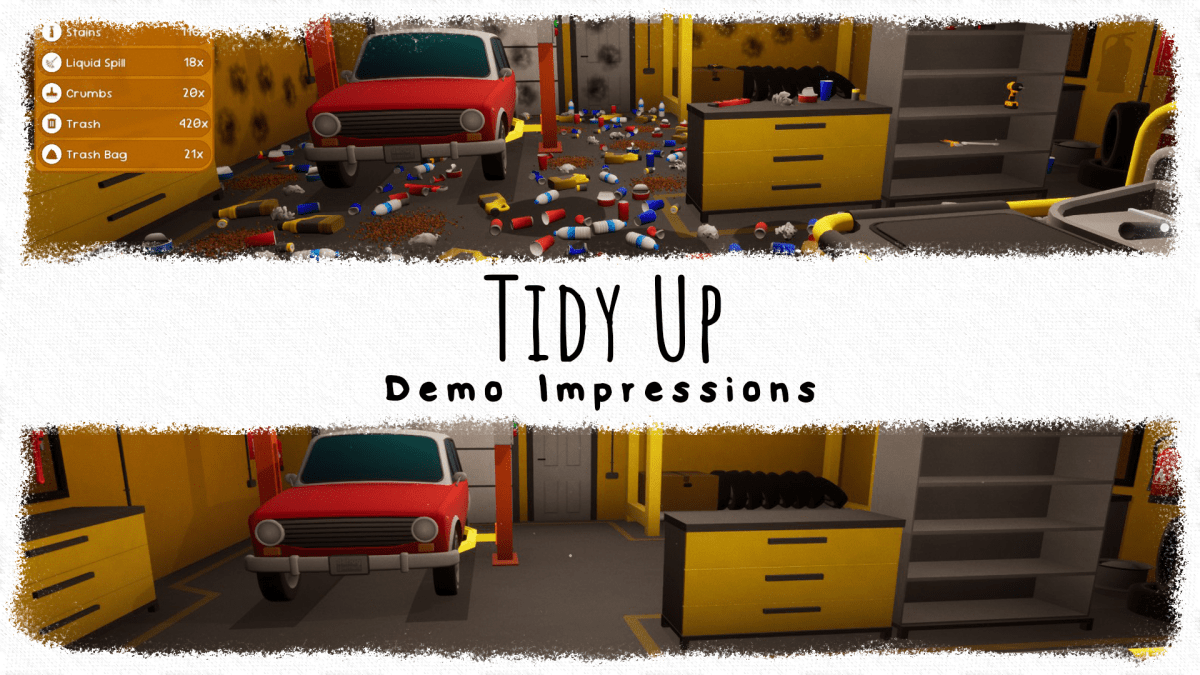
In Tidy Up we are a cleaner hired to clean, tidy and square up some absolutely filthy spaces. The demo consists of two levels, a coffee shop and a garage. It is short and sweet and gave me the quick hit of dopamine that I long for when I play these types of games. In fact, the speed at which I could complete the tasks got rid of that feeling of ‘why am I doing this when I could be cleaning my real house’ that I sometimes get from playing cleaning games. It feels less of a simulator and more of a ‘jump in and out when you need a break’ type of experience, as opposed to Powerwash Simulator where some of the levels took so long that I was questioning my sanity about why I could not stop.
If it wasn’t obvious, I am partial to a compulsive cleaning game or two, and I found that this one hit the spot. It reminds me of my favourite part of House Flipper 2 – the beginning phase where you first walk into a disaster zone, wondering where the heck you are going to begin. You pick a task and soon enough, you have a fresh clean space and a job well done. Perhaps listening to a podcast or decluttering your own brain as you go.
I mentioned Powerwash Simulator, and that is because Tidy Up occupies a similar brain space, without actually feeling similar to play. I find the variety of tasks here in the Tidy Up demo almost more satisfying, likely because of the faster pace that I mentioned.
The game offers variable ‘difficulty options’, as in, you can customise how terrible of a state you want the environment to be in when you walk through the door. While this is nice to have, I do fear it could take away the potential for environmental storytelling that a game like this has (I’m looking at you Crime Scene Cleaner). That doesn’t have to be a negative, but it is something to be aware of, possibly expecting more of an arcade experience than a narrative. Having said that, a fun feature of the Tidy Up experience is straightening up the furniture, restocking areas and putting objects back where they belong. These little touches could be used in clever ways should the developers choose to!
I really feel like Tidy Up has a lot of potential. The length of the full game will depend entirely on the amount of maps available, and while I was praising the snappiness of the levels so far, I think the loop is fun enough to expand. I want office buildings, mansions, schools, hospitals, prisons, supermarkets, warehouses. One of every type of big building that exists, and plenty of smaller ones too.
Demo Length – 20 mins At a glance + Snappy levels provide less worrying about whether I am wasting time doing virtual chores and more satisfaction from completing the jobs and seeing immediate results. + Dopamine babyyyyy. + A nice variety of tasks including bog standard cleaning, but also tidying up objects and restocking shelves. + UI/UX meant I always knew what I needed to do. + Lofi mess to chill to. +/- The ability to customise the mess is a nice feature. There is just something about it that makes me unsure, like I would rather have the intended experience first. +/- I wouldn’t be expecting a huge game. It does have the potential for expanding scope but that doesn’t guarantee anything.
Explore the scenes, find clues, and sort out people, pets, and belongings in this cozy slice-of-life detective puzzle game. Fans of Duck Detective, Little Problems, and The Case of the Worst Day Ever will enjoy this new deduction game for all ages.
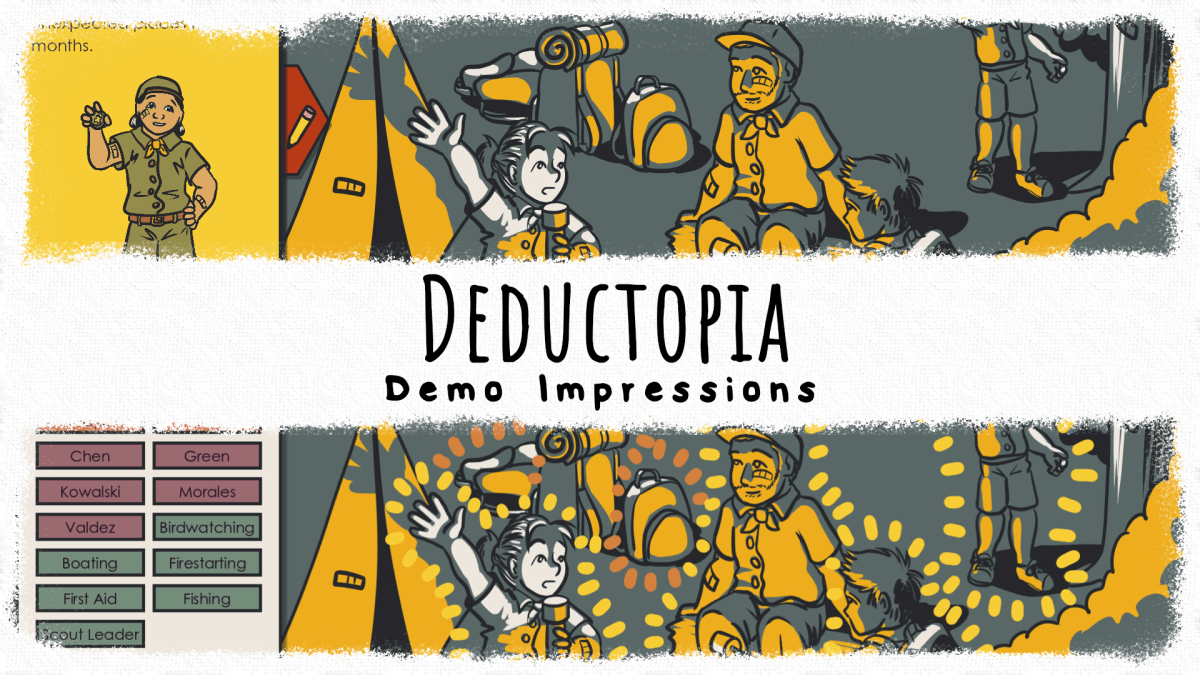
I have tried a lot of demos for Obra Dinn and Golden Idol likes (admittedly I still have yet to play Golden Idol beyond the demo), and Deductopia has been my favourite so far. It is a logic puzzle to its core and it did all of the right things. The UI is intuitive, the clues are just enough, and it pushes you in the deep end, giving that delicious initial overwhelm that unravels through exploration, turning ‘how the heck am I ever going to do this?’, to ‘if this is this then that must be that’, at a satisfying fast pace. It throws you in a scene, provides you with some questions, some clues and some solutions, and says, ‘have fun’.
Something that I really appreciate about Deductopia are the difficulty options. There is the option to experience these levels in two different ways. Easy mode checks your answers as you go, informing you if you are correct or potentially going down the wrong path. Hard mode waits until you have inputted all of your answers and deduced the entire scene to reveal whether you made any mistakes. Hard mode was exactly the kind of challenge that I am after. If you give me a way to brute force a puzzle I will, I just can’t resist it so for me, easy mode would have had me gaming the game rather than playing the game. I only bring this up because, while I am glad it exists for the folk that prefer to play that way, a lot of the reward of a deduction games for me is the dopamine flood I get when I get confirmation of my answers. From my experience so far, this is always 10x better when lots of information that you have been chipping away at all gets approved at once. These options allow me to flex whatever brain muscles that this works, while also providing reassurance that if I get stuck later down the line, I am not hung out to dry, easy mode will be there for me.
The demo offered 3 of 12 scenes to explore and solve. It took me 30 minutes total, so this is not going to be a long game. It does however seem like it is going to be an extremely satisfying version of what it is. Low stakes, sit down with a cuppa and a biscuit, and be the observation hero that everyone needs.
Demo Length – 30 mins At a glance + Difficulty settings + Thoughtful UI + A good ratio of clues:deduction so far +/- Trusts that the player doesn’t need handholding +/- Short
From the creator of The Stanley Parable and The Beginner’s Guide comes Wanderstop, a narrative-centric cozy game about change and tea.
We live in an era of hustle culture that glorifies work over wellbeing. We are encouraged to put everything we have into everything we do. If we don’t achieve our goals, we must not have worked hard enough. If we managed to take breaks or have fun along the way, did we really work hard enough? Of course, not everyone actually believes this, but we certainly all have met people who do, and based on the reception to this game by both critics and gamers alike, I would say a lot of us have internalised this mindset somewhat, whether we want to have, agree with it, care to admit it, or not.
Wanderstop challenges this mindset in a way that only a game really could.
These are demo impressions only, so I have yet to experience any of the story beyond the intro, but this small taster had a big enough impact that it felt really important to sum up my experience.
So far, Wanderstop is a commentary on passion and obsession. Where is the line between those things and if we are walking it, would we even realise it? Say we do take a step back and recognise, “Yes. I have a passion about something (in our main character Alta’s case, it is fighting). I am so passionate that I am going to chase this dream, idea, goal, or whatever it may be. I am going to chase it so completely that no one could possibly question my passion.” Wanderstop asks the question, “at what cost?”
We meet Boro, the most gentle, content soul, and the game asks another question. “Are you ok?”. Then, gives you all the time you need – probably more time than you would usually give yourself – to ponder it.
As someone who is prone to going all in on things and has burnt myself out multiple times before, every cutscene and conversation in this demo had an impact that I did not anticipate would hit me so hard. Personally, I am at a time in my life, I’d say a little further on than Alta is currently, where I have started to recognise the need for – and desire – balance. The moment I met Boro, his energy felt like the end goal for me. While Alta is wrecking herself, living her life with one goal in mind, desperatly clutching at one potential outcome and tormenting herself for falling short of an almost impossible goal, Boro is living in the moment, enjoying the journey, the here and the now. Alta, and I can confidently say a lot of us too, could do with taking a leaf or two out of Boro’s book (or tea… hehe).
Perhaps, feeling a longing for a Boro to find you and give you this opportunity the way that I did is an indicator that you yourself should take some time to reflect, to have no schedule, and to be. Whether that is through getting out in nature, a duvet day, doing absolutely nothing, or through making tea in Wanderstop, that is up to you – although I’d say Wanderstop is a good place to start.
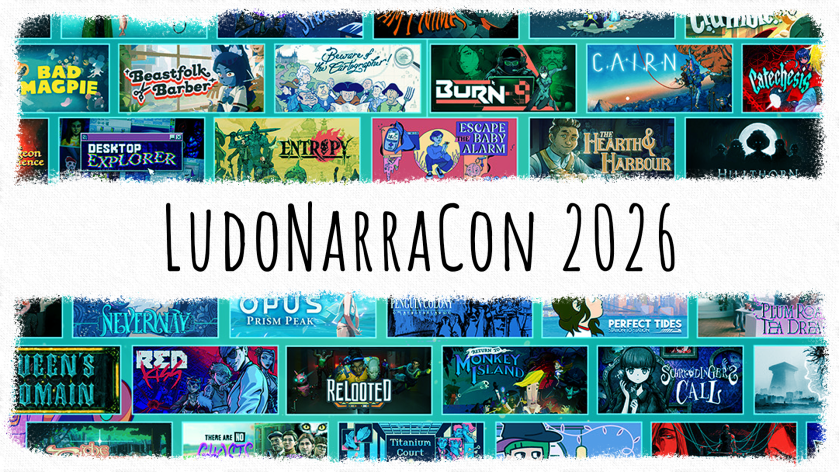
The action of playing this game forces the player to do the very thing the narrative is encouraging. Slow down. Potter around. Make some tea. No rush. No worries. This is our time. Rather than just telling you that you should do these things in a way that you have likely heard 100 times before, Wanderstop teaches you through showing and doing. This, along with some beautiful artwork, voice work and dialogue, is the reason this game stands out to me among a sea of cozy games, and I am really pleased to have it accompany me during my LudoNarraCon 2025 coverage. I am thrilled by the prospect of taking a break from my other IRL projects to go all in on game content for the month, but I am going to keep Wanderstop going on the side, reminding me to take a break and check in with myself every so often. And I am rooting for Alta to do the same.
Demo Length – 1+ hour At a glance + Writing – both conceptually and dialogue. + Beautiful cutscenes. + Heavy hitting package, relatable to many. + Meta in a way that only a game can be. + Voice acting is great. + Boro is precious. + Alta is imperfect in a very real way + Themes of tunnel vision, failure, sacrifice, exhaustion, burnout and the consequences of that have already been explored in the first hour. +/- I am anxious to see where the story goes and whether it continues to resonate. +/- I am also anxious to get further into the gameplay, to see whether it is therapeutic, or becomes tedious, boring or repetative.
Watch my playthrough and first impressions of the Wanderstop demo here!
A relaxing puzzle game where you recreate towns from people’s memories. These people will give you written puzzles and to solve them you’ll be able to either modify the buildings or use different tools, such as one that makes wind, and many others. Each puzzle will surprise you in a different way.
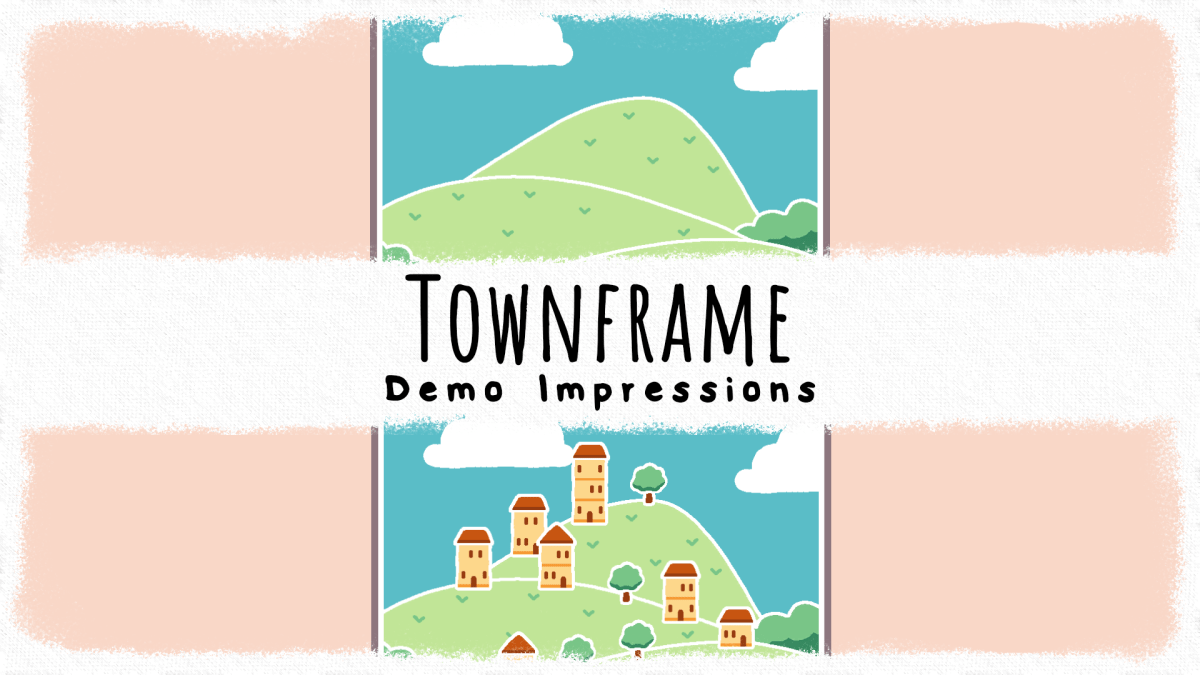
Townframe is an incredibly lo-fi, chill game that allows you to solve the puzzles of friendly folks hometowns or favourite locations based on the clues that they share with you. You begin with a landscape acting as your canvas. It is your job to recreate their memories by placing the correct buildings or objects in the correct places, allowing a nostalgic glimpse into their past.
The game couldn’t be simpler to pick up, offering a point and click interface. There is no need for any extended tutorials as the game is self explanatory and the UI is as clear as it is pleasing. The soothing music is complemented by the pastel colour palette. It is bright but never harsh maintaining the soft, airy aesthetic throughout.
This not going to be a long game. The demo included 8 puzzles which took 15 minutes to complete, with no indication of how much more complexity to expect. For now, it feels like it is going to be a lovely, short puzzle game for a rainy day or for winding down for bed. I am thoroughly charmed and wish all of the best for the release!
Demo Length – 15 Mins At a glance + The colour palette. + The vibes are perfectly relaxing and nostalgic. + The UI is clean and clear. + Easy to pick up and play. +/- Total playtime will be 2-3 hours. +/- Puzzles in demo were very simple.
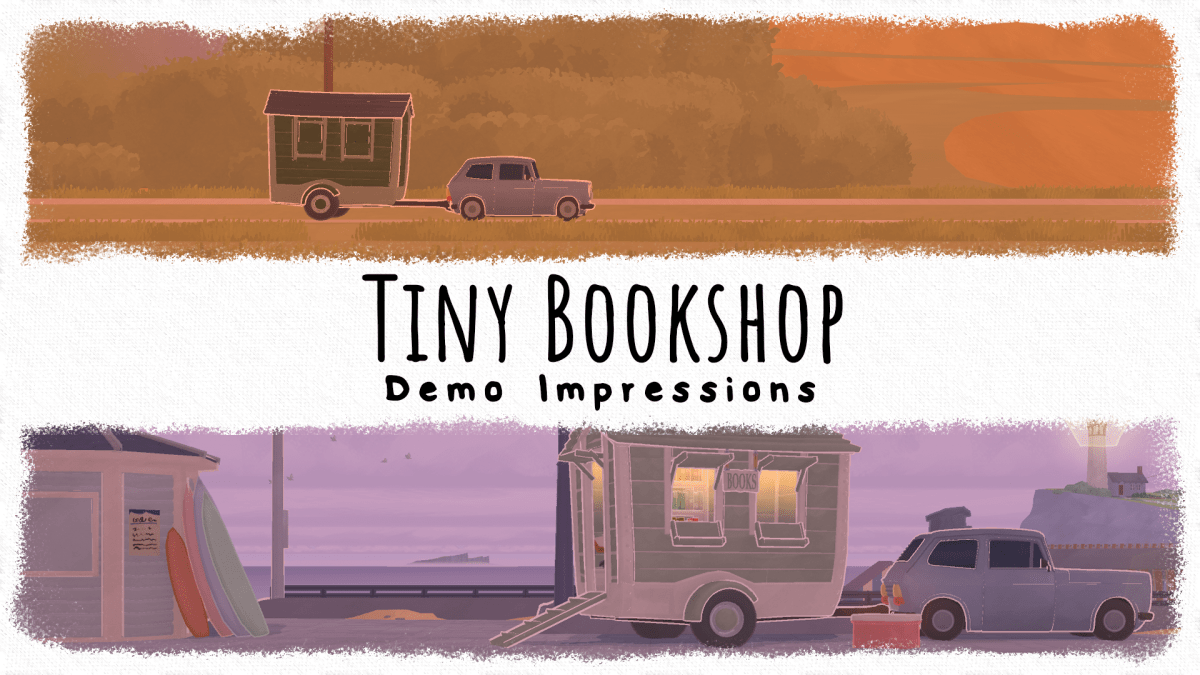
Resisting the urge to buy a trailer and a bunch of books irl as we speak.
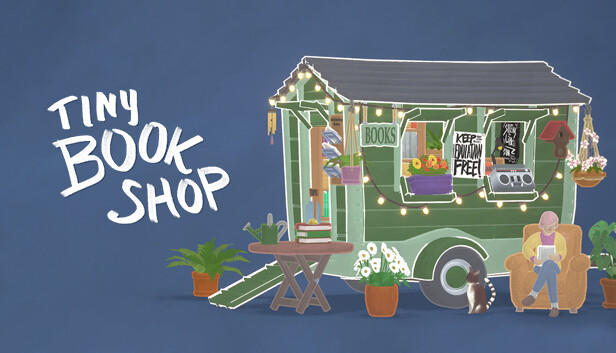
Tiny Bookshop
Developer: Neoludic games
Release Date: To be announced
Leave everything behind and open a tiny bookshop by the sea in this cozy narrative management game. Stock your tiny bookshop with different books and items, set up shop in scenic locations, and run your cozy second-hand bookshop while getting to know the locals.
Tiny Bookshop is a cozy management sim about running your own portable bookshop from a trailer on the back of your car. I can’t express how pleased I was that the peaceful atmosphere was complimented by engaging systems, allowing me to live a fantasy that I never knew I had.
The game is not heavy on the management systems, or at least not from my time in the demo. This, in my opinion, is a good choice, allowing the player to fully absorb into the relaxing vibes. I didn’t feel the need to min-max everything, optimising my shelves in an attempt to wring my customers dry. Instead, experimentation felt key in these early stages.
On a daily basis you are able to manage your inventory, decor and location in order to sell as many books as you can in the most aethetically pleasing way posible. The books that you place on your shelves determine the chance that a customer will find a book that they like in the given genre they are looking for. If they successfully find one, they will continue looking, picking up books until they find no more that they like. While this is of course RNG, it feels so clever and realistic to the shopping experience. Sometimes you will go into a shop with something in mind and nothing speaks to you, or sometimes, you will find way more than you expected. Throughout the day as your shelves get depleted, it will naturally be less likely that your customer will find the book that they are after, but there is still always a chance.
Although it is RNG, we can affect the outcome somewhat with the choices we make and it still feels very nice when you succeed. In my case, one lady picked up 10 books. That was 10 coin flips in a row, except luckier as the 50% chance got lower every single purchase.
If the pleasing aethetic and breezy management wasn’t enough, there are more mechanics to the game. Visiting different locations is essential to build up your knowledge of the area. Meeting people will give you leads on new areas and events in the town. Reading the paper will allow you to buy more books as your stock runs dry, as well as decorations. I love the inclusion of the paper, not only as it narratively makes a lot of sense but it is also, on purpose or not, makes the game even more ‘feel good’ by being an eco-friendly business.
Finally, every book you have on your shelf is an actual book, written in real life. Chances are, you have read some of them. One fun way that the game plays with this is that throughout the day, customers will ask you for recommendations. They will tell you a genre, mood, preference, or specific things that they want or don’t want from a book. Then, it is up to you to scour your shelves, reading the descriptions to find a good match. Of course once you sell the book it is gone, so if you think that you have the perfect match for some one, you ought to hope no one has snatched it up in the meantime.
I went into the Tiny Bookshop demo expecting a pleasant way to pass half an hour but I got a lot more than I expected. It is an instant wishlist from me while I look up the price of trailers and have a peak at Facebook Market Place for book bundles, contemplating a pivot to a travelling librarian.
Demo Length – 30 mins At a glance + More to this game than I expected, while not being too complicated. + Aesthetically pleasing. + Lo-fi vibes. + Especially fun for book lovers. + Recycling. + Bookshop fashion.
It is a pleasure to report that this game is stellar.
Times & Galaxy
Developer: Copychaser Games
Release Date: 2024
Embark on an interplanetary adventure as the first robo reporter for the Times & Galaxy, the solar system’s most trusted holopaper. You’re just an intern, but if you can get the scoop, write great stories, and impress your colleagues, maybe you’ll get to keep your job!
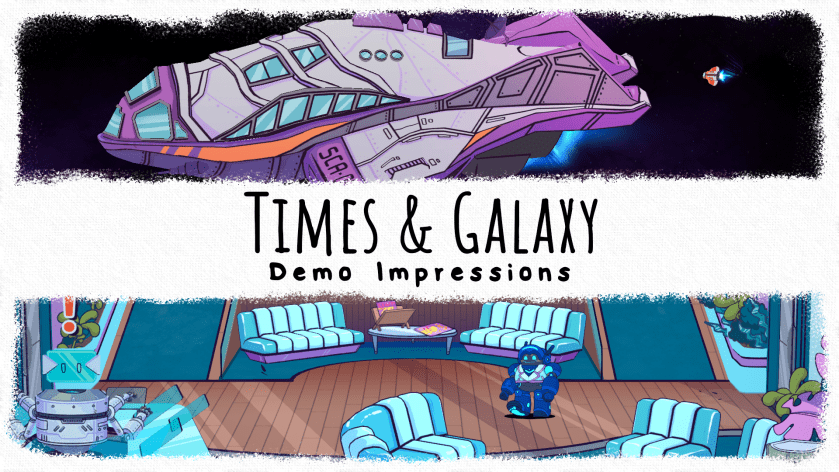
I am having a blast with all of the new ideas on display at LudoNarraCon 2024 and Times & Galaxy is no exception. In this demo we are an intern robo reporter, given the opportunity to take on 2 very different cases and explore our central hub.
I am not a stranger to adventure style games, particularly enjoying the detective type. In those games you generally hunt for clues, trying to get to the bottom of a mystery in order to deliver justice. Times & Galaxy takes that general concept but adds its own entirely new spin on it. We do get to inspect scenes, snooping around as we see fit and interviewing witnesses, professionals and suspects alike, but delivering justice isn’t necesserily the end goal, unless you want it to be.
Our actual goal is storytelling. Just because we have figured out the culprit of a crime it doesn’t mean we actually have to tell anyone, especially if it aligns with our own morals or interests (how morally right or wrong that is is a whole other discussion). It is up to us to choose the angle of the story that we present to our readers based on the information that we have collected. Writing about a spaceship crash.. Do we implicate the police, do we play it down due to the fact that it is not an infrequent occurrence in this area, or do we expose a huge scandal that we may or may not have discovered based on how much digging we did. Do we respect a persons wishes for anonymity at the cost of our reputability, or do we break their trust and tell everyone exactly who the are for our gain. We get to shape the identity of our cosmic newspaper one story at a time.
I already applauded the whole twist on the detective genre, but there was a second stroke of genius here – setting the game in space. I would have been happy enough trekking around our world reporting on global events, but the extra terrestrial setting allows for anything to happen. Anything. What a choice this was. You can give me the most mundane scoop to chase and there will be fun in it due to this funky universe we are scrutinizing. Of course, the cases available so far are anything but mundane. When my colleague scoffs at me for being delegated menial cases like the intergalactic cat show, all I can do is scoff back about the things I saw.
The excitement of space shines through the entire style of the game. Colourful, cute and creative, it is almost comic like which makes sense in this world because we are literally making holopapers. This runs through everything from the UI to the environments we are scouring. It is all so bold, smooth, and it just fits. The puzzle isn’t only about finding as much information as possible, but asking the right questions to get responses that fit your narrative.
If you are looking for a new take on the adventure genre where you value being learning about and being within a world as much as the play, then I do recommend checking this one out. It is charming, it is cosy as heck and it gave me a good laugh.
Demo Length – 1 hour 30mins+ At a glance + New take on detective genre. + Player has a lot of agency. + The reward for exploring is getting more data for you to decide how to use. + Creative cases. + The reveal in Chapter 2 got me good. + I really appreciate the commitment to the jokes. + Feels it will be easy to pick up and play a story at a time. + The bold and colourful aesthetic is energizing. + Only being able to ask a limited amount of questions makes you think about which questions are worth asking. +/- Has a familiar, comfortable structure of hub, story, hub, story.
A beguiling adventure in which you uncover the secrets of an expansive and mysterious world – haunting both the environment and its denizens to craft ingenious solutions to the many challenges that await.
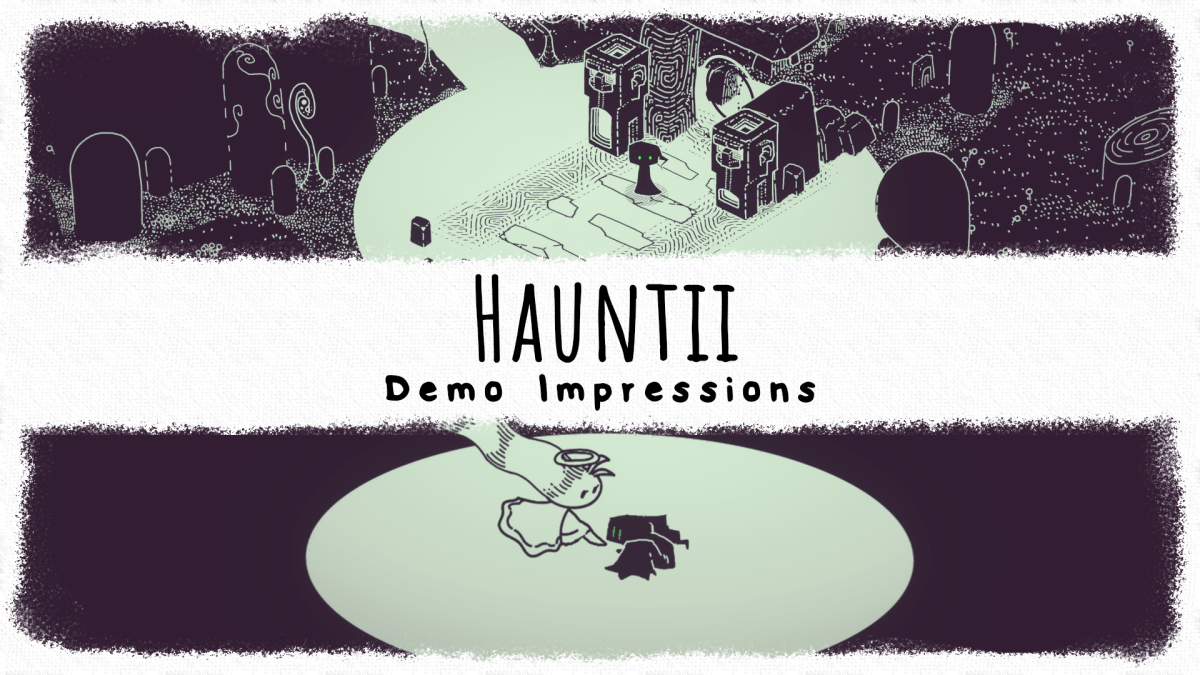
When I read ‘twin-stick shooter’ and ‘action’ as tags on steam I was a little hesitant, but felt drawn in by the art style on display. Thankfully for me, there was a lot less action than I expected. The demo showed off a game of exploration, collection and puzzles where navigating the dangerous dark land of Eternity is our goal, guided by the welcoming lights around us and the friendly locals.
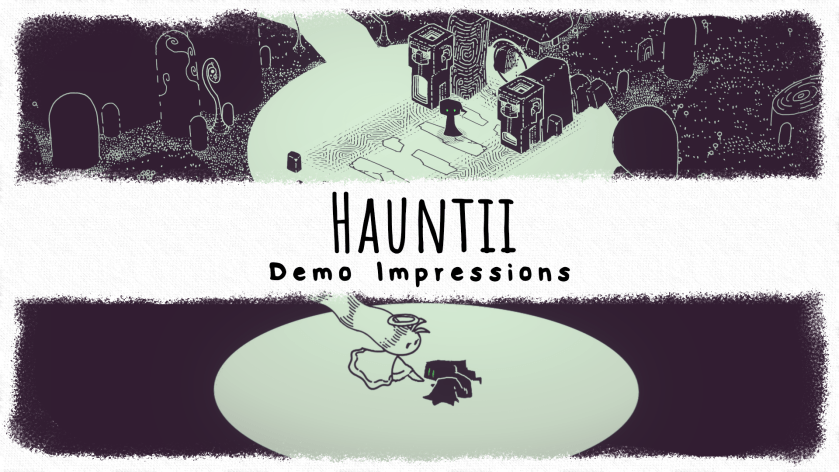
While our character moves quite slowly, shooting feels great and is used for many more purposes than just shooting enemies. We are Hauntii, a ghost that has the ability to posses objects and other things, influencing them to do as we please. This could be lighting up a previously unlit path, growing to allow us to reach other places, becoming a turret to shoot heavier objects or even allowing more traversal to find all of the secrets. Our goal is to collect fragments of our past, bringing them together to paint a clearer picture of who we were and how to free our self from the tether this land has on us.
Hauntii reminded me of some other indies that I have played or seen in the last couple of years, and while it isn’t exactly like any one of these games, I will mention why they prompted memories in me. My first touchpoint was Gris, a very artful, intentional experience promising emotions through imagery and sound. Chicory is the second game I was reminded of, due to the way that we can change the world as we interact with it, as well as having a sweet vibe underlined by a threat. Finally, The Wild at Heart was my third reference point, not at all through gameplay, just very vague aesthetics, exploration, an interesting forest family, a hub area and the use of the dark. If you like any of those games for any of those reasons then there is a potential that there will be something here for you too!
This feels like a one for the couch, to play on a cozy night in with the lights low, candles on, a blanket and a nice cup of hot chocolate in hand.
Demo Length – 1 hour At a glance + Art. + Music. + The animation. + The use of colour. + The distortion in the dark. + Shooting feels very smooth. + Finding secrets. + The whimsy. +/- The puzzles were quite simple, but I also didn’t feel like my hand was being held. – Not sure why I was collecting things other than my memories. – Movement speed is a little slow.
Plant crops, produce biofuel, and automate! A relaxing idle-farming simulator that sits at the bottom of your screen while you do other things.
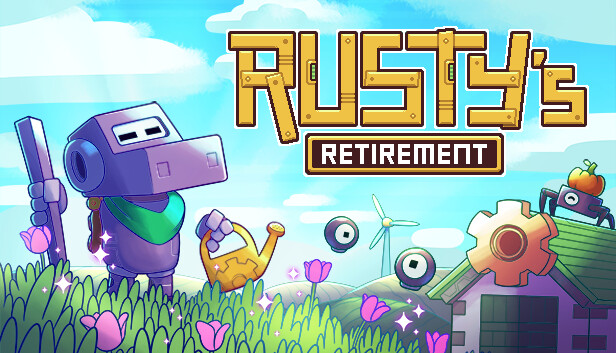
Rusty’s Retirement is an innovative idle game that I imagine we will see inspiring other games of its kind in the years to come.
What makes Rusty’s Retirement stand out from the rest is that it is designed to be accessible when you are doing other things on your PC, whether that is watching YouTube or Twitch, working, or even playing another game. This game sits at the bottom of your screen taking up maybe a quarter of your monitor, allowing you to flick your eyes down to check on your little working farm at any time you please.
Farming and automation feel like a perfect fit for the idle genre, I am surprised I haven’t played this mixture before but I am glad that this one was my first. Growing crops in this game is simultaneously faster and slower than in a regular farming sim. Faster in the sense that you don’t have to wait for in-game days to pass, but slower in the sense that all you have to do is wait, at least early on. As you progress though you can turn your attention to other things such as upgrading your machines for better productivity and decorating your little slice of agricultural heaven.
I had the game running in the background for quite a lot of time during the Steam Next Fest. It is very refreshing to have it sat at the bottom of a second monitor, just checking in every now and again to plant new seeds and checking what I needed to produce in order to unlock the next type of vegetable. The progression doesn’t require a lot of focus but I personally found it nice to take a minute whenever there was a halt in my work and be distracted, ready to focus again once I had planted my seeds.
One thing to note – I wouldn’t really recommend Rusty’s Retirement as a first Idle Game, or at least the version of the demo that I played. This is simply due to the lack of tutorial. I have played a couple of idle games and various automation games but I still wasn’t 100% certain what to do at first glance. Of course, some of the fun for some folk may be figuring that out, but I feel previous familiarity would be very beneficial.
Overall, I honestly think Mister Morris Games are onto something here. I would not at all be surprised to see this concept take off with all sorts of other ideas that I can’t even imagine yet. It is a companion game that doesn’t demand your constant attention all of the time, just being there for you when you have a moment. The way that the larger games industry leans more and more towards live service and monetization every passing year, demanding full attention, daily logins or thousands of hours, Rusty’s Retirement feels humble, elegant and for the player. I wish them all of the success.
Demo Length – 8+ hours At a glance + A genius innovative idea. + Cozy vibes. + ‘Always on top’ option allows me to interact with other windows without hiding or affecting the game. +/- Only as engaging as it needs to be (allowing you to get back to work between planting sessions) – Could use a small tutorial
Design automated workshops for your odd and adorable Sparks to carry and craft everything, including more of themselves! Lead your squad of Sparks into combat. Explore a strange fantasy world, in single player or online co-op. Unearth the ancient mystery of the Sparks!
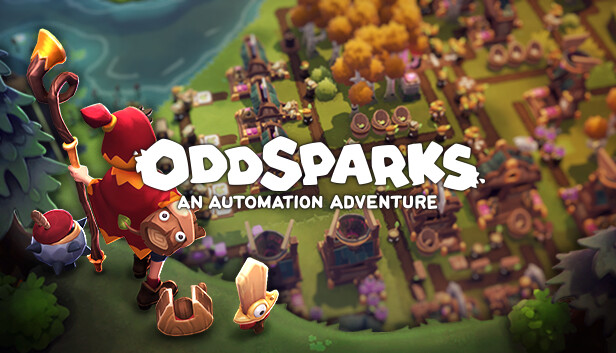
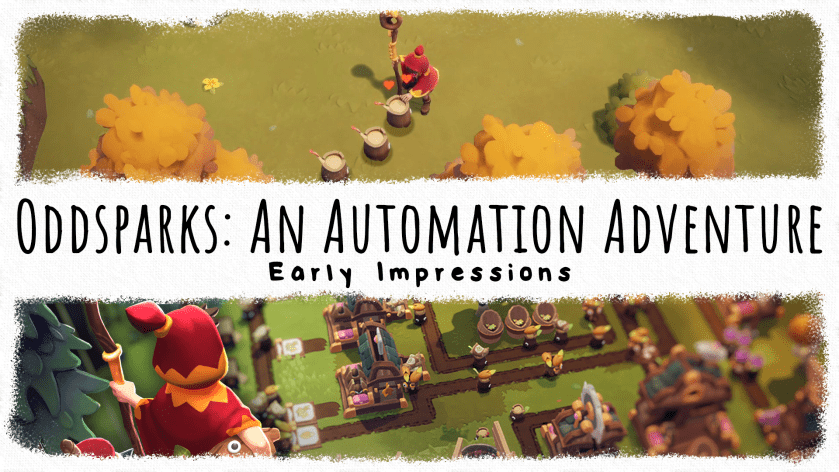
Oddsparks: An Automation Adventure combines the automation and optimisation process of games like Satisfactory or Factorio, with the crafting and creature collecting of games like The Wild at Heart into an expansive yet cozy package. The generous demo provides a lengthy look at what the game aims to be ready for its Early Access release in April.
After a slow start, Oddsparks begins to shine as it reveals the star of the show – Sparks. Sparks are mysterious little forest friends that seemingly exist to serve you. Whether moving ever forward on a predefined route carrying anything in their path as they go, or following you around ready to harvest resources or even fight, these valuable little critters are the heart of the game.
In any automation game, the freedom to be able to relocate your buildings and constructs, make changes to your set up and alter and rebuild paths without penalty is crucial in encouraging creativity. This game allows for that perfectly. As I unlocked new things and discovered new areas I was free to experiment with my set up which, in my opinion, is half of the fun of the game.
The game (at least as far as I got) is set in two areas. The village, and what I will call the wilderness. The village is where the NPCs live, giving you tasks in order to help you learn the game while drip feeding story and flavour. The wilderness is where you will do your building. It is large, full of resources, and potentially more dangerous the further that you go.
The village itself is the weakest point of the game for me. I was never excited to return, only going back because I had to hand in my quests but never looking forward to it. There was a disconnect between me and the dialogue that didn’t allow me to connect with the characters, making it feel less like a home base and more like a chore to return.
I am looking forward to following the development of Oddsparks and very interested to see what changes – if any – are made throughout Early Access. While it wasn’t a home run for me, I did stop playing the demo early as I was sold on the full game. That is a sign of a demo doing its job!
Demo Length – Long At a glance + Simple rules. + Encourages creativity. + A great mixture of game genres. + Glad it is going into Early Access rather than full release. – A little too talky for me as I was not invested in the dialogue. – I never wanted to go to the village.










































![A Noob’s [Mini] Review – Death Trick: Double Blind](https://ctrlaltnoob.com/wp-content/uploads/2024/06/death-trick-double-blind-review.png?w=840)