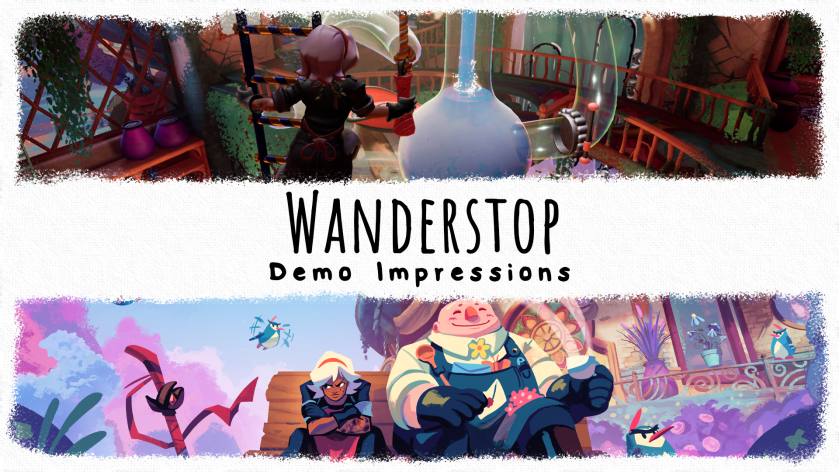
From the creator of The Stanley Parable and The Beginner’s Guide comes Wanderstop, a narrative-centric cozy game about change and tea.
We live in an era of hustle culture that glorifies work over wellbeing. We are encouraged to put everything we have into everything we do. If we don’t achieve our goals, we must not have worked hard enough. If we managed to take breaks or have fun along the way, did we really work hard enough? Of course, not everyone actually believes this, but we certainly all have met people who do, and based on the reception to this game by both critics and gamers alike, I would say a lot of us have internalised this mindset somewhat, whether we want to have, agree with it, care to admit it, or not.
Wanderstop challenges this mindset in a way that only a game really could.
These are demo impressions only, so I have yet to experience any of the story beyond the intro, but this small taster had a big enough impact that it felt really important to sum up my experience.
So far, Wanderstop is a commentary on passion and obsession. Where is the line between those things and if we are walking it, would we even realise it? Say we do take a step back and recognise, “Yes. I have a passion about something (in our main character Alta’s case, it is fighting). I am so passionate that I am going to chase this dream, idea, goal, or whatever it may be. I am going to chase it so completely that no one could possibly question my passion.” Wanderstop asks the question, “at what cost?”
We meet Boro, the most gentle, content soul, and the game asks another question. “Are you ok?”. Then, gives you all the time you need – probably more time than you would usually give yourself – to ponder it.
As someone who is prone to going all in on things and has burnt myself out multiple times before, every cutscene and conversation in this demo had an impact that I did not anticipate would hit me so hard. Personally, I am at a time in my life, I’d say a little further on than Alta is currently, where I have started to recognise the need for – and desire – balance. The moment I met Boro, his energy felt like the end goal for me. While Alta is wrecking herself, living her life with one goal in mind, desperatly clutching at one potential outcome and tormenting herself for falling short of an almost impossible goal, Boro is living in the moment, enjoying the journey, the here and the now. Alta, and I can confidently say a lot of us too, could do with taking a leaf or two out of Boro’s book (or tea… hehe).
Perhaps, feeling a longing for a Boro to find you and give you this opportunity the way that I did is an indicator that you yourself should take some time to reflect, to have no schedule, and to be. Whether that is through getting out in nature, a duvet day, doing absolutely nothing, or through making tea in Wanderstop, that is up to you – although I’d say Wanderstop is a good place to start.
The action of playing this game forces the player to do the very thing the narrative is encouraging. Slow down. Potter around. Make some tea. No rush. No worries. This is our time. Rather than just telling you that you should do these things in a way that you have likely heard 100 times before, Wanderstop teaches you through showing and doing. This, along with some beautiful artwork, voice work and dialogue, is the reason this game stands out to me among a sea of cozy games, and I am really pleased to have it accompany me during my LudoNarraCon 2025 coverage. I am thrilled by the prospect of taking a break from my other IRL projects to go all in on game content for the month, but I am going to keep Wanderstop going on the side, reminding me to take a break and check in with myself every so often. And I am rooting for Alta to do the same.
Demo Length – 1+ hour At a glance + Writing – both conceptually and dialogue. + Beautiful cutscenes. + Heavy hitting package, relatable to many. + Meta in a way that only a game can be. + Voice acting is great. + Boro is precious. + Alta is imperfect in a very real way + Themes of tunnel vision, failure, sacrifice, exhaustion, burnout and the consequences of that have already been explored in the first hour. +/- I am anxious to see where the story goes and whether it continues to resonate. +/- I am also anxious to get further into the gameplay, to see whether it is therapeutic, or becomes tedious, boring or repetative.
Watch my playthrough and first impressions of the Wanderstop demo here!
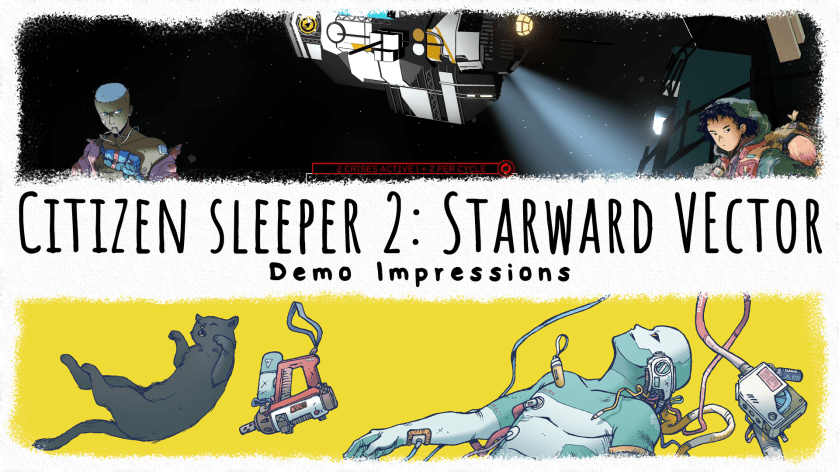
A dice-driven RPG, in a human and heartfelt sci-fi world. You are an escaped android, with a malfunctioning body, a price on your head and no memory of your past. Get a ship, find a crew, and take on contracts while you navigate across the Starward Belt.
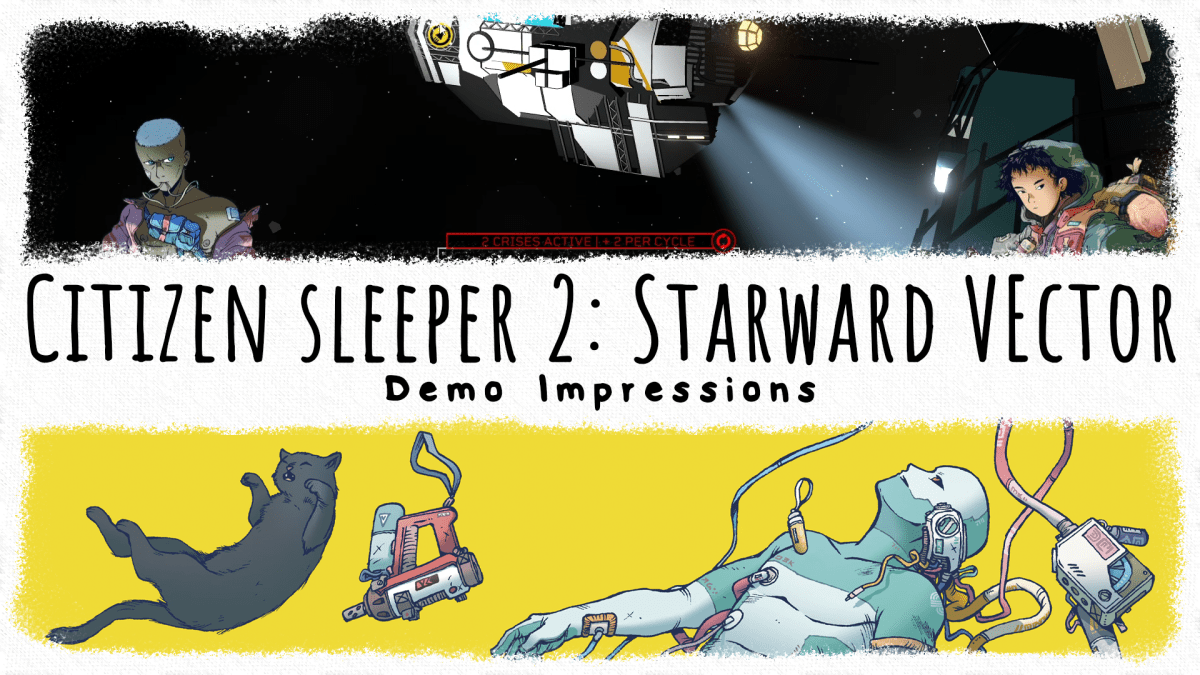
The Citizen Sleeper 2 demo throws you straight into the narrative. We are a sleeper. We are disoriented and lost as we come to our senses in an unfamiliar situation. The eloquent introductory scenareo does a great job of filling you in if you have yet to play the original, while not lingering too long for those that are already acquainted with the fiction. The ever familiar UI and soundscape provide comfort to me as a player as I get to know a new individual in an entirely new scenareo. We are no longer confined to the Eye, and based on what I have played so far, I cannot wait to see the stories that are yet to be told throughout the rest of space.
Citizen Sleeper is a Narrative RPG in which we use dice rolls to determine and distribute our actions. As is the case in Citizen Sleeper, your character has stats to give an advantage to certain types of tasks over others based on your strengths. Building these up over time as you gain experience in the world is just one of the mechanics in play in this management style, choices matter story.
What strikes me about the sequal so far during my 2 hours with it is that while a lot of the tone is synonymous with the first, there is a subtle change that has huge implications in both the gameplay and the narrative experience. We have a crew. In the first game we met plenty of people, got to know them, relied on them, even grew to love some of them, but deep down, it was a wholly solitary experience. For me at least, it felt deliberate as we go through the personal struggle of acceptance of what/who we are. People can help us along the way but that journey has to be ours and ours alone. I went to sleep alone at night, and I made my decisions based on what was best for me as survival had to be my number one priority. The small shift of having a crew is going to ripple out not only into my decisions, but into my way of thinking, and that is an exciting proposition.
Another impactful mechanic added to 2 is the contract system, changing up the day to day gameplay. If you are not currently on a contract, you are probably going to want to stock up for the next one as these multi-day jobs take you away from any bustle, to focus solely on the hustle. This new system is sure to complement our nomadic lifestyle, but presents its own challenges in resource management, risk reward and possibly even crew relations. I can tell you that my first contract absolutely did not go as I intended.
The writing is just as engaging as the first and with the universe at our fingertips, the possibilities feel endless. And with the recent announcement of a January 31st release date, we don’t have long to wait.
Demo Length – 2 hours At a glance + Meaningful changes from the first game. + A comfortable familiarity with the general structure and UI. + Choices matter, even during contracts. + Time pressure still feels weighty. + The addition of crew stress adds more plates to spin in an interesting way. + Writing and design remain stand out. +/- Looking forward to seeing the rest of the structure of the game.
Resisting the urge to buy a trailer and a bunch of books irl as we speak.
Tiny Bookshop
Developer: Neoludic games
Release Date: To be announced
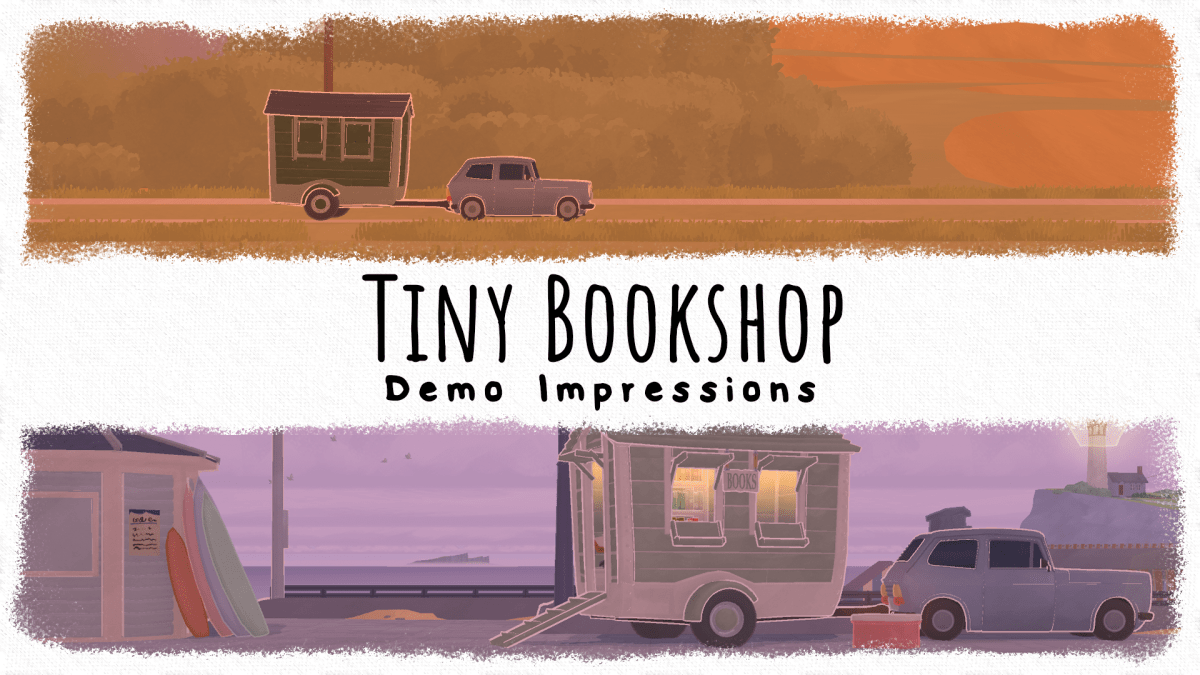
Leave everything behind and open a tiny bookshop by the sea in this cozy narrative management game. Stock your tiny bookshop with different books and items, set up shop in scenic locations, and run your cozy second-hand bookshop while getting to know the locals.
Tiny Bookshop is a cozy management sim about running your own portable bookshop from a trailer on the back of your car. I can’t express how pleased I was that the peaceful atmosphere was complimented by engaging systems, allowing me to live a fantasy that I never knew I had.
The game is not heavy on the management systems, or at least not from my time in the demo. This, in my opinion, is a good choice, allowing the player to fully absorb into the relaxing vibes. I didn’t feel the need to min-max everything, optimising my shelves in an attempt to wring my customers dry. Instead, experimentation felt key in these early stages.
On a daily basis you are able to manage your inventory, decor and location in order to sell as many books as you can in the most aethetically pleasing way posible. The books that you place on your shelves determine the chance that a customer will find a book that they like in the given genre they are looking for. If they successfully find one, they will continue looking, picking up books until they find no more that they like. While this is of course RNG, it feels so clever and realistic to the shopping experience. Sometimes you will go into a shop with something in mind and nothing speaks to you, or sometimes, you will find way more than you expected. Throughout the day as your shelves get depleted, it will naturally be less likely that your customer will find the book that they are after, but there is still always a chance.
Although it is RNG, we can affect the outcome somewhat with the choices we make and it still feels very nice when you succeed. In my case, one lady picked up 10 books. That was 10 coin flips in a row, except luckier as the 50% chance got lower every single purchase.
If the pleasing aethetic and breezy management wasn’t enough, there are more mechanics to the game. Visiting different locations is essential to build up your knowledge of the area. Meeting people will give you leads on new areas and events in the town. Reading the paper will allow you to buy more books as your stock runs dry, as well as decorations. I love the inclusion of the paper, not only as it narratively makes a lot of sense but it is also, on purpose or not, makes the game even more ‘feel good’ by being an eco-friendly business.
Finally, every book you have on your shelf is an actual book, written in real life. Chances are, you have read some of them. One fun way that the game plays with this is that throughout the day, customers will ask you for recommendations. They will tell you a genre, mood, preference, or specific things that they want or don’t want from a book. Then, it is up to you to scour your shelves, reading the descriptions to find a good match. Of course once you sell the book it is gone, so if you think that you have the perfect match for some one, you ought to hope no one has snatched it up in the meantime.
I went into the Tiny Bookshop demo expecting a pleasant way to pass half an hour but I got a lot more than I expected. It is an instant wishlist from me while I look up the price of trailers and have a peak at Facebook Market Place for book bundles, contemplating a pivot to a travelling librarian.
Demo Length – 30 mins At a glance + More to this game than I expected, while not being too complicated. + Aesthetically pleasing. + Lo-fi vibes. + Especially fun for book lovers. + Recycling. + Bookshop fashion.
I already wrote at length about my first impressions of 1000xRESIST. Instead of rehashing that, I am going to talk about what I consider to be the games strengths. I would also talk about the weaknesses but I honestly have difficulty finding any beyond the slow start that I mentioned in those impressions.
The more you try to recommend this game to folk, the more you realise how difficult it is to define the genre. There is a surprising variety of touchpoints for comparison, but every similarity I point out is usually a specific tone or mechanic, rather that the game itself being similar to any other. Here, I want to talk about what this game does, and why it works for me.
+ Scope
I often wonder how people come up with stories like this. But then I read something from an AMA with the developers. This game is a fantastic example of using what you have to inform what you do.
A question was asked about what birthed the idea using clones. There were two answers, one we will get into later, but the second one stood out to me.
“The other thing was SCOPE. Yes, it meant we could focus on making the character model that we had, better!”
It’s fascinating how a creative decision so important can stem from such a technical, meta reason. I personally find that given all of the freedom in the world, my work will often be weaker than the work I had to do under restrictions, which could be why this resonates so much. Scope takes discipline, and while they could have decided to spend more time creating more characters, they made it a core part of the story, giving them more time to focus on the intricacies of the world they were building.
Thinking of it this way, it begins to dawn on me that there are a lot of reused environments too. Many of the places that you go, you will see again for one reason or another. However, there wasn’t a single visit to any of these locations that made me feel sick of them. It never got tiresome. Every revisit was repurposed so carefully that suddenly, fewer environments become a blessing, allowing me that familiarity that makes me feel more involved in the story.
+ Nature vs nurture / themes
Nature vs nurture is something that has always intrigued me. It’s not something that can ever be researched ethically, but the questions remain ever fascinating. How much of a person is in their genetics, and how much is their circumstance? What would the best of us be driven to under difficult circumstances? Could an evil person have been good? Is everyone capable of anything? Is anyone capable of everything? We will never know and it makes for an extremely rich setting for a narrative to explore. One thing that no one can deny is that we are influenced by the people around us, no matter how much we want to be, for better or worse, and that is explored well here.
There are two reasons why we wanted to look at clones! One, was getting to explore the classic thematic of nature vs. nurture. How much of how we turn out as human beings is because of things we don’t understand?
The game also took on many tricky themes that could very easily have been too much. Generational trauma, oppressive regimes, faith, sacrifice, ends justifying means, intent, justice. It was a lot, but never too much. Everything was handled with care and in a world where everyone is waiting for the next thing to be outraged about, I found the game handled everything with class, giving no ammunition to the folk who try to drag things down. Equally, it felt like a safe space to consider these delicate topics without judgement.
+ The Writing
As I mentioned in my first impressions, I didn’t like the writing at first. However, once I got used to the rhythm of the speech of these characters, I was finishing their sentences. I when I finished the game, I couldn’t remember the specific lines in some important moments, but I could hear their rhythm like a melody stuck in my head. And it’s believable. No one talks like this, but they do. It is another one of those bold choices that went well because they rightfully have confidence in the excellent quality of their storytelling.
+ Everything Audio
The music goes a long way to setting the atmosphere of this game. Every time I sat down for a session, hearing the melancholic tones had me immersed immediately, whether it was light, sombre melodies or a little heavier.
The voice acting is another auditory factor that solidifies this games identity. There are so many characters, all so similar and yet so different. The hushed tones, words spoken so softly yet carrying so much weight. It is all so intentional and commendable. The voice acting also contributes to the rhythm of the speech as mentioned above. Without it, I am not sure the game would have bled into my thoughts the same way that it did.
+ Visuals
The game does not have ‘impressive’ graphics. As in, don’t come here for photorealism or next gen aesthetics ala Hellblade. It is stylized. Sometimes, particularly walking around the hub area, the textures felt a little PS3 to me. However, I think any reasonable gamer, and particularly indie enjoyers, can accept that photorealism is only one choice in a medium that can achieve anything, and beauty can be created in other ways.
What this game does have is very impressive art direction and cinematography. It is ambitious in its style in every way except perfection. Colour is already an in game concern, but the use in a creative sense, alongside lighting, can be striking. Whether you are walking around a corner into a set piece, or being guided by a cutscene to see something new, the developers clearly had a vision and they did everything they could to put that on screen, succeeding with flying… colours.
+ Balance
1000xRESIST contains a huge, winding story, the likes of which is very rare to be told so comprehensively within a 14 hour experience. The reason that it is done so well is the balance achieved in the conceptual phases as well as the execution. This story is about disaster. It is about eras. Civilisations. But it is also about people. Individuals. It is about things much bigger than we can possibly comprehend, and it is about the nuance of being human within that. It never loses sight of either of these things.
+ Attention to Detail
Just because the scope was kept in check, that doesn’t mean there is a lack of anything. In fact, that is most likely the very reason that the game contains the density of detail that it does. Again, I am not talking about the textures or foliage. I am talking about continuity, and the stories that are being told indirectly throughout the entire game. It is worth looking around and talking to everyone that you find. You never know who or what will make a huge difference down the line. While it isn’t the focus of the story, I find there to be a bit of butterfly effect between the lines and it is really neat to identify the triggers that may change the course of history, no matter how small they seem at the time.
+ Respecting the Player
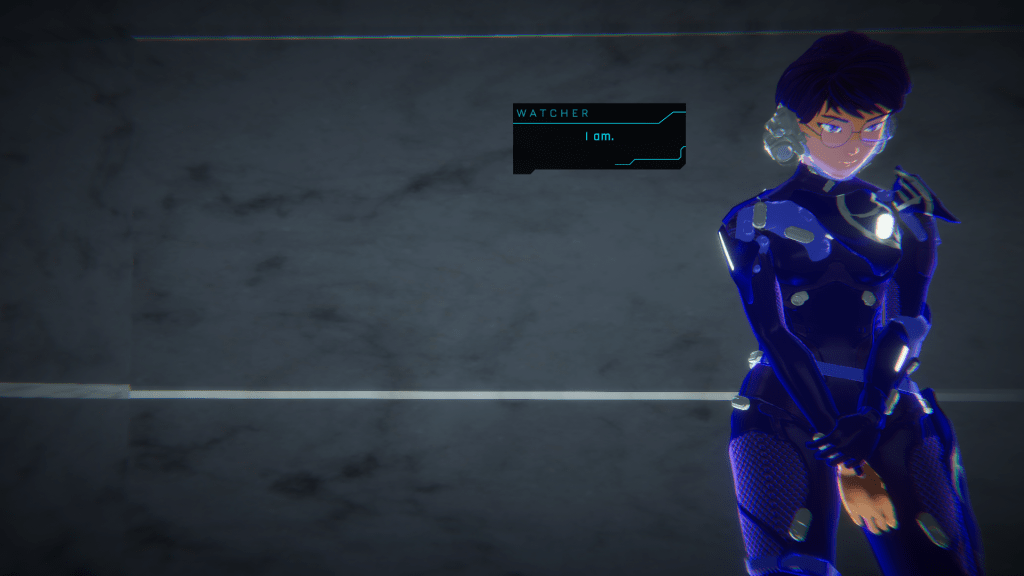
Possibly the thing that I found the most impressive above all else is the way that I felt respected as a player. In my initial impressions I complained that I felt I was supposed to care about something I had no understanding of or context for. I understand that decision a lot more as I have made my way through the game. The developers trust that you will come to understand, without any clumsy exposition dumps or codexes. We learn through experience, exploring the environments we are in, and observation. It is no coincidence that our main character is called ‘Watcher’.
Of course, there is exposition, there has to be, but it is weaved into the game so well that I never begrudged it. In fact I welcomed it as the more that I found out, the more that I realised I still wanted to know. There is even an exposition device written into the story in the form of communions, allowing us to learn about the history of the game world alongside our main character.
I felt respected in another way too. Throughout this whirlwind of heavy hitting themes, I never once as the player felt that I HAD to feel a certain way. These characters are flawed. They make mistakes, mistakes that we are making with them, whether we believe it is a good idea or not. Never once did the game then shame you for what you have done. It provides opportunities to think, but it never does the ‘What have you done?! You, the player, you did something despicable’ thing that some other games do. It could easily have gone down that route but I am very grateful that it did not and as a result it is a richer experience.
1000xRESIST appeals to the part of me that loves YA dystopian fiction. There is nothing wrong with that, but it also somehow feels very reductive. I think what I ultimately mean is that this is not going to be for everyone. For me, it came out of the blue, infecting my thoughts both in and out of the game for a while, but not everyone will have that experience. I think it is important to temper expectations, especially if you aren’t going in as blind as I did.
If anything that I have wrote sounds interesting to you then there is a good chance you will enjoy the game, but be aware that this is an immersive, experimental, narrative based experience. If that isn’t your jam then I don’t necesserily think this is the game that could convert you. My recommendation to everyone is that if you aren’t feeling the beginning, just like I wasn’t, try finishing the first two chapters and see if it grabs you. If it hasn’t by then it probably wont but that is a good amount of time to see some of the variety of storytelling on display.
One thing I do know is that I am not finished with this game.
This is a game about breaking barriers. Some characters giving their all to destroy them and some giving their all to stop them. But also the developers, creating a game that I can’t ever imagine a large studio having the courage to try. It is unconventional, it nails what it is going for, it is a breath of fresh (and emotional) air, and as I said in my impressions post, this is what indie gaming is all about.
Hekki Grace.
TLDR: + Scope + Themes + The Writing + Everything Audio + Visuals + Balance + Attention to Detail + Respecting the Player
The Horror at Highrook is an occult card crafting RPG. Explore a haunted mansion with your team of investigators, summon dark entities, craft powerful protections, uncover the fate of the missing family, and choose your own path through the darkness.
I have been searching for my perfect crafting game for a while now. So often I have the urge to gather stuff to make things, to distribute them, to gather more and make more, but I have yet to find the jackpot game that satisfies my very specific itch. I didn’t even consider I would find it here. The Horror at Highrook demo allows players to play through Chapter 1 of the game. I could have played a LOT more. I am not saying that this is the perfect game or the jackpot, but based on this first hour, it not only hit that compulsive management corner of my brain, but made my eyes sparkle at the idea of increasing complexity. All of this, seasoned with a really enjoyable flavour made this demo an absolute treat.
The game begins with an instruction manual which I found incredibly easy to read. It suits this game a lot more than a conventional tutorial would, immediately setting you loose playing god over a group of investigative explorers. The house that we are inspecting is our board, the team and their belongings are our cards, and it is up to us to set everyone away doing tasks, using the resources that we have to discover new tasks to perform.
As we perform our tasks we find journal pages and other bits of lore scattered throughout the mansion. This guides us forward as we follow in the footsteps of the family that lived here. Doing questionable rituals to appease eldritch horrors is never a good idea, with one exception. Luckily for us, we are doing it to rescue someone, which makes it absolutely fine, and we can all be sure that nothing terrible will happen.
I like the cast of characters. One of them wants to leave – rightfully so might I add – but is reluctantly convinced to stay due to history with another character and despite the fact that I have only known them for 30 minutes, I totally believe it. I didn’t expect to empathise with a card on a board but it is the little details like that that engage the player within the story and make it a memorable experience.
It is hard to put my finger on the exact reason this game hits for me. It has a lot of elements that I like individually, like crafting, management, cosmic horror, character interactions, investigation, and even exploration somehow works considering we are on a static board. Everything feels additive to the next thing with no padding involved. So far it has been linear and I imagine the rest will continue to be the same, I just hope the game continues to feel as fresh as the beginning, as getting new cards is a dopamine rush that only has limited legs. Either way, I will certainly be keeping an eye on the game, consider it wishlisted!
Demo Length – 1+ hour At a glance + Easy to learn. + Drip fed the story. + The character interactions. + The theming is great, especially when surprises happen. + I just love arranging my cards on a mystery mansion. +/- On one hand I could see the game remaining engaging with complexity, but on the other I could see it getting repetitive. Hoping for the former. +/- We can choose the way we manage our time and characters but the overall story so far appears to be linear.
1000xRESIST is a thrilling sci-fi adventure. The year is unknown, and a disease spread by an alien invasion keeps you underground. You are Watcher. You dutifully fulfil your purpose in serving the ALLMOTHER, until the day you discover a shocking secret that changes everything.
This is a write up of my first impressions of 1000xRESIST having played through 2 chapters of the game. I intended to play around an hour or the first chapter – which ever came first – but this game got it’s hooks in me. I had to tear myself away otherwise my first impressions would become a full blown review. On one hand, I wouldn’t mind that but on the other, I have lots more games to try out during the fantastic LudoNarraCon.
*My first impression posts aren’t usually this long but I had a lot to say about this game!
First thing’s first, this is an experimental game. It does exactly what it wants to do and does so confidently. I will admit, I was not sold at first. I found the opening slightly off-putting, feeling like I was supposed to care about these characters that I had never met, having an experience that I don’t understand. However, with a little more patience the world was built, less through exposition and more through exploration and character interactions. Half way through chapter 1 I got into my groove and by the end of the chapter I was all in.
The steam description sets up an epic story about aliens and diseases and the ALLMOTHER, and while these are all certainly present, creating the entire setting for the game, it surprisingly feels very personal so far. Even more impressively, it remains personal and creates an investment despite incredibly flawed and some even dare I say unlikable characters.
The game splits between the present time and the past, parts of the chapter taking place in the form of what I would call long vignettes. The character who’s memories we are exploring, in my opinion, is down-right awful, but I am compelled to see what made her that way. What particularly shines are the relationships, personalities and actions of the people around her.
A common complaint in either cinematic narrative games or walking simulator style stories, is that there isn’t enough for us – the player – to do. I feel it is important to point out that I can personally enjoy a narrative game with very minimal mechanics. Having said that, I find 1000xRESIST to have struck a great balance of engaging gameplay so far. The primary verbs that I have experienced so far are walk around, interact, and a time hop mechanic.
The time hop mechanic alone warrants the existence of this game. Not to sell the other aspects short, but the way it weaves intricately with the environmental storytelling and level design has been fantastic to experience so far. Not to mention that in each chapter the mechanics have been used in their own way, leaving me eager to see what other ways the story is going to be told throughout the rest of the game.
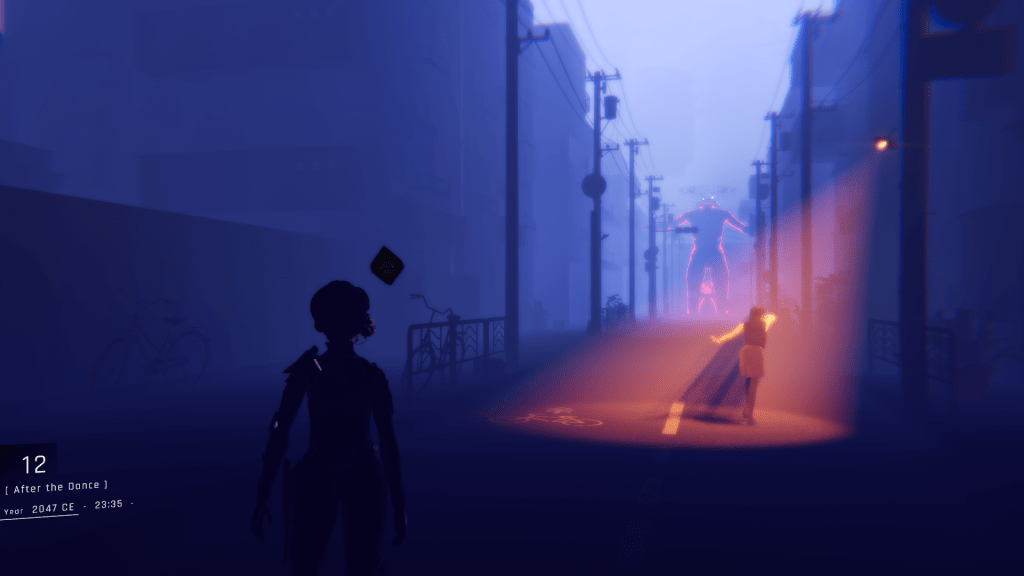
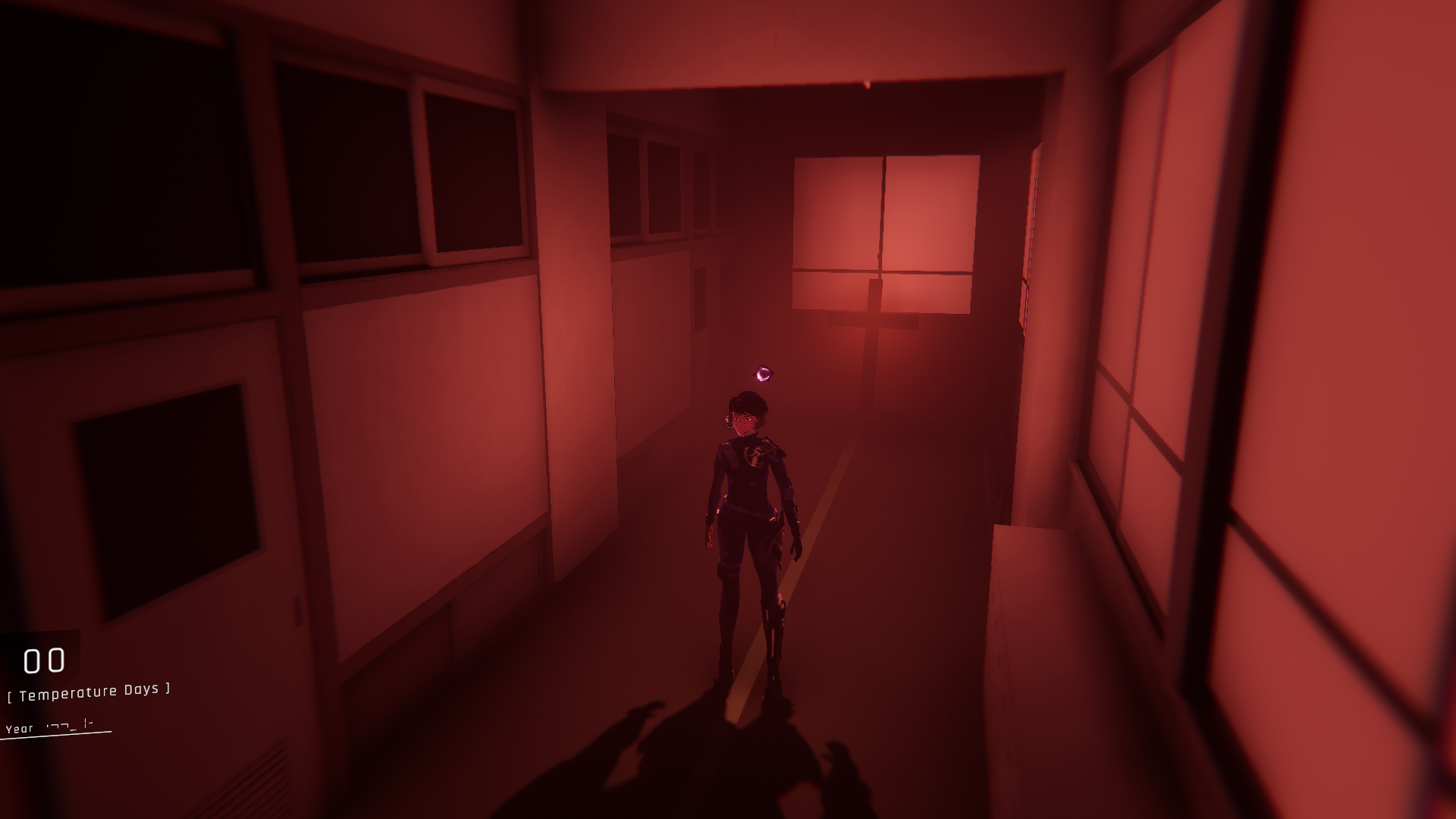
An example of the impact of the aethetic contrast.
The presentation – particularly in chapter 1 – felt inspired. The lighting alongside fixed camera angles were super effective, I felt dread rounding every corner without it ever being too much. The design of the aliens that have literally plagued humanity and the effect that they have had on the world brings a fantastic contrast to the world of 2047, an unknown amount of years prior, right before the effects took hold. Switching between both of these times in the blink of an eye creates a jarring effect aesthetically and a devastating one emotionally.
It is hard to describe what to expect as this game is unique, but I felt influences or slight similarities every now and again from other media. The first being that the experience of Chapter 2 is exactly the experience that I wish I had from the game Virginia. A wonderfully executed montage experience that I can’t say I have seen many games try. Other looser and unexpected vibes I got lead me to think of set up and themes of stories like Signalis and Everything Everywhere All At Once. I am not saying that you will have the same experience in this game as you had from those other properties, but they felt worth mentioning none the less as if you enjoyed them, I think there could be something here for you.
1000xResist is an experimental narrative game that resonated with me in ways that other experimental narrative game sometimes have not. Both chapters that I played were strong and emotional. What is different about this game is that I don’t actually know what I am going to be doing next. Rather than being goals driven, I am being taken on a journey. A tour of a world entirely different to the world I know. And that is great too. I am excited to see what lies in store.
This game breaks the mould – this is what Indie Gaming is all about.
At a glance + All in on the experimental storytelling. + Enough input required from the player to keep it engaging. + Time hop mechanic. + Environmental storytelling. + Very intriguing concept all around leaving me hungry for more. + Not exposition heavy. + I feel invested in characters despite not agreeing with them or even liking some of them. + The Asian-Canadian perspective enriches the whole experience. + The aethetic – particularly in chapter 1 – is great. + What a cool idea for a disease. +/- The characters are flawed, and I think the game is trusting player curiosity to carry on despite the player characters feelings on the situation. +/- Took a while to understand what is happening. +/- No indication about what is next, just this really interesting world. – Disconnect in dialogue took me out of it occasionally e.g. Watcher talking as herself when people see her as Iris.













![A Noob’s [Mini] Review – Death Trick: Double Blind](https://ctrlaltnoob.com/wp-content/uploads/2024/06/death-trick-double-blind-review.png?w=840)























![A Noob’s [Mini] Review – Sea of Thieves](https://ctrlaltnoob.com/wp-content/uploads/2023/05/sea-of-thieves-review-2.png?w=840)
![A Noob’s [Mini] Review – Astro’s Playroom](https://ctrlaltnoob.com/wp-content/uploads/2023/04/astros-playroom-review.png?w=840)
![A Noob’s [Mini] Review – SOMA](https://ctrlaltnoob.com/wp-content/uploads/2023/04/moonlighter-soma.png?w=840)
![A Noob’s [Mini] Review – Return of the Obra Dinn](https://ctrlaltnoob.com/wp-content/uploads/2023/03/return-of-the-obra-dinn-review.png?w=840)
















 CtrlAltNoob