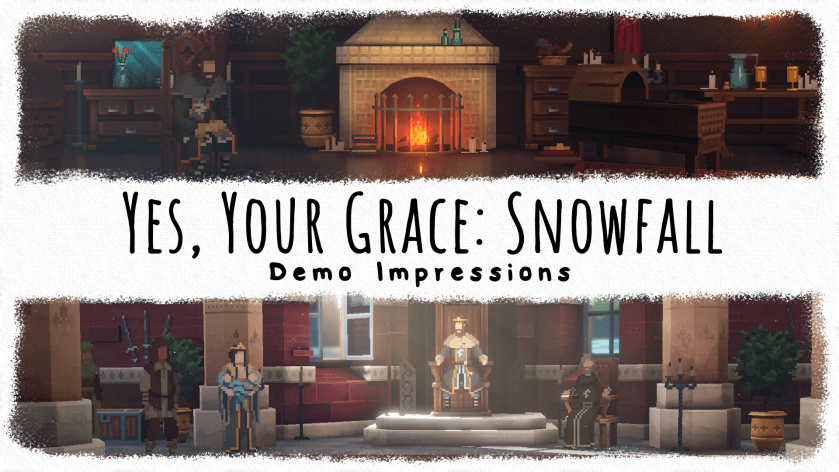
Rule your crumbling kingdom as you try to satisfy the petty needs of your people in this cinematic kingdom management RPG. Balance your resources, collect taxes, hire agents and make difficult decisions to see your kingdom prosper or fail.
It feels really important to preface this post by saying – Yes, Your Grace: Snowfall is a direct sequel and I highly recommend playing the original game, ‘Yes, Your Grace‘, first. Deciding not to is a viable and reasonable choice, but since I had such a phenomenal time with it, it would be a disservice not to explain why.
Firstly, this game opens with a recap of all the major story beats of the first. This was fantastic for me as it is quite a while since I played it and great for anyone who isn’t going to, but if you even have a slight interest in a Game of Thrones the video game, kingdom simulating, stressful decision making, trauma inducing, jolly old time then do consider going back and playing before spoiling it. If you like this game you will almost certainly like that one too and it is worth your time. Secondly, if you wish, choices you make in the first game carry over into this one, meaning that everyone can have their own slightly different canonical story. How much do these choices impact this game? Only time will tell but at the very least – somewhat. For me, I love the idea that some of my desperate decisions to survive the first game may come back to bite me in a sequel that I had no idea was even going to be made at the time. It is almost poetic with the themes of the game.
Alright, I have made my pitch, now onto Snowfall itself. This demo raised my blood pressure. As soon as I found myself perched back into my familiar throne room I was overcome with feelings from the first game. Feelings of life or death stress, trying to please everyone and barely scraping by… and it made me so happy. Even from the hour that I played, the demo confirmed that at it’s core, it is going to follow a very similar structure to the first. A structure of impossible choices, humorous and heart felt family time, tragedy, responsibility, treachery and hope, but with some shiny new upgrades.
The intensity of the resource management is felt after the very first week where you may be finding yourself squeezing your community for all its worth just so that you can pay one of your staff. This is also when we get to feel some of the new mechanics of the game. Resources have categories, and while it may feel harder to have stock of everything you might require, satisfying villagers needs can be more flexible as a result. More flexible, but also difficult to optimise most efficiently. Excursions beyond the castle have also been upgraded, adding another weight to balance on the scales, attempting to do enough to drive folks stories forward while still being able to tend to new folk in need.
Finally, and possibly the most grateful change to me is the ability to ask your people to wait once they have told you their woes. The one little change that changes everything – “Hold up a minute sir, let me back out this request for a second, let me go and have a mooch around to see if I can scrape some supplies together before I commit to rejecting your cry for help, dooming your friends to death. I am back! Yeah sorry I couldn’t afford to buy what you need but at least I tried, come back in a few days and maybe I will have saved enough money to pay for the funeral.” In the previous game you had to make a decision there and then so talking to people felt like a huge commitment in itself.
Of course there are other things to mention like the graphical and cinematic updates, but the biggest thing that I want to point out is that this demo gave me faith that this sequel is the perfect kind of sequel. It takes what was good about the first game, makes some QoL changes, presents a slightly different challenge while retaining the tone that made me fall in love with it originally. I can only pray that this game goes smoother than the first did as I am not sure how much more the King can take.
Demo Length – 1+ hour At a glance + A true sequel. + Maintains the charm and draw of the first game. + Cinematics add to the drama. + A fun family to follow through their life. + Weighty decisions. + QoL upgrades. + More layers to the resource management. + Decisions follow from first game.
I can’t think of a better set up for a point & click adventure.
The Drifter
Developer: Powerhoof, Dave Lloyd
Release Date: To be announced
A Pulp Adventure Thriller – A murdered drifter awakens. Alive again, seconds before his death. Hunted and haunted, help him untangle a mad web of conspiracy in this fast-paced point ‘n click thrill-ride.
The Drifter is a demo that I tried for the first time around 2019, back in one of the early Steam Next Fests. It left such an impression that it has been on my Wishlist ever since. I was thrilled to see the game in the LudoNarraCon line up and delighted that I enjoyed it just a much the second time around as I did all of those years ago.
The first thing that immediatly stands out to me is the presentation of the game. The pixel art and animation is fantastic, the colours immediatly setting the gritty tone that will continue throughout the entirety of the chapter contained within the demo. The game is fully voice acted, including narration from the main character himself which in my opinion, elevates The Drifter from a typical point and click adventure to a more unique cinematic experience.
The demo can be played in less than 30 minutes and even in such a short space of time manages to establish two excellent story hooks. One is more realistic, setting the tone in what immediatly feels like a very down to earth game. However, the other is a science fiction twist that has the potential to allow for some very stressful, suspenseful, intense story and puzzle scenarios, or even hilarious ones if they want to. One of these hooks would have been enough but together, along with the entire aesthetic, this is the set up for a narrative that I am itching to see play out.
Demo Length – 30 minutes At a glance + Lovely pixel art and animations. + Great story hooks. + Narration. + Writing feels good so far. + Drama. + Nice, clear, time saving UI.
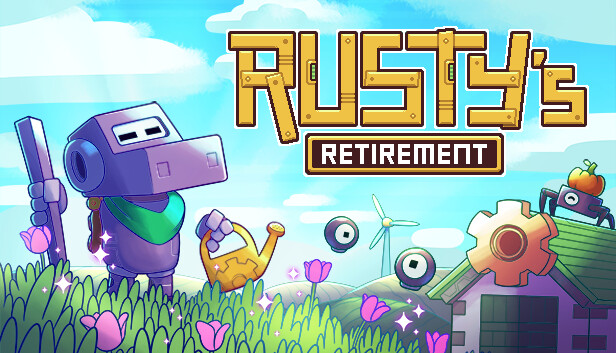
Plant crops, produce biofuel, and automate! A relaxing idle-farming simulator that sits at the bottom of your screen while you do other things.
Rusty’s Retirement is an innovative idle game that I imagine we will see inspiring other games of its kind in the years to come.
What makes Rusty’s Retirement stand out from the rest is that it is designed to be accessible when you are doing other things on your PC, whether that is watching YouTube or Twitch, working, or even playing another game. This game sits at the bottom of your screen taking up maybe a quarter of your monitor, allowing you to flick your eyes down to check on your little working farm at any time you please.
Farming and automation feel like a perfect fit for the idle genre, I am surprised I haven’t played this mixture before but I am glad that this one was my first. Growing crops in this game is simultaneously faster and slower than in a regular farming sim. Faster in the sense that you don’t have to wait for in-game days to pass, but slower in the sense that all you have to do is wait, at least early on. As you progress though you can turn your attention to other things such as upgrading your machines for better productivity and decorating your little slice of agricultural heaven.
I had the game running in the background for quite a lot of time during the Steam Next Fest. It is very refreshing to have it sat at the bottom of a second monitor, just checking in every now and again to plant new seeds and checking what I needed to produce in order to unlock the next type of vegetable. The progression doesn’t require a lot of focus but I personally found it nice to take a minute whenever there was a halt in my work and be distracted, ready to focus again once I had planted my seeds.
One thing to note – I wouldn’t really recommend Rusty’s Retirement as a first Idle Game, or at least the version of the demo that I played. This is simply due to the lack of tutorial. I have played a couple of idle games and various automation games but I still wasn’t 100% certain what to do at first glance. Of course, some of the fun for some folk may be figuring that out, but I feel previous familiarity would be very beneficial.
Overall, I honestly think Mister Morris Games are onto something here. I would not at all be surprised to see this concept take off with all sorts of other ideas that I can’t even imagine yet. It is a companion game that doesn’t demand your constant attention all of the time, just being there for you when you have a moment. The way that the larger games industry leans more and more towards live service and monetization every passing year, demanding full attention, daily logins or thousands of hours, Rusty’s Retirement feels humble, elegant and for the player. I wish them all of the success.
Demo Length – 8+ hours At a glance + A genius innovative idea. + Cozy vibes. + ‘Always on top’ option allows me to interact with other windows without hiding or affecting the game. +/- Only as engaging as it needs to be (allowing you to get back to work between planting sessions) – Could use a small tutorial
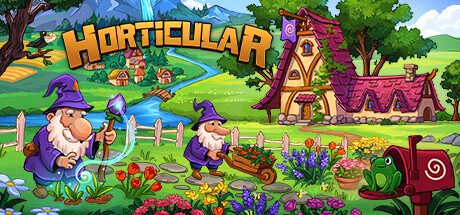
You have been magically summoned by mysterious gnomes to restore a long-lost garden. Attract adorable animals, build a lush environment, and immerse yourself in this relaxing garden-builder. Will you manage to reclaim the wasteland or succumb to a looming corruption?
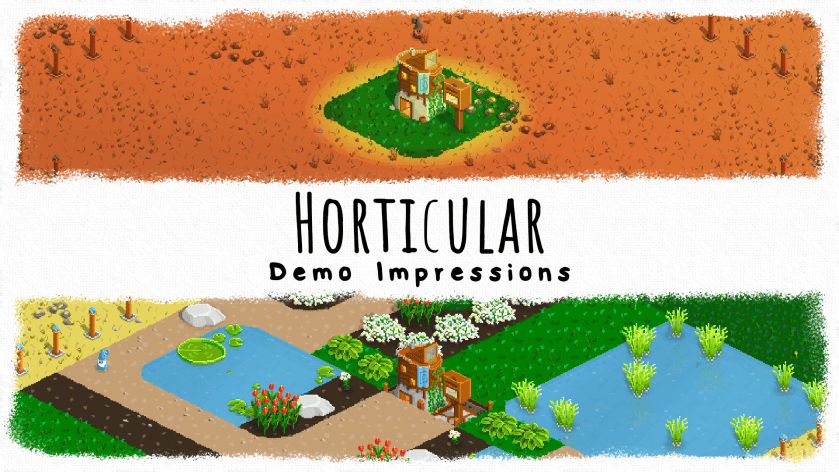
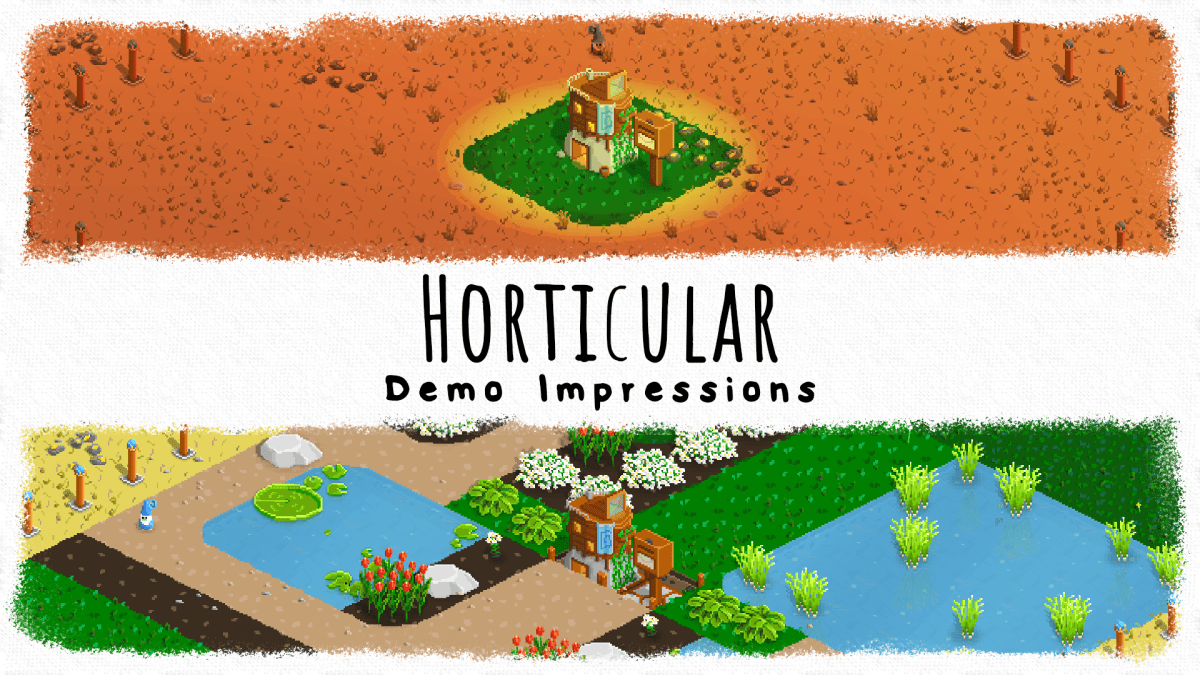
Horticular feels like a mixture of two genres that I individually want to love, but together may be a winning recipe. The two genres that I refer to are cute sandbox builders, and zoo management games. While neither of those things are entirely what this game is about, it takes – in my opinion – the best part of both and merges them together in an ultimate, zen experience. But the kind zen that requires some planning and thought… but not too much!
In Horticular, we are recruited by a council of gnomes to restore a wasteland, reviving the ecosystem and attracting more wildlife into our custom made, picturesque environments. There is an impressive amount of beautifully crafted pixel flowers, terrains, items, decorations and so on, allowing for maximum creativity. Of course they aren’t all available to you from the start. The more that you restore, the more money you can make to continue restoring and unlock new options.
All of these items impact the environment in different ways, mostly being the deciding factor of whether an area is habitable for certain creatures. The more creatures you attract, the more you will learn about their needs, which helps you to invite more creatures. The more creatures you have the more resources you will gain, and the more pride you can have that your environment is thriving. It is a cycle of absolute pleasantness to the highest degree.
Even from the demo I feel like this is a game that I have been looking and hoping for for a long time. The developers are doing an outstanding job and I wish them every success. I hope this game can get the attention that it deserves.
Demo Length – I played for 2 hours and got the impression there was quite a while to go.
At a glance + Beautiful. + Peaceful. + Loads of options to make your garden your own. + Ground types only cost time which allows you to be creative. + It is exciting when a new animal arrives. + I enjoy the gnome theming. +/- It has management game elements without going really far in that direction. Perfect for people like me who fall off those games when it starts getting too complicated. Maybe not so if you are looking for something extremely complex. +/- I am not sure how keen I am on the corrupted gnome attacks. Difficulty options make this a none issue though, and I can’t judge it this early as there is an entire progression route to it. – I had trouble seeing nectar that had been dropped.
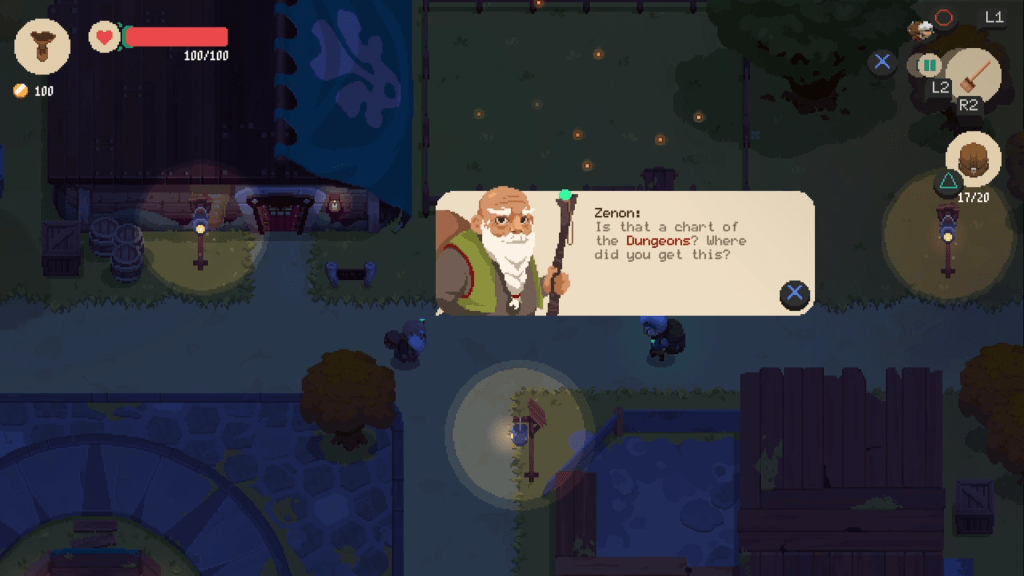
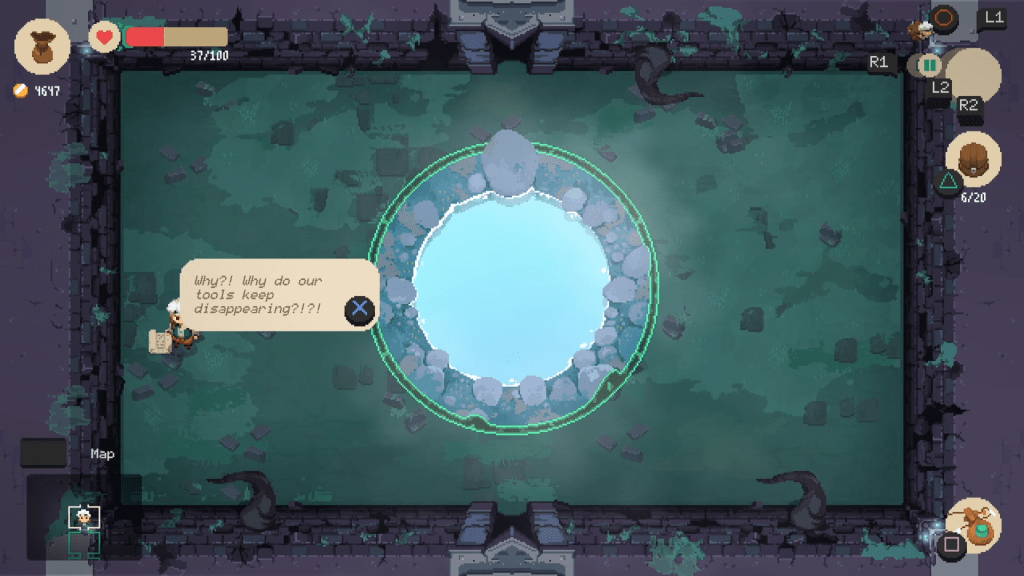
Moonlighter is a game in which you hunt for treasures by night, and sell them by day. Both of these jobs create two different modes which construct the daily flow of the game. The dungeons you pillage are randomized in a rogue-like fashion. The further you get into a dungeon, the more valuable loot you will find. Kill the main boss to complete the dungeon and unlock the next one, with a new biome and new loot. Throughout the journey you will be fighting creatures, finding notes and organizing your bag in order to maximize your haul. What is the catch here you may be wondering? Well.. If you die you lose the majority of the loot that you have collected that night. It becomes a game of deciding whether you dare go into the next room. There may be enemies that could kill you, but there also may be a healing pool or something worth everything you have already collected combined. Do you want to risk it all? Or are you satisfied to come back another day.
The second half of this game is managing your shop. Almost everything that you find is sellable. Your job is to figure out the optimal price to sell these items. Price them too low and you are missing out on valuable cash, but price them too high and they will not sell or customer demand for said item will plummet. The game kindly provides you with a book that updates automatically to allow you to focus on pricing up the new goods while quickly selling old ones. Another catch? A lot of what you find are also materials that you will need to upgrade your equipment, so you have to make some decisions – managing money vs benefit when it comes to what you sell. My advice? Prioritize upgrading every time. It makes a huge difference as you can spend longer in the dungeons, allowing you to bring even more valuable loot home. And thus, the loop continues.
+ A Good Podcast Game
My favourite thing about this game is that it is a great podcast game. By which I mean, once you are used to the mechanics and know what you are doing, you can easily put on your favourite podcast and listen away.
– The Combat
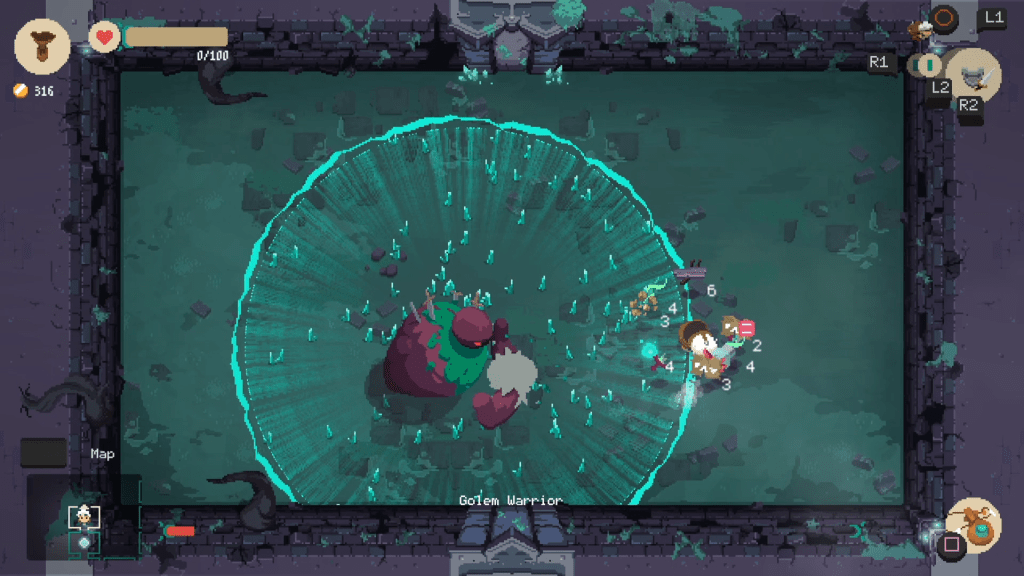
I am so hit and miss with combat that anyone would be forgiven for taking my opinion with a grain of salt. However, I found the combat to feel really clunky. Hitboxes were strange, it didn’t feel super responsive and I never really got the hang of it. The first thing that I did was rebound the controls (excellent feature I am always happy to see) to feel more familiar which helped some, but the further I got it never felt better. The only thing that helped me make progress was upgrading my equipment. Of course, that is to be expected, but I never felt like I was improving as a player. I was still feeling as frustrated by the end as I was at the beginning. By the fourth dungeon I ended up turning down the difficulty because I just wasn’t having fun with it. Granted, I am used to playing The Binding of Isaac where you can attack in a different direction than you are facing. You can’t do that here and I felt it a lot. It resulted in lots of running into enemies while trying to face them, taking damage in the process.
+/- The Progression
This being a pro or a con really depends on how much you enjoy the core loop. I did enjoy the loop, but I was excited to see how it was going to progress as I unlocked new areas and facilities in the town. Unfortunately for me, I didn’t enjoy the direction it took. The best way that I can describe it is – more of the same but with a few added annoyances. The dungeons and your gear upgrades all follow the same patterns with a couple of changes here and there. That was fine. It was the shop progression that I had a bit of an issue with. As an example, the larger your shop grows, new mechanics are introduced. One of them is a bird flying into your shop. You have to chase it around and catch it by pressing X. It startles the customers and everyone freezes until you catch it. The first time this happened was fine, but it happened around the same time every single day, with the bird flying in the same predictable pattern. It wasn’t a challenge or a delight. It was just a thing that happened to give you something to do and it didn’t add anything. In fact the opposite, it developed to be quite annoying. I do enjoy how the variety of customers grows as your shop does, but I hoped for more in the shop itself.
+ The Ease of Use Features
Simple mechanics such as moving everything to and from chests, easily being able to pick up individual items or stacks, sorting via price, getting rid of items mid dungeon, automatically updating my price book, being able to see my price book easily mid looting, and having a wish list option that highlights crafting materials you need as you find them, were all very gratefully received by me. Often when I thought ‘I wish I could do this’ my thought was cut short because the game had already given me a way to do it.
– Valuing items becomes finicky
To create more challenge and variety, your book doesn’t store item price data if the item is in high demand when it is sold. That means that you can charge more than normal for profit, but the number doesn’t get saved. I wish there was a separate section for recording this data. In addition, it doesn’t save the price for certain customers. This can result in an attempt to figure out the best price of a particular item thwarted because some rich or interested dude bought it. This then gets frustrating becasue you not only have to remember the item and price range that you were working with, but find it again and try another day where it is just as likely to happen again. By the third dungeon I would say around 95% of my prices were not getting recorded and it was really frustrating because figuring out the price boundaries was my favourite part of the game. I loved testing the boundaries, slowly testing the maximum I could get without being too cheeky. This aspect was completely taken away due to the progression of the mechanics and instead turned into annoying robbers and just trying to sell everything as fast as I could. It improved slightly in the fourth dungeon but by then I felt defeated. It had me questioning whether my game was bugged, a question I still don’t know the answer to.
– Some Minor Technical Issues
Every time I pressed X – from entering a dungeon to reading a note – the game would switch my weapons. Which would mean I would run up to punch an enemy only to slowly shoot an arrow in their face because I didn’t realise it had switched. This isn’t game ruining at all, but it was an annoyance that added onto previous ones. I also had some chugging and framerate drops occasionally which felt a little strange in a 2D top down game like this.
+ The Familiars
You can happen upon eggs in the dungeons that after a few days hatch into little friends that aid you during your dungeoneering. I loved this addition. They were cute and had some legitimately interesting perks.
– The Notes
There are notes you can find throughout the dungeons and every time I found one I felt excited. They are there to give the player some hints and add some flavour. I just wish they were a bit more interesting. It didn’t take long at all for them to start repeating and I found them to be quite generic. Occasionally it would be a hint for something that I figured out 2 dungeons ago, and it just ended up feeling very disappointing.
Ultimately, the first couple of hours of was my favourite part of the time that I spent with this game. Where I thought it was going based on those first hours and where it actually went turned out to be a little different, which was unfortunate for me. My favourite part of the game was gradually made worse by strange mechanics rather than staying the same or improving, to the point that I pretty much gave up on it. I started my first few hours wanting to craft every weapon to the highest level, but by the end I was just trying to finish the game. It could be that it is just not for me, but what I really think happened is the niggles that I mentioned above wore me down. The later the game, the more niggly mechanics were added which added to the wear down. I think it is a fantastic, fun core concept for a game that was brought down by a few small things. That all being said, if you go in with the expectations set by everything written above then it is a nice game to keep your hands busy while you listen to podcasts.
+ A Good Podcast Game
– The Combat
+/- The Progression
+ The ease of use features
– Valuing items becomes finicky
– Some minor technical issues
+ The Familiars
– The Notes
If you would like to see my first few hours with the game then you can here!


![A Noob’s [Mini] Review – Death Trick: Double Blind](https://ctrlaltnoob.com/wp-content/uploads/2024/06/death-trick-double-blind-review.png?w=840)


























 CtrlAltNoob