Death Trick: Double Blind is a detective visual novel. And it is a very good one. There has been a murder at the travelling circus and it is their last day in the area. We have until the conclusion of their big show tonight to solve it and it is up to us to use our time wisely.
This game was satisfying on both a narrative and mechanical level, the game-play providing a fantastic spin on the genre while the characters played a large part in populating this colourful world.
In Death Trick, we play as dual protagonists. A private detective hired to investigate the case, and a magician, here to ensure that the show goes on. Through both of these characters we get to know the cast of the circus from both an outsiders perspective and within.
The game is played in hourly blocks. First, we play as the magician, behind the scenes of the circus getting ready for our big performance. We are under cover as the famed murder victim herself, meaning that not only do we have to work to be accepted by our peers but we must avoid public areas to keep our performance a surprise. Then, we play the same hour as our down on his luck detective, re-orienting himself after a nasty black-out. As an outsider, we are not allowed into the behind the scenes sections, catching the entertainers for a word in the public areas between their performances.
Conversations are made using Action Points. Every hour they refill, and it is up to us how we use them. As we chat to different characters we gain topics and evidence that we can then question them about. Each question takes up an action point so you really want to take care to ask the questions that matter. Scouring environments for clues and calling out contradictions also use points. You can’t talk to everyone about everything, so a huge part of the game play is prioritising your questions, deciding whether you want to chase up every lead immediatly, or get to know a character in ways which may or may not get you closer to solving the mystery.
The circus setting is pleasing, the cast are colourful to say the least, the currency of points adds an angle of puzzle and the dialogue, as well as the mystery itself are well written, entertaining to read and easy enough to follow along. The music sets the scene, the art is evocative and does a good job visually presenting the characters personalities and styles alike.
I discovered two things playing this game. One is that I want more games set in a travelling circus. The other, is that I want many other games that follow this structure, set in their own weird and wonderful locations and telling their own fantastical stories with their own cast of characters. If any of this sounds appealing to you then I would urge you to give the game a go for yourself.
Developer: Misty Mountain Studio Publisher: Neon Doctrine Release date: 12 March 2024 Average Playtime: 7 1/2 hours Available on:PC, Switch
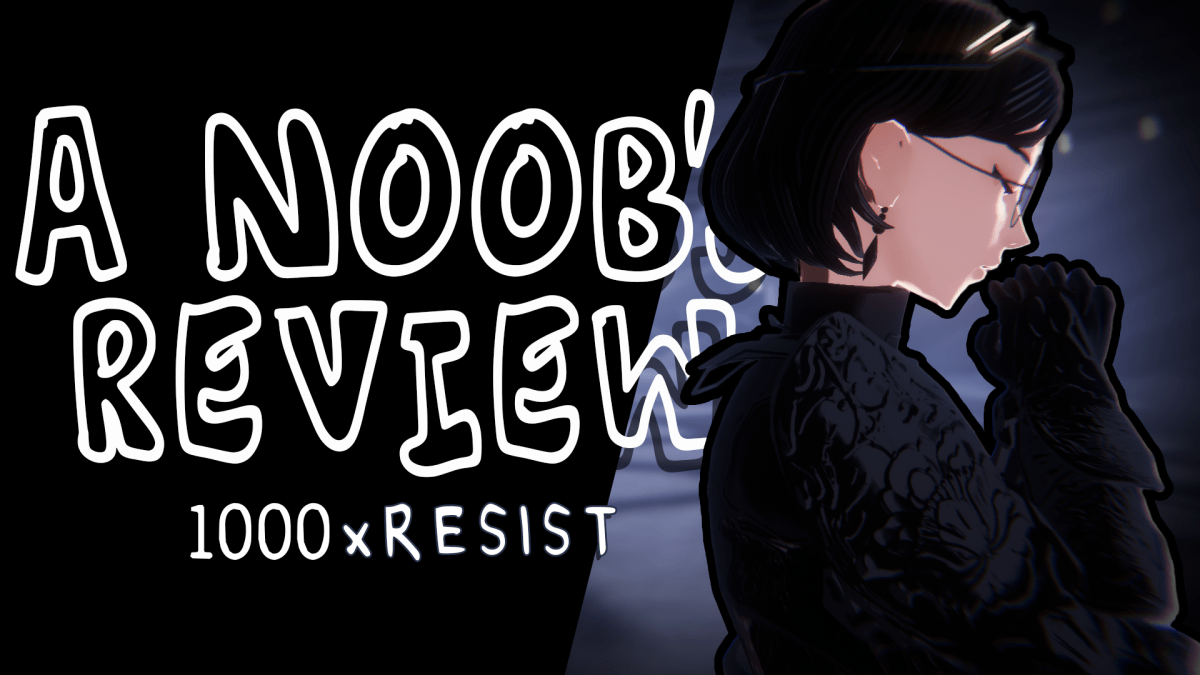
I already wrote at length about my first impressions of 1000xRESIST. Instead of rehashing that, I am going to talk about what I consider to be the games strengths. I would also talk about the weaknesses but I honestly have difficulty finding any beyond the slow start that I mentioned in those impressions.
The more you try to recommend this game to folk, the more you realise how difficult it is to define the genre. There is a surprising variety of touchpoints for comparison, but every similarity I point out is usually a specific tone or mechanic, rather that the game itself being similar to any other. Here, I want to talk about what this game does, and why it works for me.
+ Scope
I often wonder how people come up with stories like this. But then I read something from an AMA with the developers. This game is a fantastic example of using what you have to inform what you do.
A question was asked about what birthed the idea using clones. There were two answers, one we will get into later, but the second one stood out to me.
“The other thing was SCOPE. Yes, it meant we could focus on making the character model that we had, better!”
It’s fascinating how a creative decision so important can stem from such a technical, meta reason. I personally find that given all of the freedom in the world, my work will often be weaker than the work I had to do under restrictions, which could be why this resonates so much. Scope takes discipline, and while they could have decided to spend more time creating more characters, they made it a core part of the story, giving them more time to focus on the intricacies of the world they were building.
Thinking of it this way, it begins to dawn on me that there are a lot of reused environments too. Many of the places that you go, you will see again for one reason or another. However, there wasn’t a single visit to any of these locations that made me feel sick of them. It never got tiresome. Every revisit was repurposed so carefully that suddenly, fewer environments become a blessing, allowing me that familiarity that makes me feel more involved in the story.
+ Nature vs nurture / themes
Nature vs nurture is something that has always intrigued me. It’s not something that can ever be researched ethically, but the questions remain ever fascinating. How much of a person is in their genetics, and how much is their circumstance? What would the best of us be driven to under difficult circumstances? Could an evil person have been good? Is everyone capable of anything? Is anyone capable of everything? We will never know and it makes for an extremely rich setting for a narrative to explore. One thing that no one can deny is that we are influenced by the people around us, no matter how much we want to be, for better or worse, and that is explored well here.
There are two reasons why we wanted to look at clones! One, was getting to explore the classic thematic of nature vs. nurture. How much of how we turn out as human beings is because of things we don’t understand?
The game also took on many tricky themes that could very easily have been too much. Generational trauma, oppressive regimes, faith, sacrifice, ends justifying means, intent, justice. It was a lot, but never too much. Everything was handled with care and in a world where everyone is waiting for the next thing to be outraged about, I found the game handled everything with class, giving no ammunition to the folk who try to drag things down. Equally, it felt like a safe space to consider these delicate topics without judgement.
+ The Writing
As I mentioned in my first impressions, I didn’t like the writing at first. However, once I got used to the rhythm of the speech of these characters, I was finishing their sentences. I when I finished the game, I couldn’t remember the specific lines in some important moments, but I could hear their rhythm like a melody stuck in my head. And it’s believable. No one talks like this, but they do. It is another one of those bold choices that went well because they rightfully have confidence in the excellent quality of their storytelling.
+ Everything Audio
The music goes a long way to setting the atmosphere of this game. Every time I sat down for a session, hearing the melancholic tones had me immersed immediately, whether it was light, sombre melodies or a little heavier.
The voice acting is another auditory factor that solidifies this games identity. There are so many characters, all so similar and yet so different. The hushed tones, words spoken so softly yet carrying so much weight. It is all so intentional and commendable. The voice acting also contributes to the rhythm of the speech as mentioned above. Without it, I am not sure the game would have bled into my thoughts the same way that it did.
+ Visuals
The game does not have ‘impressive’ graphics. As in, don’t come here for photorealism or next gen aesthetics ala Hellblade. It is stylized. Sometimes, particularly walking around the hub area, the textures felt a little PS3 to me. However, I think any reasonable gamer, and particularly indie enjoyers, can accept that photorealism is only one choice in a medium that can achieve anything, and beauty can be created in other ways.
What this game does have is very impressive art direction and cinematography. It is ambitious in its style in every way except perfection. Colour is already an in game concern, but the use in a creative sense, alongside lighting, can be striking. Whether you are walking around a corner into a set piece, or being guided by a cutscene to see something new, the developers clearly had a vision and they did everything they could to put that on screen, succeeding with flying… colours.
+ Balance
1000xRESIST contains a huge, winding story, the likes of which is very rare to be told so comprehensively within a 14 hour experience. The reason that it is done so well is the balance achieved in the conceptual phases as well as the execution. This story is about disaster. It is about eras. Civilisations. But it is also about people. Individuals. It is about things much bigger than we can possibly comprehend, and it is about the nuance of being human within that. It never loses sight of either of these things.
+ Attention to Detail
Just because the scope was kept in check, that doesn’t mean there is a lack of anything. In fact, that is most likely the very reason that the game contains the density of detail that it does. Again, I am not talking about the textures or foliage. I am talking about continuity, and the stories that are being told indirectly throughout the entire game. It is worth looking around and talking to everyone that you find. You never know who or what will make a huge difference down the line. While it isn’t the focus of the story, I find there to be a bit of butterfly effect between the lines and it is really neat to identify the triggers that may change the course of history, no matter how small they seem at the time.
+ Respecting the Player
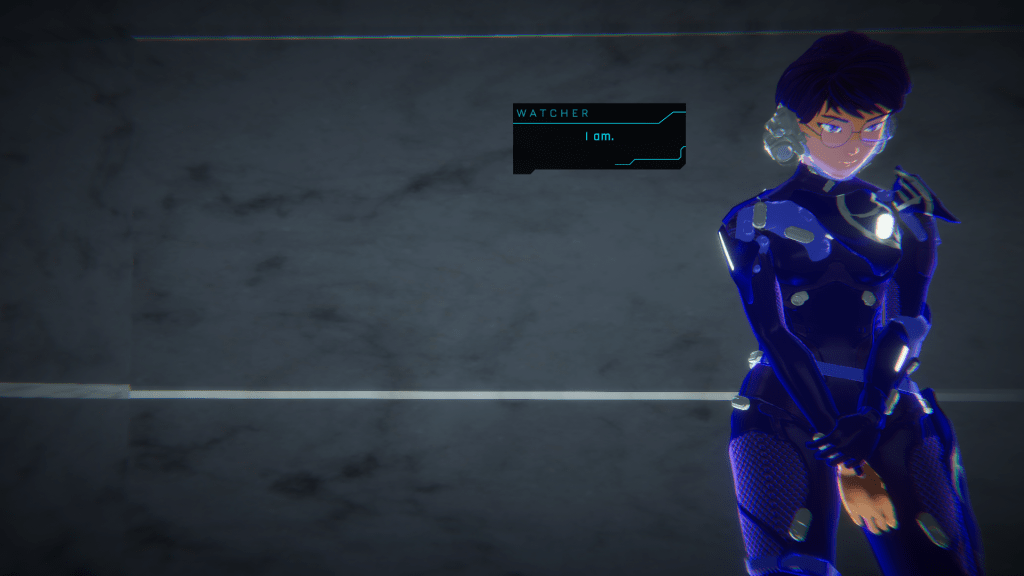
Possibly the thing that I found the most impressive above all else is the way that I felt respected as a player. In my initial impressions I complained that I felt I was supposed to care about something I had no understanding of or context for. I understand that decision a lot more as I have made my way through the game. The developers trust that you will come to understand, without any clumsy exposition dumps or codexes. We learn through experience, exploring the environments we are in, and observation. It is no coincidence that our main character is called ‘Watcher’.
Of course, there is exposition, there has to be, but it is weaved into the game so well that I never begrudged it. In fact I welcomed it as the more that I found out, the more that I realised I still wanted to know. There is even an exposition device written into the story in the form of communions, allowing us to learn about the history of the game world alongside our main character.
I felt respected in another way too. Throughout this whirlwind of heavy hitting themes, I never once as the player felt that I HAD to feel a certain way. These characters are flawed. They make mistakes, mistakes that we are making with them, whether we believe it is a good idea or not. Never once did the game then shame you for what you have done. It provides opportunities to think, but it never does the ‘What have you done?! You, the player, you did something despicable’ thing that some other games do. It could easily have gone down that route but I am very grateful that it did not and as a result it is a richer experience.
1000xRESIST appeals to the part of me that loves YA dystopian fiction. There is nothing wrong with that, but it also somehow feels very reductive. I think what I ultimately mean is that this is not going to be for everyone. For me, it came out of the blue, infecting my thoughts both in and out of the game for a while, but not everyone will have that experience. I think it is important to temper expectations, especially if you aren’t going in as blind as I did.
If anything that I have wrote sounds interesting to you then there is a good chance you will enjoy the game, but be aware that this is an immersive, experimental, narrative based experience. If that isn’t your jam then I don’t necesserily think this is the game that could convert you. My recommendation to everyone is that if you aren’t feeling the beginning, just like I wasn’t, try finishing the first two chapters and see if it grabs you. If it hasn’t by then it probably wont but that is a good amount of time to see some of the variety of storytelling on display.
One thing I do know is that I am not finished with this game.
This is a game about breaking barriers. Some characters giving their all to destroy them and some giving their all to stop them. But also the developers, creating a game that I can’t ever imagine a large studio having the courage to try. It is unconventional, it nails what it is going for, it is a breath of fresh (and emotional) air, and as I said in my impressions post, this is what indie gaming is all about.
Hekki Grace.
TLDR: + Scope + Themes + The Writing + Everything Audio + Visuals + Balance + Attention to Detail + Respecting the Player
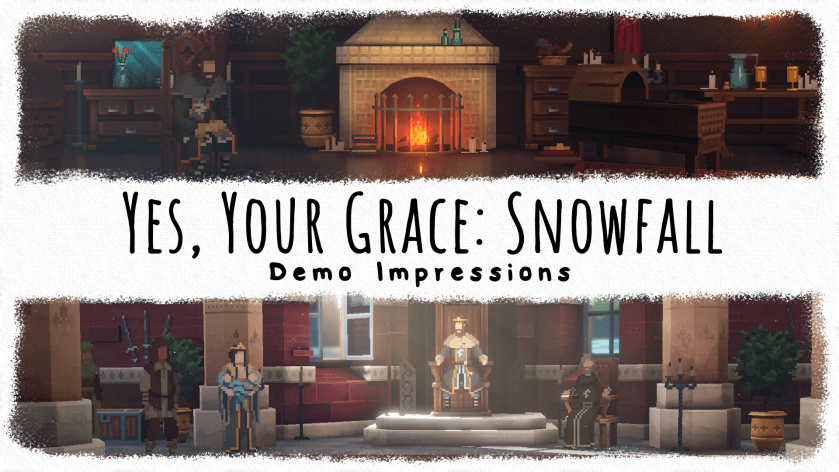
Rule your crumbling kingdom as you try to satisfy the petty needs of your people in this cinematic kingdom management RPG. Balance your resources, collect taxes, hire agents and make difficult decisions to see your kingdom prosper or fail.
It feels really important to preface this post by saying – Yes, Your Grace: Snowfall is a direct sequel and I highly recommend playing the original game, ‘Yes, Your Grace‘, first. Deciding not to is a viable and reasonable choice, but since I had such a phenomenal time with it, it would be a disservice not to explain why.
Firstly, this game opens with a recap of all the major story beats of the first. This was fantastic for me as it is quite a while since I played it and great for anyone who isn’t going to, but if you even have a slight interest in a Game of Thrones the video game, kingdom simulating, stressful decision making, trauma inducing, jolly old time then do consider going back and playing before spoiling it. If you like this game you will almost certainly like that one too and it is worth your time. Secondly, if you wish, choices you make in the first game carry over into this one, meaning that everyone can have their own slightly different canonical story. How much do these choices impact this game? Only time will tell but at the very least – somewhat. For me, I love the idea that some of my desperate decisions to survive the first game may come back to bite me in a sequel that I had no idea was even going to be made at the time. It is almost poetic with the themes of the game.
Alright, I have made my pitch, now onto Snowfall itself. This demo raised my blood pressure. As soon as I found myself perched back into my familiar throne room I was overcome with feelings from the first game. Feelings of life or death stress, trying to please everyone and barely scraping by… and it made me so happy. Even from the hour that I played, the demo confirmed that at it’s core, it is going to follow a very similar structure to the first. A structure of impossible choices, humorous and heart felt family time, tragedy, responsibility, treachery and hope, but with some shiny new upgrades.
The intensity of the resource management is felt after the very first week where you may be finding yourself squeezing your community for all its worth just so that you can pay one of your staff. This is also when we get to feel some of the new mechanics of the game. Resources have categories, and while it may feel harder to have stock of everything you might require, satisfying villagers needs can be more flexible as a result. More flexible, but also difficult to optimise most efficiently. Excursions beyond the castle have also been upgraded, adding another weight to balance on the scales, attempting to do enough to drive folks stories forward while still being able to tend to new folk in need.
Finally, and possibly the most grateful change to me is the ability to ask your people to wait once they have told you their woes. The one little change that changes everything – “Hold up a minute sir, let me back out this request for a second, let me go and have a mooch around to see if I can scrape some supplies together before I commit to rejecting your cry for help, dooming your friends to death. I am back! Yeah sorry I couldn’t afford to buy what you need but at least I tried, come back in a few days and maybe I will have saved enough money to pay for the funeral.” In the previous game you had to make a decision there and then so talking to people felt like a huge commitment in itself.
Of course there are other things to mention like the graphical and cinematic updates, but the biggest thing that I want to point out is that this demo gave me faith that this sequel is the perfect kind of sequel. It takes what was good about the first game, makes some QoL changes, presents a slightly different challenge while retaining the tone that made me fall in love with it originally. I can only pray that this game goes smoother than the first did as I am not sure how much more the King can take.
Demo Length – 1+ hour At a glance + A true sequel. + Maintains the charm and draw of the first game. + Cinematics add to the drama. + A fun family to follow through their life. + Weighty decisions. + QoL upgrades. + More layers to the resource management. + Decisions follow from first game.
1000xRESIST is a thrilling sci-fi adventure. The year is unknown, and a disease spread by an alien invasion keeps you underground. You are Watcher. You dutifully fulfil your purpose in serving the ALLMOTHER, until the day you discover a shocking secret that changes everything.
This is a write up of my first impressions of 1000xRESIST having played through 2 chapters of the game. I intended to play around an hour or the first chapter – which ever came first – but this game got it’s hooks in me. I had to tear myself away otherwise my first impressions would become a full blown review. On one hand, I wouldn’t mind that but on the other, I have lots more games to try out during the fantastic LudoNarraCon.
*My first impression posts aren’t usually this long but I had a lot to say about this game!
First thing’s first, this is an experimental game. It does exactly what it wants to do and does so confidently. I will admit, I was not sold at first. I found the opening slightly off-putting, feeling like I was supposed to care about these characters that I had never met, having an experience that I don’t understand. However, with a little more patience the world was built, less through exposition and more through exploration and character interactions. Half way through chapter 1 I got into my groove and by the end of the chapter I was all in.
The steam description sets up an epic story about aliens and diseases and the ALLMOTHER, and while these are all certainly present, creating the entire setting for the game, it surprisingly feels very personal so far. Even more impressively, it remains personal and creates an investment despite incredibly flawed and some even dare I say unlikable characters.
The game splits between the present time and the past, parts of the chapter taking place in the form of what I would call long vignettes. The character who’s memories we are exploring, in my opinion, is down-right awful, but I am compelled to see what made her that way. What particularly shines are the relationships, personalities and actions of the people around her.
A common complaint in either cinematic narrative games or walking simulator style stories, is that there isn’t enough for us – the player – to do. I feel it is important to point out that I can personally enjoy a narrative game with very minimal mechanics. Having said that, I find 1000xRESIST to have struck a great balance of engaging gameplay so far. The primary verbs that I have experienced so far are walk around, interact, and a time hop mechanic.
The time hop mechanic alone warrants the existence of this game. Not to sell the other aspects short, but the way it weaves intricately with the environmental storytelling and level design has been fantastic to experience so far. Not to mention that in each chapter the mechanics have been used in their own way, leaving me eager to see what other ways the story is going to be told throughout the rest of the game.
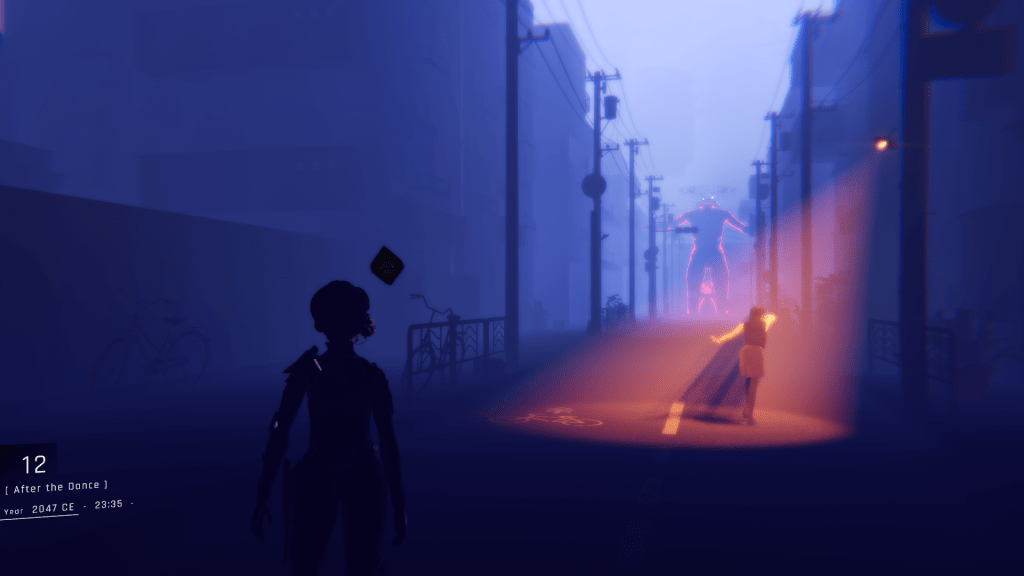
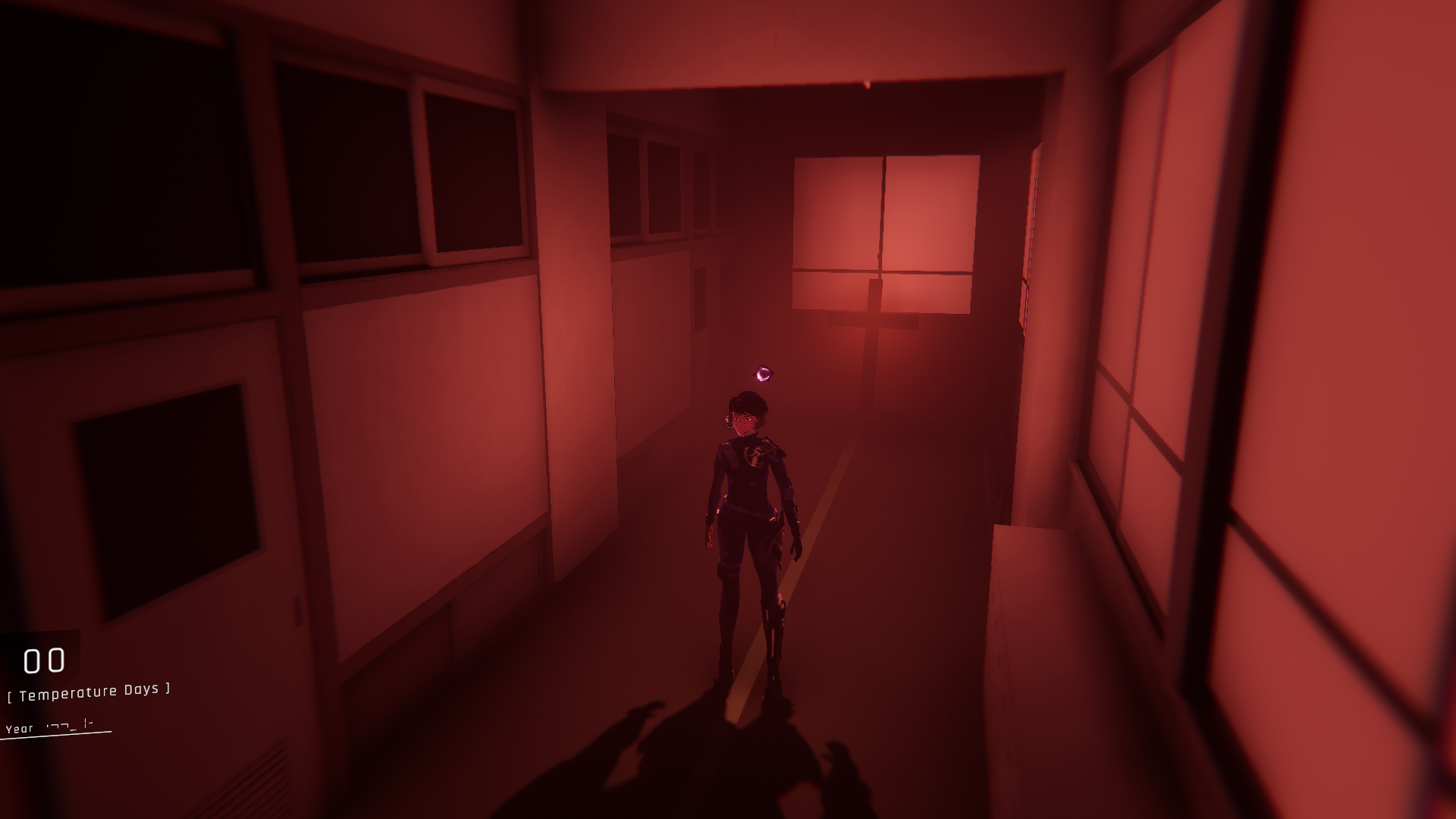
An example of the impact of the aethetic contrast.
The presentation – particularly in chapter 1 – felt inspired. The lighting alongside fixed camera angles were super effective, I felt dread rounding every corner without it ever being too much. The design of the aliens that have literally plagued humanity and the effect that they have had on the world brings a fantastic contrast to the world of 2047, an unknown amount of years prior, right before the effects took hold. Switching between both of these times in the blink of an eye creates a jarring effect aesthetically and a devastating one emotionally.
It is hard to describe what to expect as this game is unique, but I felt influences or slight similarities every now and again from other media. The first being that the experience of Chapter 2 is exactly the experience that I wish I had from the game Virginia. A wonderfully executed montage experience that I can’t say I have seen many games try. Other looser and unexpected vibes I got lead me to think of set up and themes of stories like Signalis and Everything Everywhere All At Once. I am not saying that you will have the same experience in this game as you had from those other properties, but they felt worth mentioning none the less as if you enjoyed them, I think there could be something here for you.
1000xResist is an experimental narrative game that resonated with me in ways that other experimental narrative game sometimes have not. Both chapters that I played were strong and emotional. What is different about this game is that I don’t actually know what I am going to be doing next. Rather than being goals driven, I am being taken on a journey. A tour of a world entirely different to the world I know. And that is great too. I am excited to see what lies in store.
This game breaks the mould – this is what Indie Gaming is all about.
At a glance + All in on the experimental storytelling. + Enough input required from the player to keep it engaging. + Time hop mechanic. + Environmental storytelling. + Very intriguing concept all around leaving me hungry for more. + Not exposition heavy. + I feel invested in characters despite not agreeing with them or even liking some of them. + The Asian-Canadian perspective enriches the whole experience. + The aethetic – particularly in chapter 1 – is great. + What a cool idea for a disease. +/- The characters are flawed, and I think the game is trusting player curiosity to carry on despite the player characters feelings on the situation. +/- Took a while to understand what is happening. +/- No indication about what is next, just this really interesting world. – Disconnect in dialogue took me out of it occasionally e.g. Watcher talking as herself when people see her as Iris.
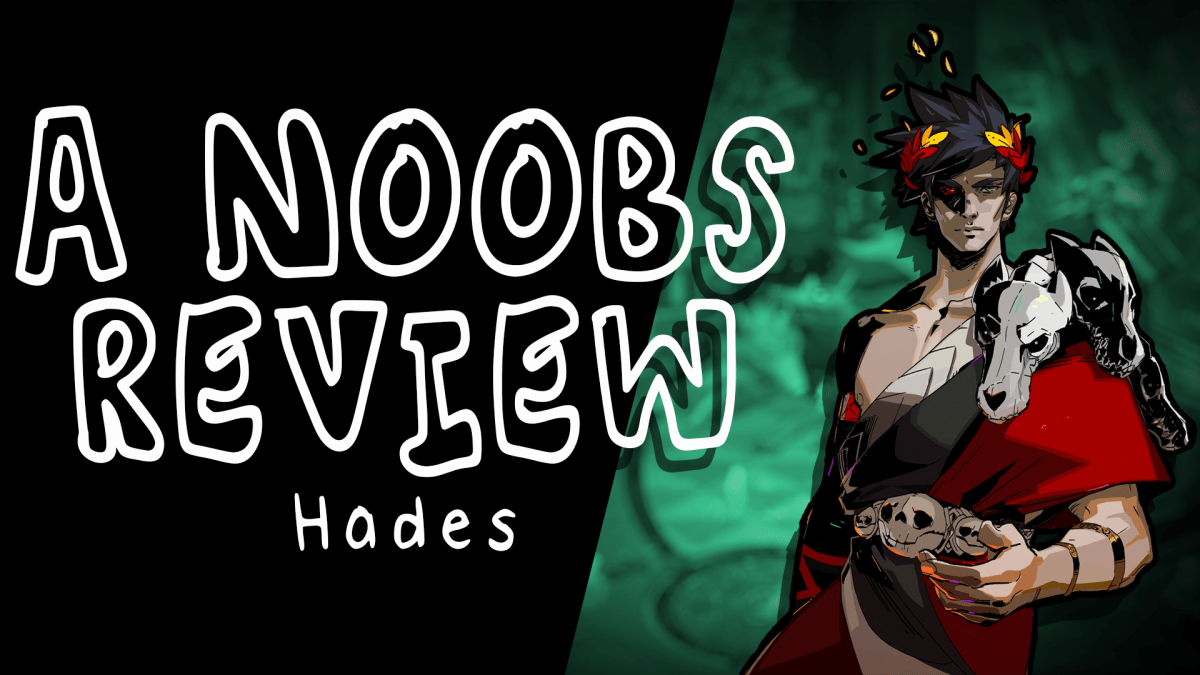
I feel I need to start this one with a disclaimer. Reviews are subjective. I am going to talk about my experience with the game as a person who doesn’t play games for their combat. People who like the challenge may disagree with what I say, as I have seen many people online say this game is too easy. I, personally, am not a god at video games. I can only talk from my own point of view, that this game can also be great for people like me, even if it does have its drawbacks.
+ The Premise
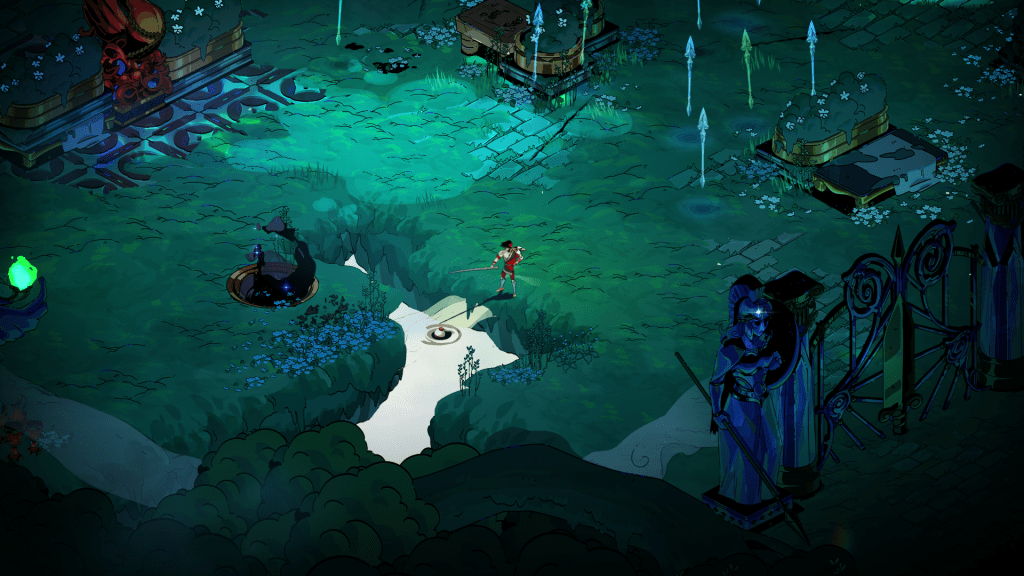
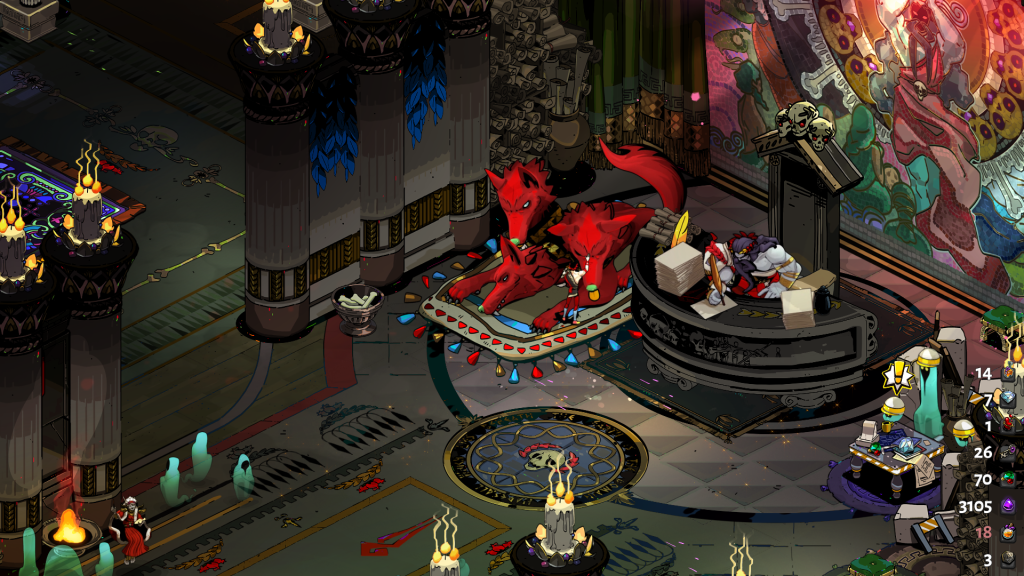
Alright, so Hades is an artistic, stylish rogue-lite based in Greek Mythology. We play as Zagreus – the Son of Hades – and we have one goal. Escaping the underworld. Everytime you die you are transported back home, which makes sense as that is where the majority of the dead end up sooner or later. This alone is such a fantastic concept. I love when game mechanics are tied to the story and I can think of no better set up for a rouge-lite. Throughout our escape attempts, our family on Olympus will offer us aid in the form of boons and this is where the classic roguelike gameplay factors in. Different perks combine in different ways to allow a variety of playstyles. Throughout our escape attempts – and eventually escapes – we get more and more story, be it characterisation of the gods, or directly talking to everyone back home. We also get more and more mechanics, including weapons to shake up your playstyle and difficulty modifiers, for better or worse. The best part of this set up is that death doesn’t always feel bad. In fact, sometimes I wanted a death just so that I could go back to the house and see what everyone was up to.
+ Aesthetics
At first, when I had only seen others play and not played myself, I didn’t love the aesthetics. Everyone was raving about them but I didn’t really get it until I tried it myself. You would think that the staple colours of red and green would shout Christmas. But they dont. Instead they evoke this regal hell. Rather than a festive cheer, it feels expensive and strict, yet also has a sense of home. The music is so good, everytime I start a run my head has to bob, it is perfect to hype you up for the challenge ahead. There is also diegetic music that is appropriately beautiful and evolves in fun ways as you go. The art in both the portraits of the characters and the movement itself is quite busy, but so unique. When things are busy sometimes my senses freeze up, but once I got used to it I really enjoyed looking at the details put into the characters. Then somehow everything also looks great when it moves. Overall, they took a premise that is already fantastic on its own, but then executed it so stylishly that it oozes personality.
+ The Voices/Dialogue
Before I was familiar with the game I heard a lot of praise for the voice acting. This was another thing that I didn’t really ‘get’ when I started playing myself. I don’t find them traditionally ‘good’. I do find them very stylised in a way that once I got used to it, I loved. As an example, lots of lines are read very quickly and don’t seem to pause in places that you would usually pause. Or there would be no gap between sentences. It felt very unnatural to me for a while, but in the end I feel like it becomes a defining factor in the style of the game. What I do love about the voices are the effects that are used on them. Some of the characters in the game are even beyond gods, and the audio designers did a fantastic job of creating ethereal effects that really characterise the way they speak. This, on top of the fun dialogue and the beautiful art, creates these very evocative and memorable characters, even if we do only meet them one line at a time. There is also so much dialogue. It will be a long time before you hear anything repeated. It is very impressive and a great hook to keep you coming back for more.
+ The Family Dynamics
Family drama is something that can be hit or miss. In real life, it SUCKS. But when that family are Greek Gods? There is something very enticing to be involved in the dynamics of these extremely powerful, extremely temperamental folk. I don’t know much about mythology in general, but I do know a lot of these characters are known for being petty, dishing out punishments, holding grudges etc. I do also believe they know how to have a good time. So having these colourful characters as our uncles and cousins and such was a rush. I didn’t trust them at all, but they so were fun to interact with. The family dynamics in the house are great too and you get to know more as you progress through the game. I really started to care and as dysfunctional as it is, some qualities shine through that you root for.
– The Difficulty Curve
Moving onto the gameplay itself, it is a very mixed bag for me. I am not that experienced with roguelikes but I do know that the more you play, the better you get. You learn the game and you improve. I did enjoy the process in the beginning, however there are certain blocks that felt like a huge wall to me. I managed to overcome some of them, but that doesnt stop them from becoming tedious. Without spoiling too much, the third area enemies often have a lot of armour and can respawn. It would sometimes take me minutes to complete a room. It was frustrating and boring. That might not sound like much but when you have been flying through the first area it feels like molasses. The same thing goes for bosses beyond the second area, I just don’t enjoy them. Thankfully, with every run you are collecting darkness and other items which you can use to upgrade your character. For me though, the satisfaction of coming back upgraded and getting further does not overcome the frustration of the halt of progress in the first place. (This may sound like I just don’t like rogue-lites. The only real point of reference I have is The Binding of Isaac, and I feel like that game moves a lot faster while also having more to think about, so there is less time to be bored). It is not a good feeling when over half of a run feels like a slog and I sometimes feel like throwing it because I can’t be bothered with the boss.
+ God Mode
God Mode is genius and I thank the Devs so much for including it. If you are playing for the story rather than the challenge, God Mode is an optional setting that can progressively make the game easier until it balances out at your level. Every time you die, you will gain a bonus to your damage reduction stat. Meaning enemies will hurt you less. You can turn this on or off at any time and it was a life saver for me. I played the game without it until I got my first clear. To get to credits you need 10 clears. I kept playing and playing but I wasn’t getting any more clears. Then the tedium mentioned above set in. I decided to turn on God Mode and it was the best decision I made. Two clears in a row and my enthusiasm for the game was back. After dying a few more times I reached the correct difficulty for me and got an 8 win streak. These weren’t easy wins either, it was just right that it was down to the wire most times. I urge you that if you are finding it tedious, getting bored, or doing a collect-a-thon, use God Mode. I certainly wouldn’t have got as far as I did without it.
+/- The Pacing
In a game with two distinct sections (gameplay during runs then story time and upgrading between) it was always going to be hard to pace it well. For a lot of people, the story sections ruin the pace of the gameplay. They are ready to jump straight back in but have to go around talking to everyone, breaking their momentum. For me, it was the other way around and play almost felt too long. I wanted to be back at the house for the next story beats and to upgrade my stuff. Based on those two types of players, I don’t really see how they could have a middle ground. It is not detrimental to the game, but it is a common complaint that I have heard and felt myself occasionally, even if it is opposite ends of a spectrum.
+ Other Objectives
There is a lot more to do than just clearing runs. These aren’t things that you have to do but are an option if you need something other than combat like I do. Some characters have side quests that you progress by gifting them items between runs. You can improve relationships, unlocking new dialogue and scenes. Then there are the Boons. If you are a compulsive list taker like me, collecting every Boon is so much fun. Some Boons require you to have other Boons first, and navigating that was a game that I enjoyed more than getting clears. I have officially collected them all and really enjoyed doing so. By the end, every fated choice (one you havent picked up yet) received a celebratory fist bump from me. There are also heat levels that you can unlock to make the game more difficult if you are so inclined. All of these things provide rewards that you can either put towards improving more runs, or buying house fashion.
I hope that if anything, this review shows that Hades can be enjoyed by many different types of people. It is very accessible as a first foray into the genre, while equally providing a new challenge for the genre savvy. While I don’t think it is a perfect game, I do believe it deserved all of the love, praise and awards it recieved. By the end, the game was leaving Game Pass so I was rushing to complete everything that I wanted to. I really don’t think this is the way to play. Chipping away with a few runs here and there after the initial addiction keeps the runs more palatable in my opinion. You can definitely have too much of a good thing! Having said that, it has provided me with many hours of entertainment and I will think back on it very fondly.
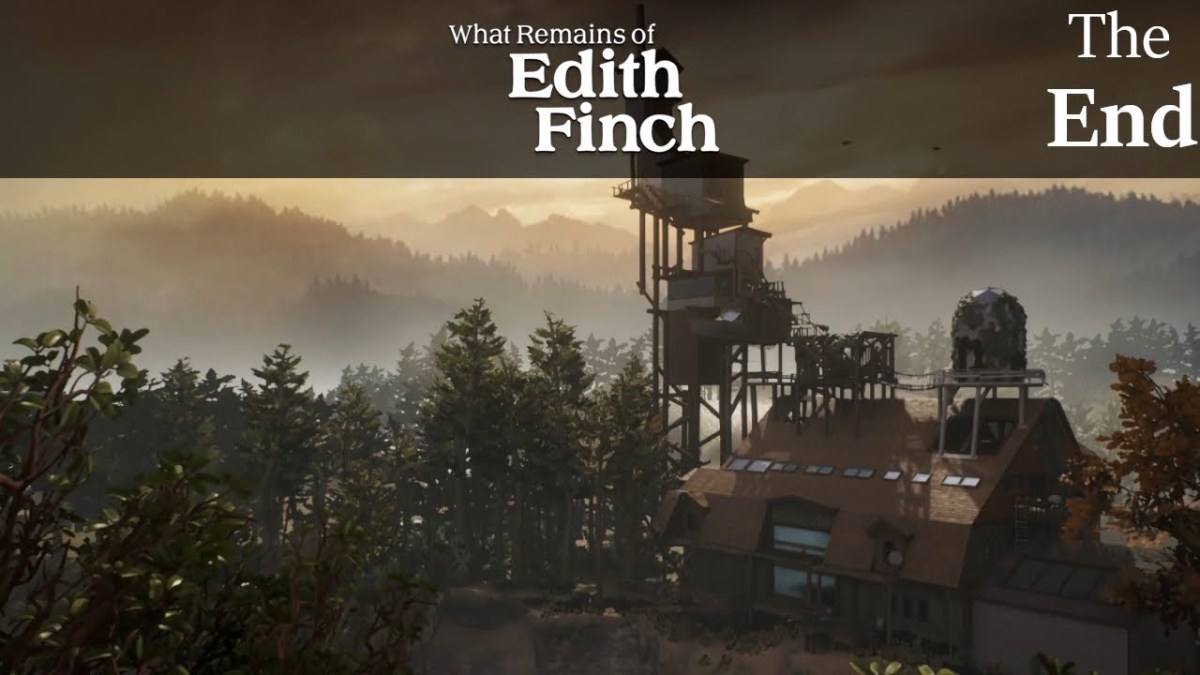
What Remains of Edith Finch was the first full play-through I did of a free PS Plus game since I started covering the monthly games on my channel.
It was already on my radar but playing through the first story had me sold. And it kept getting better.
This is another game that I would like to recommend playing through yourself before watching any other play-throughs, as I believe that would really enhance your experience. If not though, my play-through is here and I had a great time. The game really delivered and had me thinking for days. I couldn’t be more satisfied with what I took away from this story.
Also, my first full play-through with my full new set up! Much better than the old headset I used to use.
![A Noob’s [Mini] Review – Death Trick: Double Blind](https://ctrlaltnoob.com/wp-content/uploads/2024/06/death-trick-double-blind-review.png?w=1200)
![A Noob’s [Mini] Review – Death Trick: Double Blind](https://ctrlaltnoob.com/wp-content/uploads/2024/06/death-trick-double-blind-review.png?w=840)

![A Noob’s [Mini] Review – Sea of Thieves](https://ctrlaltnoob.com/wp-content/uploads/2023/05/sea-of-thieves-review-2.png?w=840)
![A Noob’s [Mini] Review – Astro’s Playroom](https://ctrlaltnoob.com/wp-content/uploads/2023/04/astros-playroom-review.png?w=840)
![A Noob’s [Mini] Review – SOMA](https://ctrlaltnoob.com/wp-content/uploads/2023/04/moonlighter-soma.png?w=840)
![A Noob’s [Mini] Review – Return of the Obra Dinn](https://ctrlaltnoob.com/wp-content/uploads/2023/03/return-of-the-obra-dinn-review.png?w=840)











































 CtrlAltNoob